Introduction
Few jewelry pieces have maintained their allure throughout the centuries quite like the classic pearl stud earring. These small yet powerful accessories have adorned the ears of royalty, celebrities, and everyday fashion enthusiasts alike, transcending trends and cultural shifts to remain a cornerstone of elegant style. From ancient civilizations to modern runways, pearl studs continue to represent sophistication, refinement, and timeless beauty.
In their deceptive simplicity lies their greatest strength—pearl studs are never out of place, whether complementing a wedding gown or elevating a casual outfit. Their versatility makes them both an essential wardrobe staple and a meaningful heirloom passed through generations. As Coco Chanel famously noted, “A woman needs ropes and ropes of pearls,” but perhaps most essentially, she needs that perfect pair of pearl studs to begin her collection.
This exploration will delve into the fascinating world of classic pearl studs, uncovering their rich history, the science behind their creation, the factors that determine their quality, and the various ways they continue to influence fashion today. Whether you’re a pearl aficionado or considering your first purchase, this comprehensive guide will illuminate why these luminous gems continue to captivate and inspire.
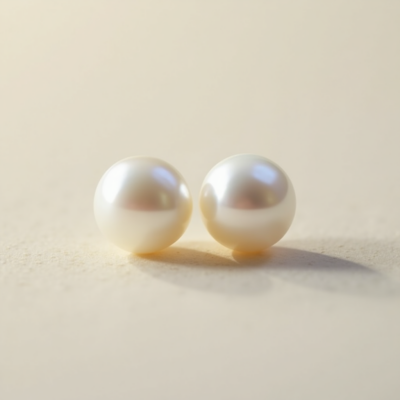
The image displays a pair of elegant, round pearl stud earrings with magnificent luster against a soft neutral background, showcasing the timeless beauty that has captivated jewelry lovers for generations.
The Rich History of Pearl Stud Earrings
Ancient Beginnings
The relationship between humans and pearls dates back thousands of years. As one of the first gems ever worn, pearls required no cutting or polishing to reveal their natural beauty. Early civilizations from Mesopotamia to Rome coveted these rare treasures from the sea, associating them with power, purity, and divine connection. Cleopatra’s legendary display of dissolving a pearl in vinegar demonstrated not just extravagance but the immense value placed on these organic gems.
While elaborate pearl jewelry existed in ancient times, the specific form of pearl studs had a more patchy history in documentation. Evidence suggests that in ancient China, men wore stud earrings featuring pearls as status symbols. These early iterations laid the groundwork for the evolution of the classic pearl stud we recognize today.
The Renaissance and Royal Influence
The Renaissance period marked a significant chapter in pearl jewelry history. European nobility, especially Queen Elizabeth I, adorned themselves with lavish pearl decorations as symbols of power, divine beauty, and authority. The portraits of Elizabeth I typically show her draped in pearls, cementing their association with royalty and prestige. While elaborate pearl designs dominated this era, the foundation was being laid for the more refined, singular beauty of the pearl stud.
Modern Emergence of Pearl Studs
The true emergence of pearl stud earrings as we know them today came in the 1960s, a pivotal moment when women increasingly had their ears pierced and sought appropriate jewelry. This period coincided with cultured pearls, particularly Akoya pearls, becoming more readily available to the general public. Suddenly, pearl stud earrings found their rightful place in the world of fine jewelry, and both women and men began wearing them as statements of style.
Cultural Impact and Artistic Influence
Few jewelry pieces have been immortalized in art as significantly as pearl earrings. Johannes Vermeer’s 17th-century masterpiece, “Girl with a Pearl Earring,” often called the “Mona Lisa of the North,” captures the mystery and allure of a single pearl earring. This iconic painting continues to influence how we perceive pearl earrings, emphasizing their ability to captivate with understated elegance.
In the 20th century, pearl jewelry underwent another transformation as Coco Chanel revolutionized their use, taking them from formal occasions into everyday wear. This democratization of pearls cemented the pearl stud as not just a special occasion piece but an essential part of a well-rounded jewelry collection.
The Science of Pearls: Nature’s Miracle
Natural vs. Cultured Pearls
Understanding pearl studs begins with knowing the difference between natural and cultured pearls:
-
Natural Pearls: These form spontaneously when an irritant enters a mollusk’s shell, and the creature responds by coating it with layers of nacre. Truly natural pearls are extremely rare today, making them collector’s items rather than commonly available jewelry pieces.
-
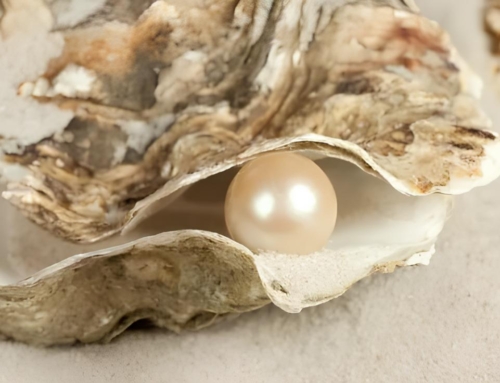
Cultured Pearls: The vast majority of pearl jewelry today features cultured pearls, which are formed through human intervention. Technicians insert a bead or piece of mantle tissue into a mollusk, which then secretes nacre around this nucleus. While cultured pearls are created with human assistance, the nacre formation process remains entirely natural, resulting in genuine pearls.
The Cultivation Process
The creation of a cultured pearl is a remarkable blend of science and patience:
-
Selection: Pearl farmers select healthy mollusks capable of producing quality pearls.
-
Nucleation: A skilled technician inserts a shell bead along with a small piece of mantle tissue into the mollusk’s body.
-
Formation: Over time, the mollusk secretes layer upon layer of nacre around the nucleus.
-
Harvesting: After 6 months to 2 years (depending on the pearl type), the pearls are carefully harvested.
-
Sorting and Matching: Harvested pearls undergo rigorous grading, with the highest quality specimens reserved for fine jewelry like pearl studs.
The Major Types of Pearls Used in Stud Earrings
Different pearl varieties offer unique characteristics, making each type suitable for different preferences and budgets:
Akoya Pearls
Akoya pearls, primarily cultured in Japan and China, are the classic choice for traditional pearl stud earrings. Their attributes include:
- Size: Typically ranging from 6mm to 9mm
- Shape: Known for being perfectly round, making them ideal for studs
- Color: Primarily white or cream with rose, silver, or ivory overtones
- Luster: Exceptional brightness and sharp reflections
- Best for: Those seeking the quintessential, classic pearl stud with high shine
Akoya pearls are often considered the standard for traditional pearl studs due to their perfect roundness and brilliant luster. They’re the pearls most people envision when thinking of classic pearl earrings.
Freshwater Pearls
Freshwater pearls, primarily cultivated in China’s lakes and ponds, offer excellent value and versatility:
- Size: Range from tiny seed pearls to 12mm
- Shape: Varied, from perfectly round to baroque (irregular shapes)
- Color: Naturally white, cream, or pastel colors, though often treated for more vibrant hues
- Luster: Softer, more satiny appearance compared to Akoyas
- Best for: Budget-conscious shoppers or those seeking unique colors and shapes
The affordability and variety of freshwater pearls make them popular for pearl studs, allowing for more experimental styles while maintaining the classic pearl look.
South Sea Pearls
Cultivated in Australia, Indonesia, and the Philippines, South Sea pearls represent the luxury end of the pearl market:
- Size: The largest of cultured pearls, typically 9mm to 20mm
- Shape: Mostly round to near-round, though perfect rounds are rare
- Color: Silver-white (from silver-lipped oysters) or golden (from gold-lipped oysters)
- Luster: Distinctive satiny glow rather than the mirror-like shine of Akoyas
- Best for: Statement pearl studs and luxury jewelry collections
South Sea pearls feature the thickest nacre of all cultured pearls, averaging 2-4mm around the nucleus. This substantial nacre layer creates their characteristic satiny luster and ensures exceptional durability.
Tahitian Pearls
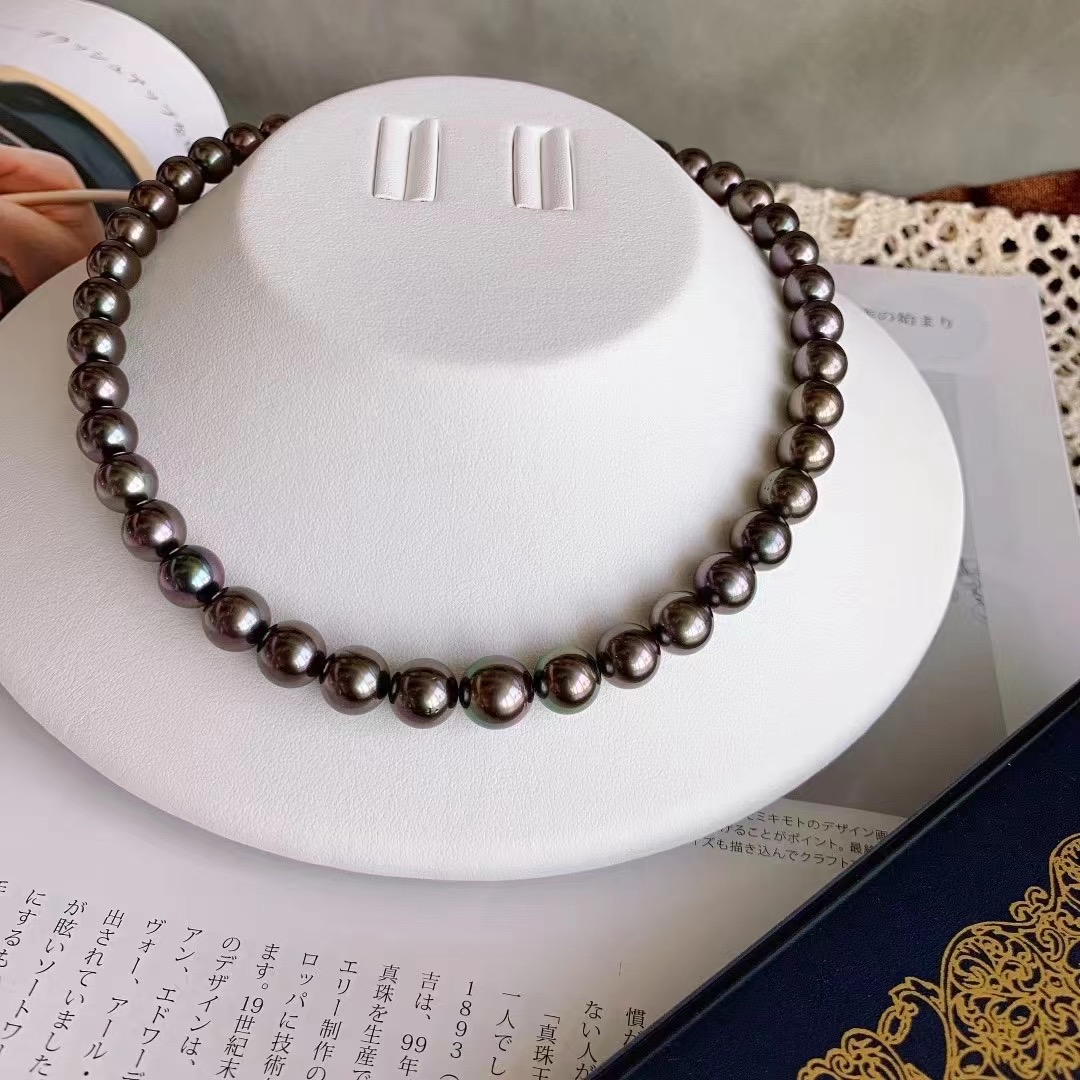
Also known as black pearls, Tahitian pearls are cultivated around French Polynesia:
- Size: Typically 8mm to 16mm
- Shape: Various, from round to baroque
- Color: Not just black, but a spectrum of dark colors including peacock green, aubergine, and blue-gray
- Luster: Metallic shine with dramatic color play
- Best for: Those seeking sophisticated, dramatic pearl studs with unique colors
Tahitian pearls offer a contemporary alternative to traditional white pearl studs, providing striking color depth that pairs beautifully with both casual and formal attire.
Evaluating Quality: The 7 Pearl Value Factors
When selecting pearl stud earrings, understanding the key quality factors helps ensure you’re making a wise investment:
1. Luster
Luster is the most crucial quality factor—it’s the bright reflectivity that gives pearls their distinctive beauty. It results from light penetrating through the translucent layers of nacre and reflecting back to the surface.
- Excellent: Sharp, mirror-like reflections where you can see distinct images
- Very Good: Bright, sharp reflections
- Good: Bright, but reflections are somewhat diffused
- Fair/Poor: Chalky appearance with dim or diffused reflections
Highly lustrous pearls appear to glow from within, while pearls with poor luster look dull and lifeless. For pearl studs worn near the face, excellent luster makes a dramatic difference in their beauty.
2. Surface Quality
This refers to the presence (or absence) of imperfections on the pearl’s surface:
- Flawless: No visible imperfections
- Very Slightly Included: Minor imperfections visible only upon close inspection
- Slightly Included: Minor imperfections visible to the naked eye
- Included: Obvious imperfections
For pearl studs, surface quality is particularly important as these imperfections will be more noticeable on a single pearl than within a strand.
3. Shape
While round is the classic shape for pearl studs, other options exist:
- Perfectly Round: The most valuable and traditional for studs
- Near-Round: Appears round to the eye but has subtle variations
- Button: Slightly flattened on one side, often comfortable for earrings
- Drop/Pear: Tear-drop shaped
- Baroque: Irregular, free-form shapes
Round pearls are the most sought-after for traditional studs, but buttons and near-rounds can provide excellent value while still maintaining a classic appearance.
4. Size
Pearl size is measured in millimeters across the diameter:
- Akoya: Typically 6-9mm, with 7-8mm being most common for studs
- Freshwater: 5-12mm, with 7-8mm popular for studs
- Tahitian: 8-16mm, with 9-11mm common for studs
- South Sea: 9-20mm, with 10-13mm typical for studs
When selecting size for pearl studs, consider face shape, personal style, and comfort. Larger pearls make a bolder statement but can be heavier on the earlobe.
5. Color
Pearl color comprises three elements:
- Body color: The dominant, overall color (white, cream, black, gold, etc.)
- Overtone: The translucent color that appears over the body color (rose, green, blue)
- Orient: The iridescent, rainbow-like play of color on the surface (present in the highest quality pearls)
Choose colors that complement your skin tone—cream or gold pearls often flatter warmer skin tones, while rose or silver overtones work well with cooler complexions.
6. Nacre Thickness
Thick nacre is essential for durability and beauty:
- Pearls with thin nacre appear chalky and may deteriorate over time
- Thick nacre creates better luster and ensures the pearl will last for generations
- South Sea pearls have the thickest nacre, followed by Tahitian, Akoya, and Freshwater pearls
For pearl studs that will be worn regularly, substantial nacre thickness is crucial for long-term durability and beauty.
7. Matching
For stud earrings, the matching between the two pearls is critical:
- Both pearls should have identical or nearly identical size
- Color, shape, and luster should be well-matched
- Surface quality should be consistent between both pearls
Perfect matching in pearl studs enhances the overall appearance and value of the piece.
Styling Pearl Stud Earrings: Versatility in Action
One of the greatest virtues of pearl studs is their remarkable versatility across different settings and styles:
Everyday Elegance
Pearl studs excel as daily wear jewelry because:
- They transition seamlessly from day to night settings
- They complement both casual and formal attire
- Their subtle glow brightens the face without overwhelming it
- They’re comfortable enough for all-day wear
For daily wear, 7-8mm Akoya or Freshwater pearls offer an ideal balance of presence and comfort.
Professional Settings
In workplace environments, pearl studs communicate sophistication and attention to detail:
- They project professionalism without being flashy
- They complement business attire perfectly
- They add a touch of personality while remaining appropriate
- They frame the face beautifully for video conferences and presentations
Many professional women consider pearl studs their “power earrings” for important meetings and presentations.
Special Occasions
For weddings, galas, and other formal events, pearl studs shine brightly:
- They complement bridal attire without competing with other elements
- They photograph beautifully, reflecting light without harsh glare
- They carry symbolic significance of purity and new beginnings
- They provide a “something old” or “something new” for brides
Many brides choose larger South Sea or Akoya pearl studs for their wedding day, creating an heirloom they can wear for years to come.
Contemporary Styling
Modern interpretations of pearl studs keep this classic fresh and relevant:
- Pearls with diamond halos or accents
- Pearls in contemporary settings like climbers or jackets
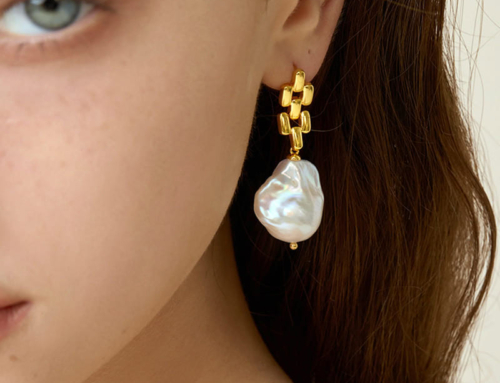
- Baroque pearl studs for organic, artistic appeal
- Colored pearls (Tahitian or treated Freshwater) for unexpected edge
These modern variants maintain the elegance of traditional pearl studs while incorporating contemporary design elements.
Caring for Pearl Stud Earrings
To maintain the beauty of pearl studs for generations, proper care is essential:
Daily Maintenance
Simple habits ensure your pearls maintain their luster:
- Wipe pearls gently with a soft cloth after each wear to remove oils and dirt
- Put on pearl earrings after applying cosmetics, perfume, and hairspray
- Remove pearl studs before showering, swimming, or exercising
- Avoid contact with chemicals, including cleaning products
Cleaning
When cleaning becomes necessary:
- Use a soft cloth dampened with lukewarm water
- For stubborn dirt, use a tiny amount of mild soap (no detergents) diluted in water
- Never soak pearls or use ultrasonic cleaners, which can damage them
- Dry completely before storing
Storage
Proper storage prevents damage when pearl studs aren’t being worn:
- Store separately from other jewelry to prevent scratches
- Keep in a soft pouch or lined jewelry box
- Avoid plastic bags, which can trap moisture and emit chemicals harmful to pearls
- Don’t store in extremely dry environments like safe deposit boxes for extended periods
Professional Maintenance
For long-term care:
- Have pearl studs checked annually by a jeweler for loose settings
- Consider professional cleaning for valuable pearls
- Restring pearl jewelry with silk thread if you notice stretching or discoloration
Investment Value of Pearl Studs
Beyond their aesthetic appeal, quality pearl studs represent a sound investment:
Enduring Value
High-quality pearl studs maintain their value over time because:
- The best pearl sources face environmental challenges, potentially limiting future production
- The cultivation process remains labor-intensive and time-consuming
- Consumer appreciation for natural, sustainable luxury continues to grow
Heirloom Potential
With proper care, pearl studs can be passed down through generations:
- Their classic style remains relevant across decades
- Their symbolic associations with purity and wisdom make them meaningful gifts
- Their natural origin creates a connection to the earth that synthetic gems lack
Modern Trends in Pearl Stud Earrings
While the classic white round pearl stud remains timeless, several contemporary trends are expanding the category:
Sustainability Focus
Modern consumers increasingly value sustainable and ethical sourcing:
- Pearls are among the most sustainable luxury gems, requiring healthy marine environments to flourish
- Leading pearl producers implement environmentally responsible farming practices
- Vintage and estate pearl studs offer sustainable options with character and history
Design Innovation
Designers continue to reimagine pearl studs for contemporary tastes:
- Minimalist settings that maximize pearl visibility
- Baroque pearls celebrated for their unique, organic shapes
- Innovative placement such as floating or front-back styles
- Mixed metals creating contrast with pearl luminosity
Color Exploration
Beyond traditional white:
- Black and peacock Tahitian pearls for dramatic impact
- Golden South Sea pearls complementing warm skin tones and yellow gold
- Naturally colored freshwater pearls in lavender, peach, and pink hues
- Ombré effects pairing pearls of graduated colors
Conclusion: The Enduring Charm of Pearl Studs
In a world of rapidly changing fashion trends, classic pearl stud earrings maintain their position as essential jewelry pieces that transcend time. Their elegant simplicity, remarkable versatility, and rich historical significance ensure they will continue to adorn ears for generations to come.
Whether selecting your first pair or adding to a collection, understanding the nuances of pearl types, quality factors, and styling possibilities enhances appreciation for these lustrous gems. From the perfectly round Akoya to the golden glow of South Sea pearls, each variety offers its own distinctive beauty while maintaining the essential characteristics that have made pearl studs beloved for centuries.
As both a practical everyday accessory and a symbol of refinement, pearl studs represent not just a jewelry purchase but an investment in timeless elegance. Their gentle luster brings light to the face, their natural origin connects us to the wonders of the ocean, and their resilient beauty reminds us that true style is never fleeting but endures with grace and sophistication.