January 15, 2026 — SOHO, New York City
Elena Vance drafts this guide from her minimalist SOHO loft, where morning light catches on baroque pearl samples and mood boards filled with 2026 runway inspiration. A south-sea golden pearl sits beside a half-empty espresso cup, its orient shimmering like gasoline on wet pavement—an effect gemologists call iridescence and poets simply call magic. The question landing in my inbox daily, across every platform, whispered in showroom consultations and shouted in DMs, is simple on its surface: are pearls in style 2026? The answer is not a yes or a no. It is a refraction. A spectrum. Pearls have not merely survived the trend cycle—they have hollowed it out from the inside and built a cathedral inside the cavity. Let me walk you through exactly what that means, with the precision of a GIA grading report and the warmth of someone who has held thirty thousand pearls against her skin.
The 2026 Pearl Renaissance: Not Your Grandmother’s Strand
When fashion historians look back at this decade, they will mark 2024 through 2026 as the years pearls completed a demographic inversion. The consumer most likely to purchase fine pearl jewelry today is not sixty-five. She is twenty-eight. She wears oversized blazers, knows the difference between akoya and freshwater nacre thickness, and shops direct-to-consumer with a forensic attention to supply-chain ethics. Modern pearl jewelry trends have abandoned the matched-strand uniformity that defined the twentieth century. Asymmetry is the new symmetry. The modern pearl jewelry trends dominating 2026 are biographical, not decorative—each pearl chosen because it refuses to match its neighbor.
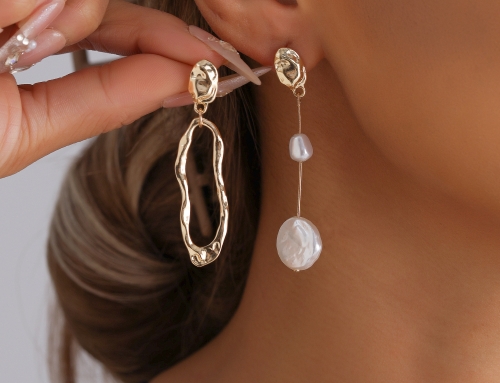
If you are asking whether are pearls in style 2026 signals a micro-trend or a structural shift, consider the sourcing data. At PearlsNation, our direct-from-farm Tahitian orders have tripled since 2023. Buyers are not accumulating. They are curating. One baroque pearl on a leather cord. A single grey Tahitian stud paired with a diamond. Three mismatched keshi pearls threaded onto a gold hoop. This is contemporary pearl fashion operating at its most articulate—jewelry that whispers instead of announces.
Beyond the Strand: The New Pearl Vocabulary
Contemporary pearl fashion in 2026 speaks a dialect that would have confused a 1990s jeweler. Mixed-shape bracelets. Pearl-and-chain necklaces where the chain is as intentional as the gem. Earrings that pair a south-sea white with a jet-black Tahitian on the opposite lobe—a deliberate asymmetry that reads as confident, not accidental. The vocabulary has expanded because the wearer has changed. She understands that are pearls in style 2026 is not a question of trend compliance but of personal architecture. Pearls are building blocks now, not trophies.
What anchors this shift is material honesty. When I hold a pearl up to the north-facing window here in SOHO, I look for three things: luster, surface character, and orient. These are GIA fundamentals. But in 2026, the market has finally caught up to what graders have always known—surface blemishes are not defects. They are provenance written in calcium carbonate. A pearl without a single blemish is a pearl without a story. The new consumer intuits this. She reaches for the baroque, the circled, the keshi—pearls that wear their formation proudly.
Surface Blemishes Are Now Coveted, Not Corrected
This is the quiet revolution at the heart of are pearls in style 2026. For forty years, the industry chased flawlessness. Strands were matched to millimeter tolerances. Blemishes were discarded or hidden under drill holes. Today, the GIA’s seven pearl value factors—size, shape, color, luster, surface quality, nacre quality, and matching—are being reinterpreted by wearers who rank character above perfection. A baroque pearl with distinct surface topography catches light in ways a perfectly spherical one cannot. The refraction becomes chaotic and beautiful, like a disco ball made of moonlight. This is not a compromise. It is an aesthetic upgrade that happens to cost forty percent less than a matched round strand of equivalent luster. DTC transparency demands I tell you that.
How to Style Pearls in 2026: A Practical Matrix
When clients visit our SOHO studio asking how to style are pearls in style 2026 in daily life, I hand them a single freshwater baroque on a sixteen-inch chain and tell them to wear it for a week. Against a white t-shirt. Over a cashmere turtleneck. Peeking out from under a denim collar. The pearl should never look like it dressed for a different occasion than you did. Here is a styling matrix that maps pearl types to 2026 wardrobe staples, calibrated for the woman who wants her jewelry to feel like an extension of her instincts, not an interruption of them.
| Pearl Type | GIA Luster Grade | Best Setting | Pairs Flawlessly With | 2026 Vibe |
|---|---|---|---|---|
| Freshwater Baroque | Good to Very Good | Solo pendant, thin gold chain | Crisp white button-down, raw denim | Effortless intellectual |
| Akoya Round | Excellent to Very Excellent | Stud earrings, 6.5-7.5mm | Black cashmere blazer, slicked-back hair | Quiet power move |
| Tahitian Drop | Very Good to Excellent | Single drop earring, mixed-metal hook | Leather jacket, silk camisole | Edgy romantic |
| South Sea Golden | Excellent | Statement ring, bezel set | Cream knitwear, wide-leg trousers | Understated luxury |
| Keshi Cluster | Soft to High (natural variation) | Multi-pearl hoop or asymmetrical earring pair | Linen blazer, bare collarbone | Art-gallery energy |
| Biwa Stick Pearls | Good to Very Good | Long chain, no clasp, wrapped twice | Chunky sweater, minimalist watch | Sculptural and serene |
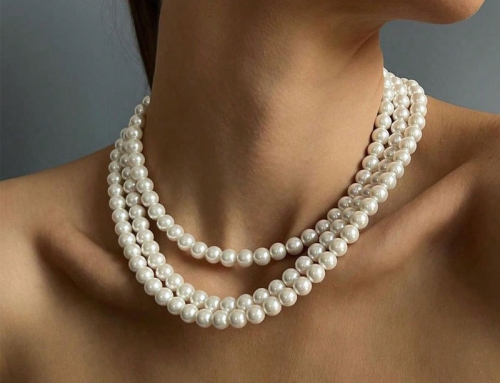
Notice something absent from this table: the matched strand. It is not that matched strands are irrelevant—a graduated akoya strand remains one of the most beautiful objects human hands can produce. But in 2026, the matched strand is a choice, not a default. When someone asks are pearls in style 2026, they are often really asking whether the old rules still apply. They do not. The only rule is that the pearl must look like it belongs to you, not to a museum vitrine.
Daily Life Integration: The Seven-Day Rule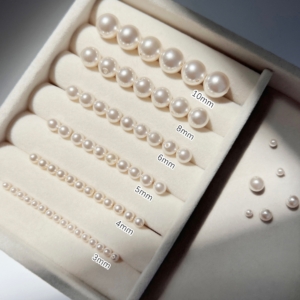
Here is how to style are pearls in style 2026 in daily life without overthinking it. On Monday, wear a single baroque pearl on a snake chain with your gym hoodie. On Tuesday, thread two mismatched freshwater drops onto gold huggies for your Zoom calls. Wednesday: a Tahitian stud in your second piercing, no partner, no symmetry. Thursday: layered chains—one bare, one with a tiny keshi pearl—over a merino turtleneck. Friday evening: that south-sea ring against a martini glass. By Saturday morning, you will have stopped asking are pearls in style 2026 because the question will feel as unnatural as asking whether your heartbeat is in style. Pearls, worn this way, become biometric.
The common thread across modern pearl jewelry trends is decontextualization. Removing the pearl from its ceremonial past—weddings, galas, inheritances—and dropping it into the texture of an ordinary Tuesday. This is not irreverence. It is intimacy. A pearl worn with a t-shirt has more in common with its original purpose—a talisman against the ordinary—than a pearl locked in a safe deposit box ever did.
The GIA Lens: What Actually Matters When Buying Pearls in 2026
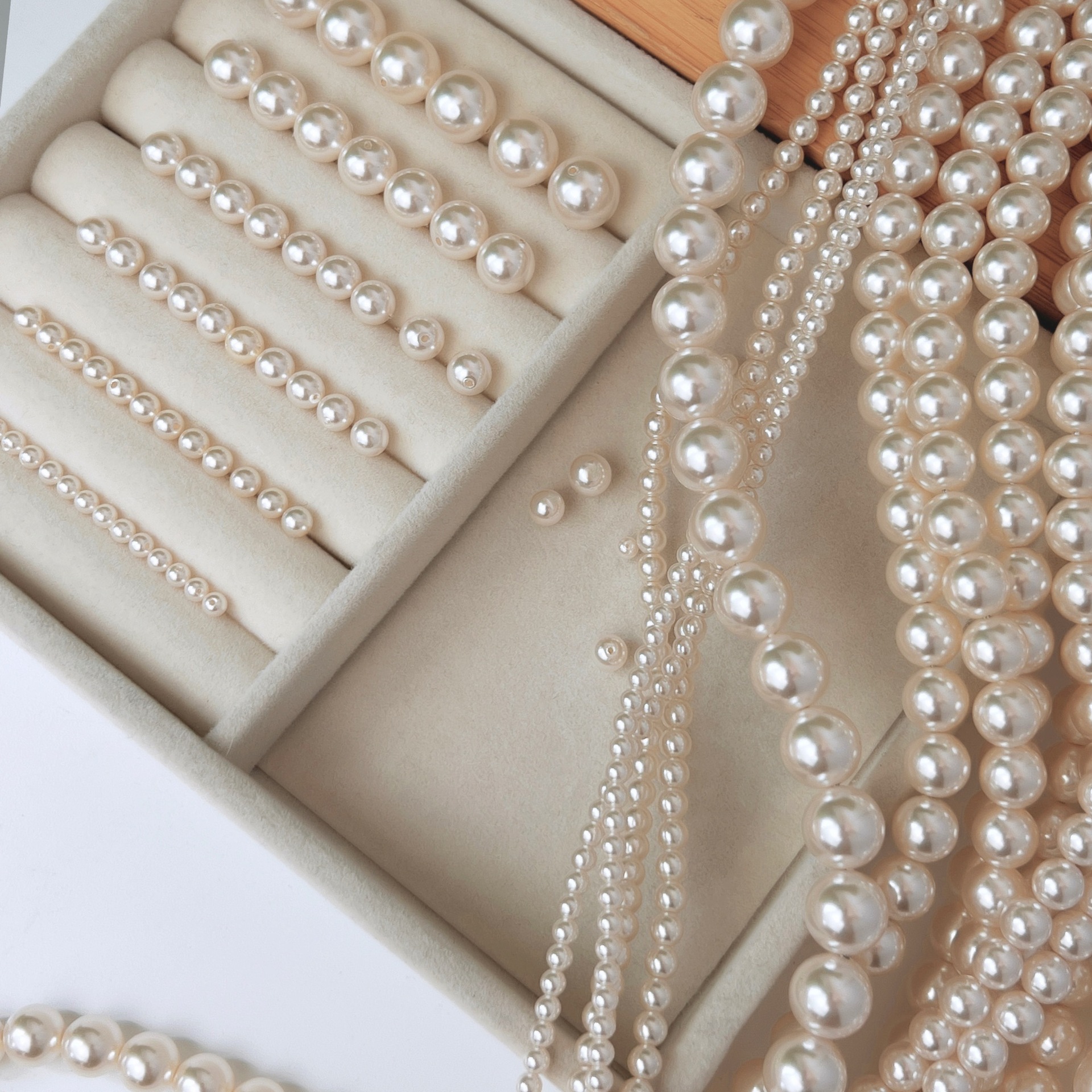
Let me speak technically for a moment, because understanding the material science beneath contemporary pearl fashion will save you from overpaying for attributes that no longer command premiums. The GIA grades pearls across seven value factors, but in 2026, three of them have been radically reweighted by consumer preference. Luster remains king—nothing replaces the sharpness of light reflection off densely packed nacre layers. A pearl with excellent luster will glow from within even in flat overhead lighting. Surface quality, historically the second-most-scrutinized factor, has slipped to fourth or fifth in importance. Shape, once dominated by the tyranny of the round, has become a playground.
Luster Over Perfection: The 2026 Equation
If you retain only one sentence from this guide, let it be this: buy luster, not symmetry. A baroque pearl with mirror-grade reflection will outshine a flawless round with chalky nacre every single time. This is where DTC pricing creates genuine value. At PearlsNation, a baroque south-sea pearl with exceptional luster and visible surface character might retail for three hundred dollars. Its perfectly round, blemish-free counterpart—same size, same origin—could exceed two thousand. The baroque one is more interesting. The round one is more expensive. In 2026, interesting beats expensive. That is not a slogan. It is a market signal.
This recalibration answers a related question I hear frequently: is pearl jewelry out of style? The confusion arises because people equate “pearl jewelry” with “the way pearl jewelry was worn in 1987.” That version—stiff, matched, reserved exclusively for occasions that required pantyhose—is indeed extinct. But what has replaced it is vastly more expansive and democratic. So is pearl jewelry out of style? The matched-strand-on-a-suit-jacket version, yes. The every-day-every-way version, absolutely not. Pearls have never been more stylistically relevant than they are right now, precisely because they have stopped behaving like pearls.
Contemporary Pearl Fashion: The Runway-to-Reality Pipeline
The Spring 2026 collections in Paris and Milan confirmed what our SOHO studio has been sensing for eighteen months. Pearls appeared at Loewe threaded through industrial chains. At Bottega Veneta, single enormous baroque pearls hung from leather cords so thin they looked like graphite lines drawn in the air. At The Row, barely-visible freshwater seed pearls dotted the inner ears of models who otherwise wore no jewelry at all. The message was consistent: contemporary pearl fashion in 2026 is about punctuation, not paragraphs. One pearl. One statement. One moment of iridescence interrupting an otherwise quiet silhouette.
This runway language translates directly to the DTC consumer because pearls—unlike diamonds or precious metals—do not require enormous scale to deliver impact. A single Tahitian pearl with peacock-green overtones costs less than a designer t-shirt and will outlast every garment you own. When people ask are pearls in style 2026, they are often surprised to learn that the most fashionable pearl purchases this year are also among the most accessible. A hundred-dollar freshwater baroque pendant on a gold-filled chain is not a compromise. It is the point.
The Fair-Trade Layer: Ethics as Aesthetic
No discussion of modern pearl jewelry trends in 2026 is complete without acknowledging the supply-chain consciousness that now drives purchasing decisions. The DTC model—which PearlsNation has practiced since founding—eliminates the wholesaler, the distributor, and the retail markup that historically multiplied a pearl’s cost by six to ten times between farm and finger. But transparency is not just about price. It is about origin. Our Tahitian pearls come from farms in French Polynesia that operate under strict environmental regulations governing water quality, oyster density, and reef preservation. Our freshwater pearls are sourced from Chinese and Japanese farms where nacre cultivation periods have lengthened—meaning thicker nacre, higher luster, and pearls that will not dull after five years of wear.
This matters because contemporary pearl fashion is built on a foundation of informed consumption. The 2026 pearl buyer knows the difference between a cultured freshwater pearl and a shell-bead nucleus. She knows that “pearl luster” is not a metaphor—it is a measurable optical property caused by light penetrating multiple nacre layers and reflecting back with interference patterns that create orient. She shops accordingly. She buys direct. She wears pearls that carry the full story of their formation, from irritant to iridescence.
FAQ: Your 2026 Pearl Questions, Answered
- Are pearls in style 2026 for younger demographics?
- Unequivocally yes. The median age of our customer base has dropped by nearly twenty years since 2020. Gen Z and younger millennials are driving the baroque pearl surge, styling single pearls with streetwear, mixing them with gold chains, and rejecting the formality that once defined pearl ownership. The question are pearls in style 2026 finds its most enthusiastic answer among consumers under thirty-five. They are not inheriting pearls. They are buying them, intentionally, as contemporary fashion objects.
- Is pearl jewelry out of style for formal occasions?
- No—but the formal pearl has transformed. A graduated akoya strand still reads beautifully at a black-tie event. What has shifted is the permission to break formality’s rules. A single oversized baroque pearl at the throat of a gown now registers as more fashion-forward than a full matched strand. Is pearl jewelry out of style in conservative settings? Not at all, but it is being worn differently—often as a single statement rather than a full suite.
- How do I know if a pearl’s luster is genuinely excellent?
- Hold the pearl at arm’s length under a single light source. You should see a sharp, defined reflection—your own face, a window, the light bulb itself. If the reflection is blurry or diffuse, the luster is middling. The best pearls return reflections with almost mirror-like clarity. This is a function of nacre thickness and crystalline structure, and it cannot be faked with coatings. GIA uses four luster categories: Excellent, Very Good, Good, and Fair. Buy Excellent or Very Good whenever your budget allows.
- Can I wear pearls every day without damaging them?
- Yes, with simple precautions. Pearls rate only 2.5 to 4.5 on the Mohs hardness scale, making them softer than many gemstones. Remove them before applying perfume, hairspray, or lotion. Wipe them gently with a soft, dry cloth after wear. Store them separately from harder jewelry to prevent surface scratches. With basic care, a well-cultured pearl with thick nacre will maintain its luster through decades of daily wear. This is precisely how to style are pearls in style 2026 in daily life—as a permanent companion, not a special-occasion guest.
- What pearl type offers the best value in 2026?
- Freshwater baroque pearls deliver the highest ratio of visual impact to cost. Exceptional freshwater baroques with high luster can be had for under $150 per pearl, sometimes far less. They offer the organic shapes and surface character that define modern pearl jewelry trends without the premium attached to south-sea or Tahitian origins. If you are experimenting with contemporary pearl fashion for the first time, start with freshwater baroque and build outward.
- Are colored pearls trending in 2026?
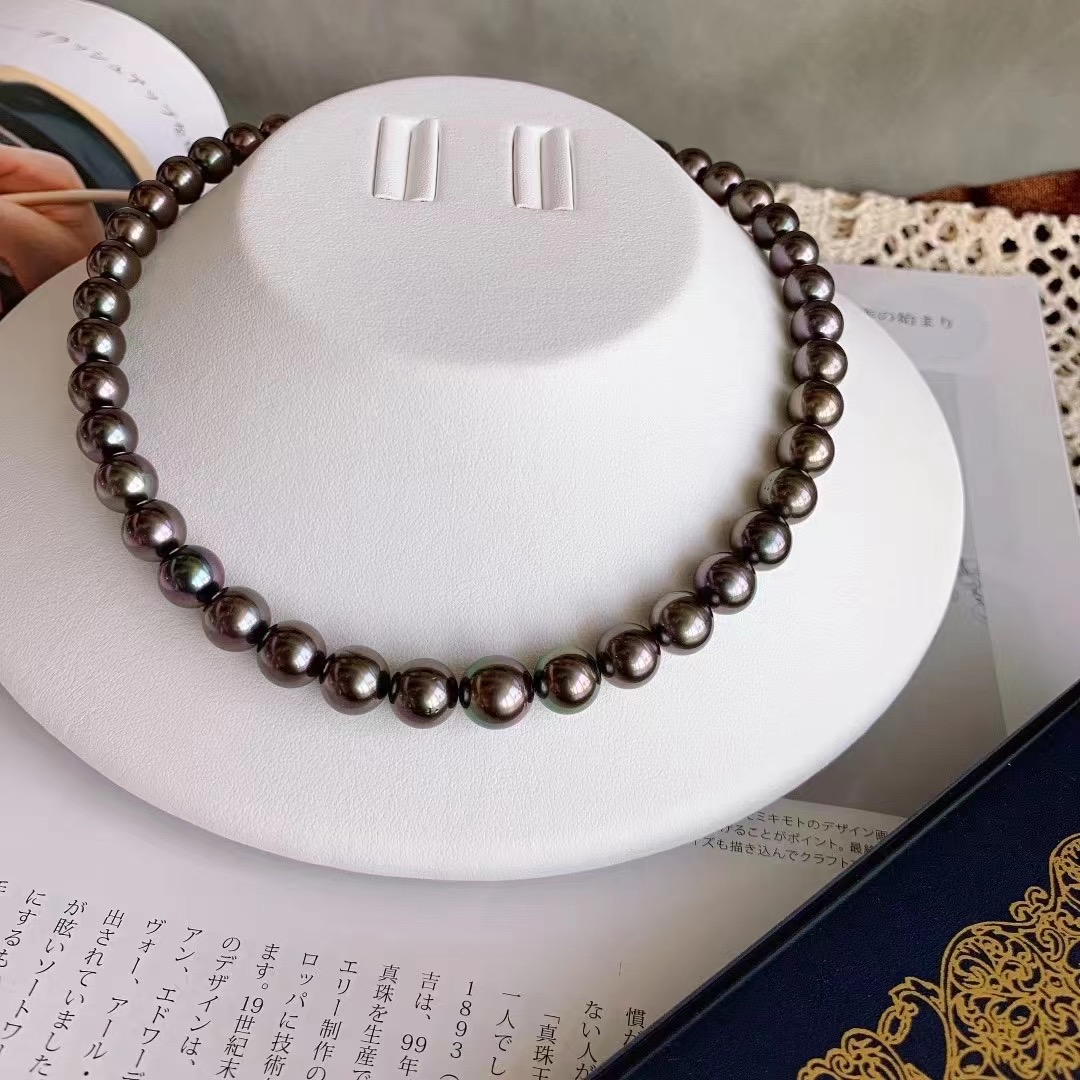
- Immensely. Tahitian pearls in peacock, aubergine, and deep charcoal are surging. Golden south sea pearls in warm champagne tones pair beautifully with the yellow-gold settings dominating fine jewelry right now. Even dyed freshwater pearls—in navy, forest green, and muted terracotta—are appearing in designer collections. Color is the next frontier of pearl personalization.
The Closing Argument
If you arrived here seeking a binary answer to are pearls in style 2026, I hope I have given you something more useful: a framework for understanding why the question itself is a relic of a fashion era that treated jewelry as seasonal currency. Pearls in 2026 are not in style. They are above style. They have become a material language spoken by people who understand that the most interesting luxury is the kind that refuses to perform. A single baroque pearl on a simple chain does not ask for attention. It receives it anyway. This is the quiet confidence that contemporary pearl fashion delivers, and it costs far less than the industry once insisted it should.
Wear one pearl tomorrow. See what happens. Then you will know the answer, and you will not need anyone—not even me—to tell you.
— Elena Vance, Chief Creative Director, PearlsNation.com
Drafted in SOHO, NYC. January 2026.