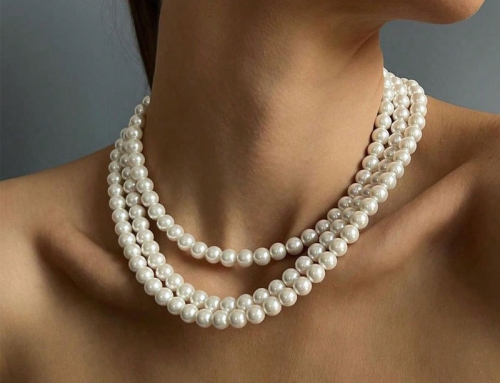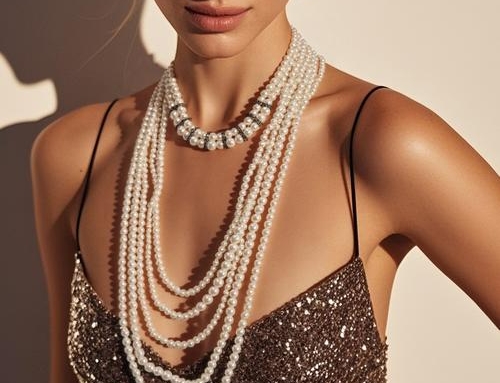
Why Perfect Matches Bleed Your Wallet Dry
Take a gradated strand of 8mm Akoya pearls—meticulously matched for lustre, shape, and orient. Break it into singles and sell each pearl as a solitaire stud. You’ll destroy 70% of the strand’s retail value. That’s not magic. It’s the luxury industry’s addiction to symmetry. Mismatched pearl earrings flip that script. They use the very pearls that graders reject for conventional uniformity: slightly off-round baroques, high-quality keshi, a 9.4mm South Sea drop with a faint growth ring. Those pearls often carry the same nacre thickness and lustre as their “perfect” siblings—but because they don’t match a neighbour, they get tossed into bulk lots sold to costume jewellery makers at pennies on the dollar. We source those pearls directly from coastal farms in French Polynesia and Northern Australia, pay a fair price per individual pearl instead of per matched pair, and pass the savings into your hands. No secret Swiss auction markups, no 10x multiplier tacked on by a Fifth Avenue boutique.
Global warming is quietly reshaping this entire calculus. Rising sea surface temperatures in the Arafura Sea and the Tuamotu Archipelago slow the metabolic rate of Pinctada maxima and Pinctada margaritifera. Research from James Cook University documents that for every 1°C above the 28°C optimum, nacre deposition drops roughly 0.15mm over a typical 18‑month culture cycle. The result: pristine, perfectly round 12mm pearls with a full 2.2mm nacre are becoming rarer and more expensive. Mismatched earrings don’t demand flawlessness. They thrive on the unique thumbprint that a stressed oyster leaves behind—a hammered texture on a baroque Tahitian, a subtle smoky gradient across a freshwater tissue‑nucleated pearl, an asymmetric drop stud that curves just enough to catch the light differently from its partner. When you wear a mismatched pair, you invest in the real biology of the shell, not a marketing illusion.
Materials You Can Actually Verify
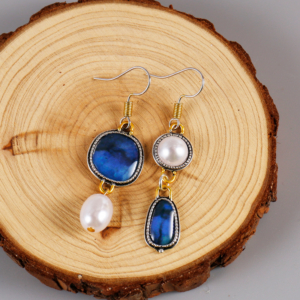 Before you scroll past “Sterling silver” and assume it’s fine, let’s get cold. A well‑constructed pair of mismatched pearl earrings starts with the metal. We use 925 sterling silver with a 0.5‑micron rhodium flash for stud posts or 18K yellow gold alloyed to 750 fineness, drawn into a 0.8mm wire for enough tensile strength to hold a 10mm pearl without bending. Cheaper imitations often swap in a 20‑gauge copper core with a thin plate; over a humid summer, green oxidation leaches onto your skin and stains the pearl’s drill hole. Check the post with a magnet. Silver 925 is non‑magnetic; plated brass will pull weakly.
For drop styles—especially asymmetric pearl drop studs where a larger pearl hangs from a delicate chain or a silk‑wrapped wire—the thread matters as much as the pearl. I knot every dangle with 0.45mm silk thread sourced from a small workshop in Japan, treated with a light beeswax coating. That diameter sits tight inside a 0.7mm drill hole and allows the pearl to spin slightly when you move, reducing stress on the metal finding. If you see polyester thread or no knot between the pearl and the gold‑filled jump ring, the earring will saw through its own silk within six months.
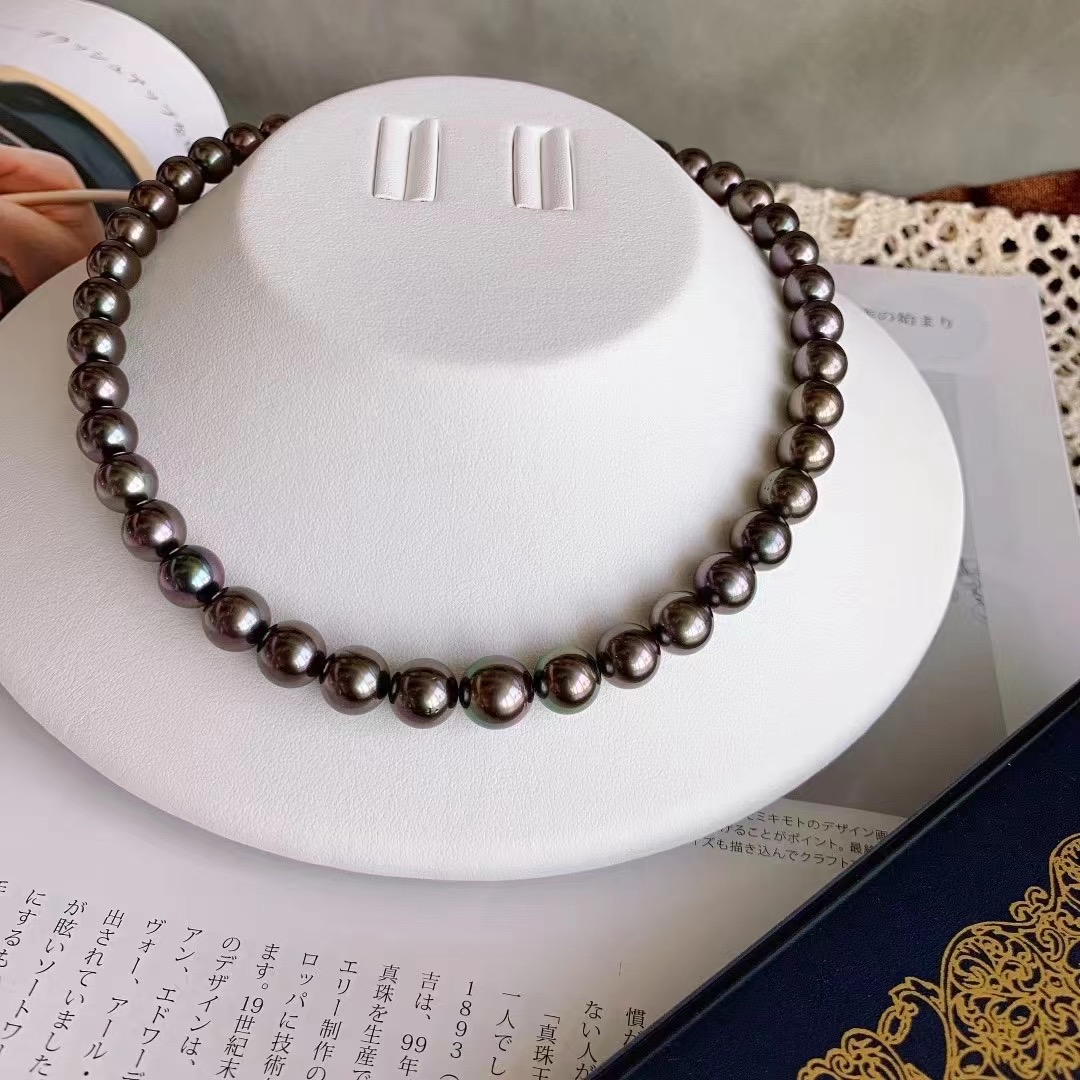
Now for the pearls themselves. A popular mismatched combination is a 10.5‑11mm Pinctada maxima gold‑lipped drop paired with a 6.5‑7mm Pinctada margaritifera peacock keshi. The South Sea pearl carries a nacre thickness of 1.8mm to 2.3mm, enough to reflect a satiny, almost metallic glow. The Tahitian keshi, born without a bead nucleus, is 100% nacre—usually 0.9mm to 1.2mm thick because keshi form late in the oyster’s life cycle when deposition slows. Neither pearl should feel plastic‑smooth; rub them lightly against your front tooth. Real nacre grits like fine sandpaper. Imitation glass or resin glides friction‑free. Direct‑trade fair‑trade certification, such as the Fair Trade Pearl Standard audited by Ecocert, guarantees the farm pays living wages, limits dredging, and records the exact lagoon coordinates of each harvest. If a seller claims “ethically sourced” but can’t show you a certificate number linked to a specific atoll, they’re likely buying from a middleman who blends Chinese freshwater with Vietnamese Akoya and slaps on a markup.
Asymmetric Pearl Drop Studs: Building the Pair
The Intentional Mismatch Formula
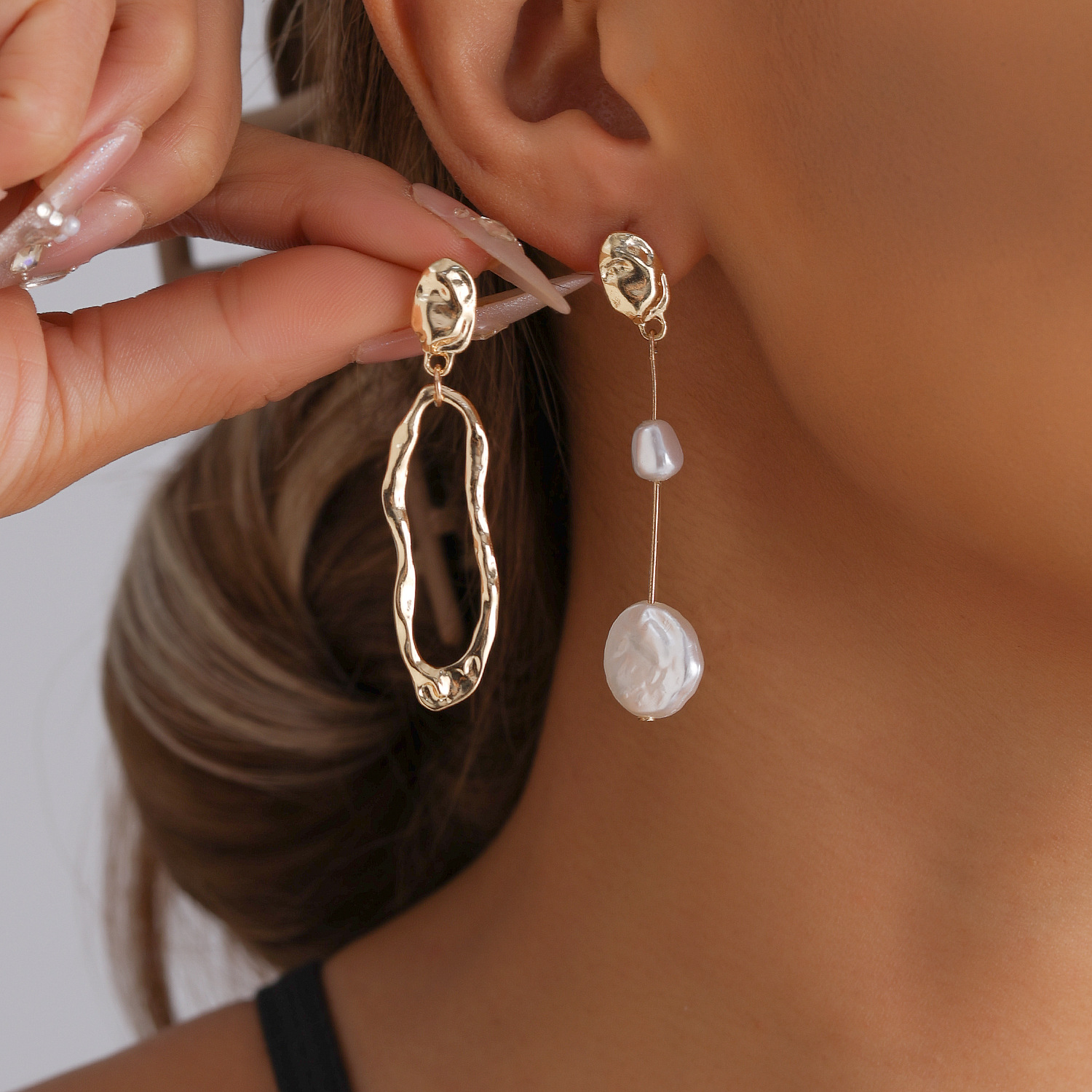
Most styling guides tell you to “balance” mismatched earrings. That’s weak advice. Balance implies equal weight, equal size, equal visual pull. A true asymmetric pair spits on balance and builds tension instead. Start with a unified metal finish—brushed satin 18K gold, for example—then create disruption through the pearls. On the left ear, thread a 9.5‑10mm white South Sea semi‑round onto a fixed post with a discreet tension clutch. On the right, hang a 7mm dark Tahitian baroque from a 22‑gauge gold ear wire that drops 40mm below the lobe. The number contrast (one near the lobe, one dangling) and the colour contrast (buttery cream vs. charcoal with aubergine overtones) produce a deliberate clash that reads as architectural, not accidental. This is what fashion editors will call trendy mismatched earrings 2026, but the idea is older than the term—think of Suzanne Belperron mixing gemstones and shapes in the 1930s.
Modern pearl earring styles that follow this formula don’t need to scream. A single 12mm Pinctada maxima drop on a short 12‑mm chain attached to a stud, paired with an empty stud post on the other ear, becomes a structural statement. The void on one lobe draws the eye to the weighted side, similar to how a well‑cut asymmetric neckline frames the collarbone. If you’re experimenting with smaller freshwater pearls (6‑7mm, tissue‑nucleated, 0.45‑0.8mm nacre), try an earring duo where one side clusters three graduated keshi on a 25‑mm hoop while the other side stays bare except for a single 5mm rice pearl stud. The empty lobe acts as negative space, making the cluster feel curated rather than messy.
Authentic Mismatched Pearl Earrings Styling Secrets
Solve the “Leftover Lobe” Problem
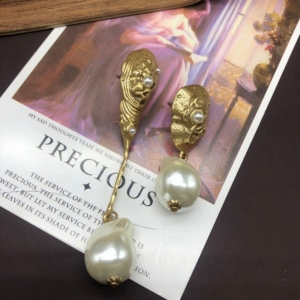 Many ears aren’t symmetrical—one piercing sits higher, one lobe hangs slightly thicker. A perfectly matched pair can make that natural asymmetry obvious because the pearls sit at different heights relative to the jawline. Mismatched earrings turn the flaw into a feature. If your right piercing is 1.5mm lower, choose a longer drop for that side: a fishhook dangle with a 35‑mm drop that ends at the same visual point as a 20‑mm drop on the higher side. The overall silhouette aligns, but the earrings themselves differ in length and volume. Keep hair swept to the same side as the longer drop, or pin it back tightly so both earrings are fully visible. No hiding the mismatch behind a curtain of hair; that kills the entire aesthetic.
A common failure is when mismatched earrings look like a mistake because the lobe’s negative space isn’t anchored. If you wear a robust 10mm stud on one ear and a thin hook with a delicate 5mm pearl on the other, the light earring can appear lost. Add a weighty element to the lighter side—a chunky 18K gold chain ear thread, a second micro‑pearl above the main one, or a small faceted metal bead directly against the lobe. This grounds the ear and signals intentionality. The idea isn’t to match weights, but to create a deliberate asymmetry where both ears have enough substance to hold their own in the composition.
Climate Stress, Nacre, and the Real Cost of Durability
Ocean acidification isn’t just a coral problem. It directly weakens the aragonite platelets that pearls are made from. A study from the University of Western Australia exposed Pinctada maxima to pH levels projected for 2050 (7.8) and found a 34% reduction in nacre yield over six months. This means a pearl that once took two years to develop a tough 2.0mm skin may now reach harvest with only 1.3mm. Thin nacre is a disaster for earrings that bump against phone screens, shoulder straps, or collar bones. Mismatched pearl earrings made from direct‑trade stockpiles often include older inventory—pearls grown before the worst heat spikes—where nacre thickness remains above 1.8mm. That’s the kind of material integrity you can’t fake. When you buy a pair from a company that lists the nacre thickness for each pearl individually (not just an average grade), you’re buying a time capsule of healthier ocean conditions.
Direct coastal trade also shortens the chain of custody. A mismatched pair I assembled last month started with a seventh‑generation pearl farmer in the Fiji Islands. He harvested a 11.3mm chocolate Tahitian keshi with a natural drill hole from a boring snail—an imperfection that would have disqualified it from a top‑tier matched strand. We bought it for $42 and paired it with a 9.2mm white South Sea button from a farm in Broome, Western Australia, purchased for $38. After fabrication, a 14‑karat gold post, and a fair markup, the earrings retail at $190—a fraction of the $600–$900 a luxury house would charge for comparable pearls with a brand stamp. That transparency stings the old‑guard industry, and I’m fine with that.
Care That Doesn’t Require a Jewelry Scientist
Pearls rank 2.5–4.5 on the Mohs scale. Your stainless steel sink is around 5.5. This means you can literally scratch a pearl by laying it face down on a counter. Store mismatched earrings in a microfibre‑lined box with individual compartments—never toss them into a communal jewellery dish where a diamond rubbing against the nacre reduces it to dust. After wearing, wipe each pearl with a clean, damp cotton cloth to remove sweat and skin oils, then let the earrings air‑dry for 30 minutes before putting them away. Silk threads, especially the 0.45mm ones, absorb moisture and stretch if stored damp. A stretched thread causes the pearl to ride up the post or dangle slackly, which looks sloppy and increases the chance of the knot slipping inside the drill hole.
If your mismatched pearl earrings include a Sterling 925 component, tarnish will eventually appear—rhodium plating wears off after 12–18 months of daily wear. A gentle polish with a Sunshine cloth restores the silver without harming the pearl, but tape off the pearl with artist’s low‑tack masking tape first. Never use liquid dips; the ammonia in most jewellery cleaners dissolves the conchiolin protein that holds nacre layers together, leaving you with a chalky, peeling mess. For gold findings, a soft bristle brush and warm soapy water suffice, but keep the pearl dry. It’s not rocket science. It’s just treating natural calcium carbonate with the respect it deserves.
I got mismatched pearl earrings and one has only 0.8mm nacre. Is that too thin to survive daily wear?
0.8mm nacre isn’t inherently fragile, but it demands caution. Freshwater tissue‑nucleated pearls often fall in the 0.45–0.8mm range. At 0.8mm, the pearl can withstand normal contact—brushing against a cotton collar, occasional bumping—but a hard knock against a metal doorframe can microfracture the surface. Avoid wearing these earriers during workouts or while sleeping. If the seller didn’t disclose nacre thickness, you’re gambling. Genuine direct‑trade farms often grade and list nacre thickness per individual pearl; a missing measurement usually means the pearl wasn’t cultured long enough. Check for a dull, chalky spot near the drill hole—that’s a sign the bead nucleus may already be visible through thin coating.
My asymmetric drop stud tilts forward, and the pearl swings against my neck. Is the earring defective?
Not necessarily defective, but poorly engineered. A drop pearl that dangles more than 15mm from the lobe needs a counterweight or a properly sized friction back to keep the stud flush. If the post is only 0.6mm thick (common in mass‑produced earrings), the weight of a 10mm pearl will lever the stud forward. Ask the jeweller to install a large silicone comfort disc behind the lobe to widen the contact area. Also, check that the pearl’s drill hole is centred; an off‑centre hole can cause rotational torque. If the earring uses a hinged lever‑back or a fishhook, the curve of the wire must follow the natural contour of your piercing—a straight wire will always tip a heavy drop.
I wore my mismatched pearl earrings in the shower once, and now the lustre is gone. What ruined them?
Water, soap residue, and steam accelerate nacre degradation. Pearls consist of aragonite crystals bound by conchiolin, a protein that swells when wet and can trap dissolved minerals from hard water. Shampoos and body washes contain surfactants that strip the pearl’s natural oils. Once the surface becomes microscopically rough, it diffuses light and looks dull. You might recover some shine by gently buffing with a soft, dry microfiber cloth, but if the damage goes deep, the only fix is to re‑polish the pearl—a destructive process that removes outer nacre layers. This is why we engrave a tiny warning on our care cards: no showers, no perfume spritz directly on the pearl.
I want to buy mismatched pearl earrings that are actually fair‑trade. How do I verify the supply chain?
Look for a public certificate number linked to a specific farm or lagoon, not a blanket “ethically sourced” badge. Fair‑trade pearl certification, such as from the Fair Trade Pearl Association or Ecocert’s Fair Trade standard, requires annual audits on labour conditions, environmental impact, and traceability. Ask the seller for the farm’s GPS coordinates and the harvest date. Direct coastal traders like us provide a digital tag with each pair: scan the QR code and you’ll see the oyster species (Pinctada margaritifera, for instance), nacre thickness, and the farmer’s name. If the trail stops at an anonymous wholesale lot in Kobe, it’s likely a blend of unverified pearls.