The Mineralogy of the Tahitian Pearl
A Tahitian pearl is a calcium carbonate secretion—specifically aragonite platelets bound by conchiolin—produced by the black-lipped oyster Pinctada Margaritifera. This is not a gemstone mined from rock. It is biogenic, layered nacre accumulating over a 2–4 year cultivation cycle in the atolls of French Polynesia. The output is a spherical structure ranging from 8.0 mm to 16.0 mm, though anything above 14.0 mm carries a significant price premium due to nucleus rejection rates in the oyster.
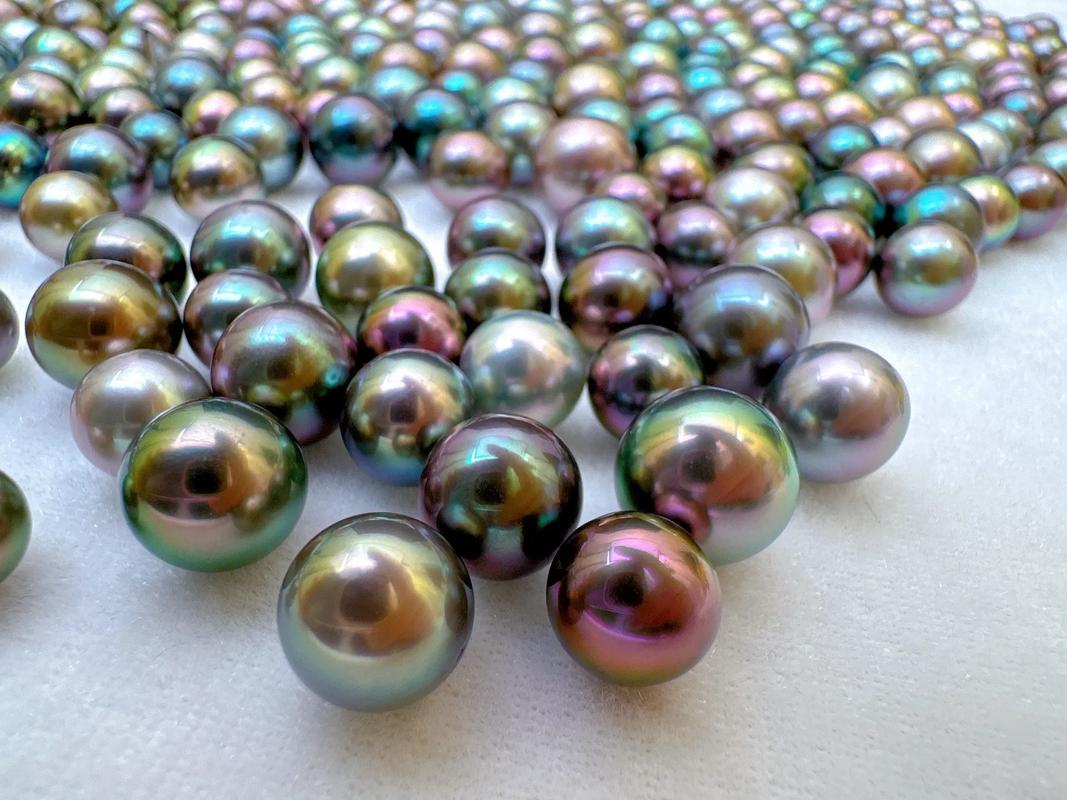
The color is not a dye. It is optical interference. The nacre thickness sits at 0.8 mm to 2.5 mm, depending on cultivation duration. Light penetrates these translucent aragonite layers, diffracts, and reflects back shades you catalog as Black, Green, Peacock, Aubergine, or Silver. The “Peacock” overtone—a simultaneous green-pink iridescence—requires a specific nacre thickness threshold: 1.2 mm minimum to produce that spectral split.
Dark Black Pearl Jewelry: Grading Beyond the Surface
When I select dark black pearl jewelry for PearlsNation inventory, I reject 60% of harvest lots. The grading starts with body color saturation. You want a solid chromatic foundation, not a weak gray washout. A genuine black body with a Green overtone reads darker than an Aubergine body with a Silver overtone. Under D65 laboratory lighting (daylight simulation), I measure luster using a reflectometer setup. A pearl with a luster rating of “AAA” returns a sharp, unbroken reflection of a fluorescent tube. A “B” rating returns a smeared, soft-focus blob.
Surface purity is critical. French Polynesian export regulations ban Tahitian pearls with more than 40% surface blemishing visible to the naked eye. For modern collections, I set the bar at 95% clean on the visible face. A 10.0 mm drop earring with a single dull pit near the drill hole is acceptable if invisible in the mount. The same flaw on the face of an 11.0 mm ring—rejected. Porosity in the nacre, visible as chalky patches, signals arrested secretion. Do not buy these. They will absorb skin oils and dull within eighteen months.
Peacock Pearl Necklace Tahitian: The Structural Formula
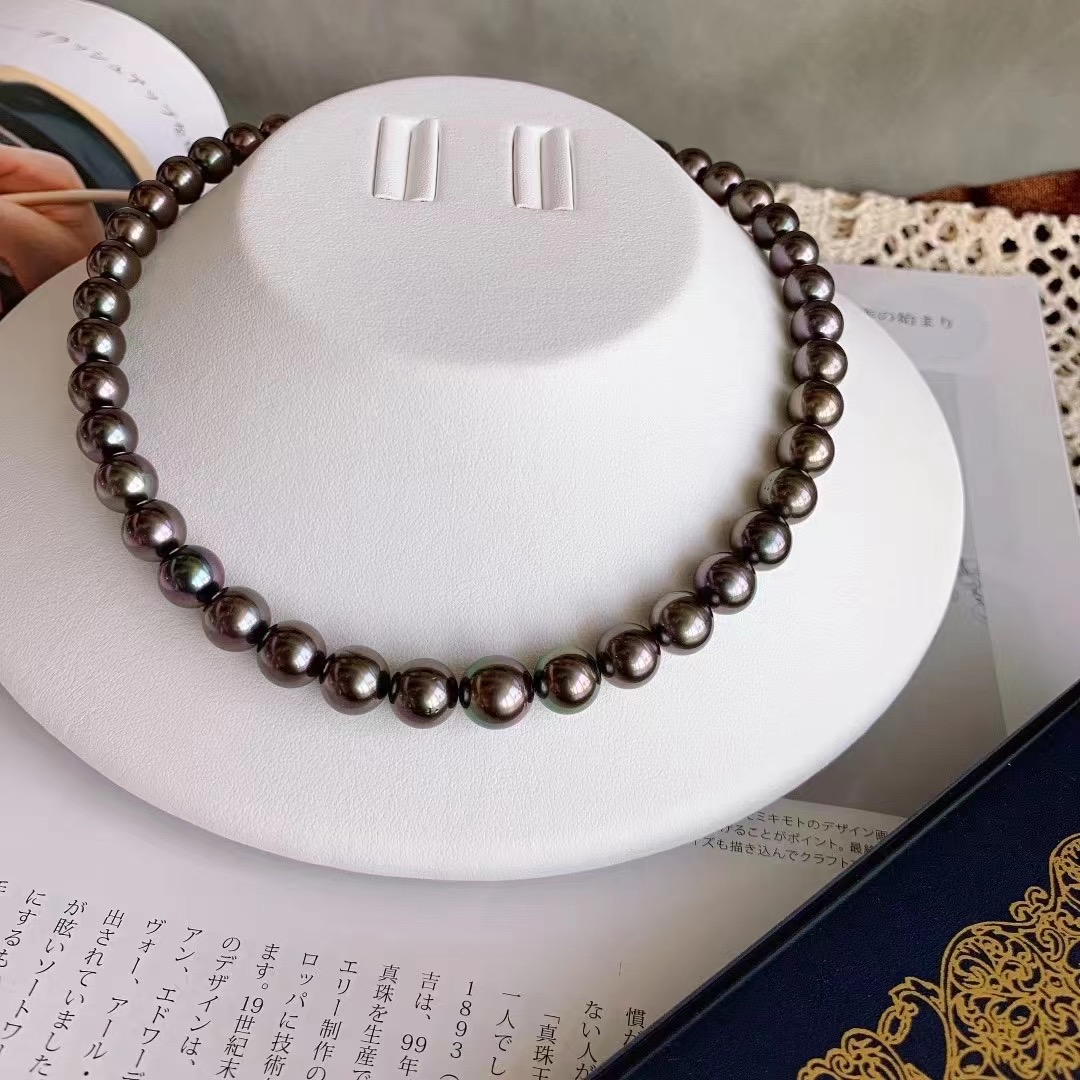
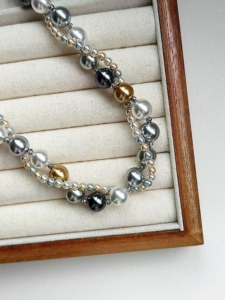
A peacock pearl necklace tahitian strand has structural demands that a soft-hued Akoya necklace does not. The dark body color absorbs light, so surface perfection is non-negotiable. I build these strands on 0.45 mm double-knotted silk. Each knot bears a 1.0–2.0 N tension rating per tied segment to prevent pearl-on-pearl abrasion. The nacre on a Tahitian pearl is softer than you think—Mohs hardness 2.5 to 3.0. A loose strand without knots will grind a flat spot into neighboring pearls within a year of daily wear.
For an 18-inch strand, I use a graduated layout: 9.0 mm near the clasp, swelling to 12.0 mm at the center. This distribution lowers the total strand weight while preserving visual mass. A uniform 12.0 mm strand weighs approximately 85 grams—too heavy for a delicate neck. I pair these necklaces with a 14K white gold orbit clasp, not a filigree fishhook. A heavy strand shears a thin wire clasp clean open.
| Parameter | Peacock Strand (18-inch) | Black/Green Strand (20-inch) |
|---|---|---|
| Number of Pearls | 39 | 43 |
| Diameter Range (mm) | 9.0 — 12.0 | 10.0 — 14.0 |
| Total Weight (g) | 68.3 | 104.7 |
| Nacre Thickness (mm) | 1.4 avg | 1.8 avg |
| Clasp Alloy | 14K White Gold, 5.2g | 18K Yellow Gold, 7.1g |
| Surface Rating | AAA, 97% clean face | AA+, 92% clean face |
| Luster | Sharp, single line | Sharp, slight edge blur |
Exotic Tahitian Pearl Studs: Weight and Wear Mechanics
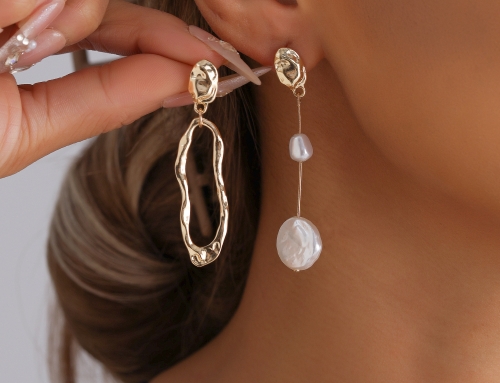
An exotic tahitian pearl stud fails if the earring is too heavy for the lobe. I weigh every pearl before setting. A 10.0 mm Tahitian pearl stud, half-drilled with a 0.7 mm post hole, weighs roughly 1.8 grams. Mounted on a 14K gold post with a medium friction back, the total weight climbs to 2.4 grams per ear. The human earlobe can support 3.0 grams before it begins to sag downward, pulling the stud face forward. That tilt kills the visual impact. The light strikes the pearl at an oblique angle instead of dead-center, washing out the orient.
I set studs in reduced-weight mounts: hollow-back 18K gold cups with a 0.3 mm wall thickness. The post requires a 20-gauge diameter (0.8 mm). Thinner 22-gauge wire bends under the pearl’s cantilevered mass. I also use a larger 7.0 mm friction back with internal silicone grip rings. Standard 5.0 mm backs slip off 14-gauge posts under the rhythmic vibration of walking.
The overtone selection for studs differs from necklaces. A neckline positions pearls at the collarbone, where light hits head-on. Studs sit under the earlobe in shadow. For this position, I select pearls with a Silver overtone to maximize contrast against the skin shadow. A deep Peacock overtone stud will render as a flat dark spot in photographs unless lit by a dedicated key light at 45 degrees.
Choosing Tahitian Pearls for Modern Collections
Choosing Tahitian pearls for modern collections means rejecting romance and applying calipers, scales, and loupes. I follow a four-point data check on every lot.
1. Size-to-Weight Ratio. A 12.0 mm pearl weighing 3.0 grams has a solid nucleus and thick nacre. The same diameter weighing 2.4 grams signals a thin, hollow-feeling nacre or a lightweight composite nucleus. I accept 2.8 grams minimum for a 12.0 mm pearl.
2. Drill Hole Integrity. The drill hole must be dead-center, 0.7 mm for strands, 0.8 mm for wire setups. A chipped exit hole means the pearl cannot take knotting tension without spalling. I reject pearls with exit-chip diameters exceeding 1.2 mm.
3. UV Fluorescence Response. Under 365 nm longwave UV, a natural-color Tahitian pearl fluoresces a faint reddish-brown. A dyed black freshwater pearl—often sold fraudulently—glows an inert greenish-gray. This is a 5-second screening test.
4. Matching Across Multiple Pearls. A strand is one organism of color. I lay all pearls on a neutral-gray sorting tray under calibrated 5000K lamps. Body color must match within a half-tone. A single green-heavy pearl in a silver-blue strand will pull the eye like a dead pixel on a screen. I break lots to achieve this tolerance, discarding 15% of matched harvest.
The Physics of Layering Tahitian Pearl Lengths
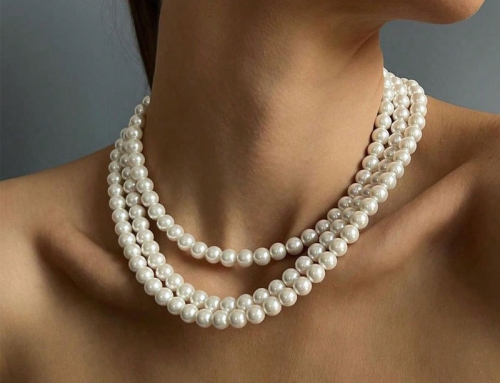
Layering requires precise length jumps. An 18-inch strand with 12.0 mm pearls sits flat against the suprasternal notch. Add a 24-inch rope of 10.0 mm pearls, and you get a 6-inch drop that clears the clavicle. The weight of the longer strand must be lower: a 24-inch rope at 90 grams with 10.0 mm pearls distributes better than a 110-gram monster of 12.0 mm pearls that pulls the clasp forward to the front of your neck. I counterweight longer ropes with a heavier clasp assembly—a 7.0-gram 18K gold slide clasp—so the closure stays at the back of the neck where it belongs.
Avoid mixing metallic-luster Tahitian pearls with high-shine white South Sea strands. The white reflectance overwhelms the dark pearl’s orient. If you must mix, use a white strand of 8.0 mm Pinctada Maxima pearls with a satin finish, paired with a 10.0 mm Tahitian strand in Peacock. The size differential and the matte white surface let the dark pearls dominate the visual field instead of fighting for luminance.
Metal Mounts: 925 Silver vs. 18K Gold for Tahitian Pearls
The mounting alloy shifts the entire tone of the pearl. A bright Sterling 925 silver mount throws white light into the pearl’s dark body, washing out the overtone. I use oxidized 925 silver—chemically darkened with a potassium sulfide patina—to reduce reflectance. The pearl’s natural iridescence pops against a dead-black metal background.
For gold mounts, 18K yellow gold adds warmth that flatters an Aubergine or Cherry overtone pearl. 14K white gold paired with a Green overtone pearl reads as clinical and sharp. Rose gold is risky. The pink alloy clashes with the green component in Peacock pearls, creating a discordant red-green color adjacency that the eye processes as visually noisy. I use rose gold mounts only with pure Silver-body Tahitian pearls that carry no green overtone.
Storage Specifications
Tahitian pearls lose moisture. The nacre contains 2–4% water by weight, bound within the conchiolin protein matrix. A dry environment below 40% relative humidity will cause micro-fissures. I ship all Tahitian pearl jewelry with a humidity-control packet in the box. Store strands flat in a silk-lined case, never hanging. The constant tension of hanging stretches the 0.45 mm silk thread, introducing gaps between pearls. A 1.0 mm gap is a failure. Restring immediately.
My Tahitian pearl necklace has a dull, chalky patch on one pearl. Did I get a defective product, or did I ruin it?
That chalky patch is nacre porosity—arrested aragonite secretion during cultivation. The oyster stopped laying down smooth nacre in that spot, leaving a microscopically rough surface that scatters light instead of reflecting it. This is a grading defect that should have been caught before sale. If the patch appeared after weeks of wear, you accelerated the breakdown. The porous nacre absorbed acidity—perspiration with a pH of 4.5 to 5.5 will etch calcium carbonate. There is no repair. The damage penetrates the nacre structure. Return it if the porosity was present at purchase and undisclosed. If you wore it against bare skin during exercise for six months, you chemically etched the pearl yourself.
I bought 10.0 mm Peacock Tahitian studs, and they look black—not green-pink—in every photo. Is the color a scam?
The color is real, but your lighting is failing the pearl. A Peacock overtone requires a light source with a high Color Rendering Index (CRI) of 90+ and a color temperature around 5000K. Your smartphone’s LED flash sits at 6500K with a CRI of 70—it cannot render the green-pink spectral split. The pearl’s orient also depends on incident angle. A stud photographed head-on under flat ceiling LEDs will read as a black circle because the light is hitting the nacre at 90 degrees, bypassing the iridescence layers. Try this: photograph the stud in shaded daylight—10 AM, next to a window, no direct sun. Tilt your head 30 degrees. The green flash appears. No trick, just optical physics.