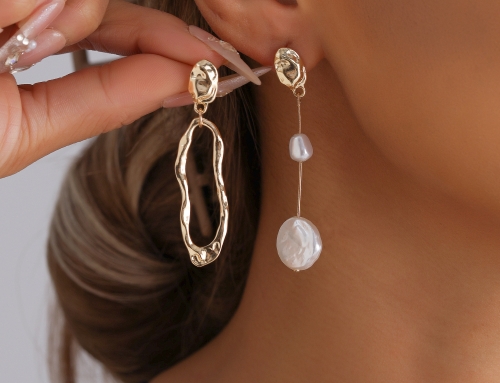
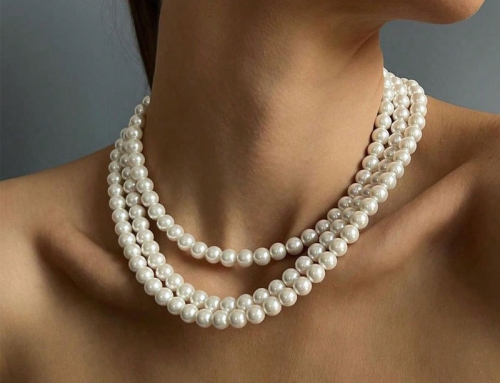
If you are looking for jewellery with that certain something, pearls are a must. Whether it is pearl earrings, enchanting pearl necklaces or beautiful pearl rings, pearl jewellery is stylish, classy, decorative and of almost fairytale elegance. The ancient Persians called them ‘the tears of the gods’. The soft and deep lustre, the interplay of “lustre” (shine) and “orient” (refraction of light) still fascinates us today.
Discover our range of pearls here.
How are pearls made and what is a pearl?
Pearls are a natural product. Whether natural or cultured, pearls only grow in oysters. These are found in both fresh and salt water. Molluscs deposit mother-of-pearl on the inside of their shells to make them harder. This increases protection against predators.
“How are pearls formed? This question can be answered. Why they occur in the ‘wild’ is a question that science has not yet been able to answer conclusively.
Sometimes, however, a small mother-of-pearl formation develops inside the oyster: the pearl. No one really knows why this happens.
So why does a shell form a pearl?
It was thought that a foreign body inside the oyster, such as a grain of sand, stimulated the oyster to produce extra mother-of-pearl.
However, scientists now believe that the faulty production of mother-of-pearl is due to a disease. This has not been proven. The fact remains that a natural pearl is created under unexplained circumstances.
What is mother-of-pearl?
The myth of the natural origin of pearls is what makes them so appealing. The pearl is organic, not a “cold” gemstone. It is made up of the same components as mother-of-pearl, which is also made into jewellery.
The components of nacre are:
Aragonite: calcium carbonate
Conchine: a substance related to horn
When a oyster tends to pearl, a more or less round nacre structure is formed, layer by layer. This process can take up to seven years.
The length of time it takes to form pearls, and the fact that shells have to be found, means that the price of natural pearls is exorbitant. They can easily reach tens of thousands of dollars.
What are cultured pearls?
“How are pearls made? This question has been answered. The process can even be started artificially. Pearls can be cultured. Therefore, the question of “why” can be left out.
Because of the extremely high prices, around 99 percent of pearls traded today are so-called “cultured pearls”.
Various methods are used to insert foreign bodies (nuclei) into suitable oysters to ensure pearl formation. The smaller the nucleus used, the thicker the nacre layer and the higher the value.
Simple pearls with very large nuclei are available for just a few dollars.
What determines the value of a pearl?
Size, shape and colour determine the value of a pearl. In addition, the lustre and refraction of light (“luster” and “orientation”) resulting from the interaction of the two mother-of-pearl components, aragonite and conchine, are included in the valuation.
Luster: The surface lustre and sheen of the pearl, the brilliance of the surface, is a major criterion.
Orientation: The refraction of light in the many almost transparent layers of mother-of-pearl is a quality feature of pearls.
Size: The diameter of a pearl also determines its value. The thickness of the mother-of-pearl layer is determined by the length of time the pearl is cultured and maintained. However, a small pearl with a beautiful lustre should be preferred to a large pearl that does not shimmer as beautifully.
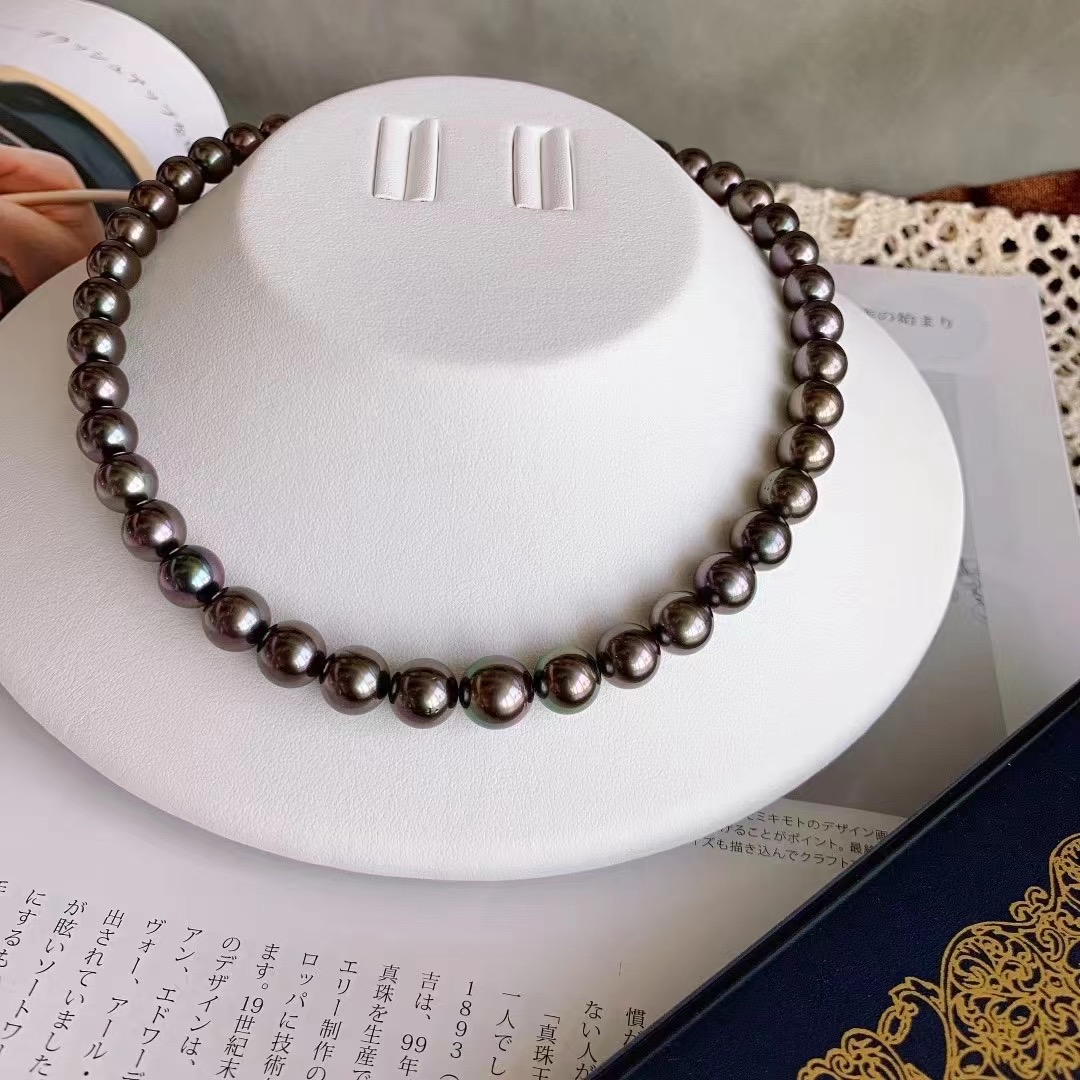
Colour: There are almost no limits to colour in nature. In general, the whiter the pearl, the higher the value. However, gold coloured South Sea pearls and dark brown Tahitian pearls also fetch high prices.
Shape: Because pearls are natural products, every pearl looks slightly different. The rounder the shape, the more expensive it is. However, pearls in unusual shapes are also very popular (baroque pearls).
What types of pearls are there?
Pearls come in a surprisingly wide range of colours. It ranges from brilliant white to elegant silver, playful pink, stylish gold or dignified grey to mysterious black. To simplify matters, the following trade names have been established for pearls:
Seawater pearl varieties
Tahitian pearls from the pearl oyster (Pinctada margaritifera), for example, are characterised by their silver, grey or black colour.
Mabe cultured pearls are characterised by their semicircular shape. A semicircular nucleus is used for cultivation.
South Sea pearls are usually white to golden in colour.
Akoya pearls are cultured pearls from the Sea of Japan.