Reading Your Skin’s Undertone Before You Buy a Single Pearl
I’ve spent 18 years at the bench, and I’ll tell you straight: most women walk into a jewelry store carrying a misconception. They think pearl selection starts with the pearl. It doesn’t. It starts with the wrist, the neck, the earlobe—the skin the pearl will rest against. Get the undertone wrong, and a $3,000 South Sea strand looks flat and disconnected from the wearer. Get it right, and a simple $180 freshwater set radiates. The pearl color skin tone match isn’t marketing fluff. It’s physics. Light reflects off nacre layers, bounces against your skin’s melanin and vascular undertones, and your eye registers either harmony or dissonance in under half a second.
Grab your forearm. Flip it over. Look at the veins visible through the skin at your wrist. Blue or purple veins? You’ve got cool undertones. Greenish veins? Warm undertones. Can’t tell, or see a mix? You’re neutral—and lucky, because nearly every pearl type will sit well on you. This 30-second vein check is more reliable than the old “gold vs. silver jewelry” test, which gets muddied by personal preference. I’ve watched customers with obviously cool undertones insist they’re warm because they like yellow gold. Preference and physiology aren’t the same thing. Trust the veins.
Another bench-level observation: skin with cool undertones tends to burn before tanning. Warm undertones tan more readily. If you flush pink after a brisk walk in cold air, that’s a cool-undertone signal. If your skin takes on a golden-brown cast in summer, you’re warm. These aren’t abstract concepts. They’re the biological canvas your pearls will sit on for decades.
Warm vs Cool Skin Tone Pearls: The Metal Frame Matters as Much as the Gem
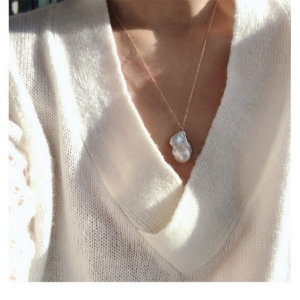 The pearl itself isn’t the whole story. The finding—the clasp, the post, the metal frame—sits directly on your skin. A mismatched metal can sabotage an otherwise correct pearl choice. For warm undertones, yellow gold (14K or 18K) and rose gold create continuity. The metal warms the pearl’s appearance. A cream or golden South Sea pearl (Pinctada Maxima, typically 9–16mm diameter) set in 18K yellow gold on warm skin looks intentional and grounded. That same pearl in white gold or platinum on warm skin? It floats awkwardly, disconnected. The cool metal fights the warm skin, and the eye registers the conflict before it registers the pearl.
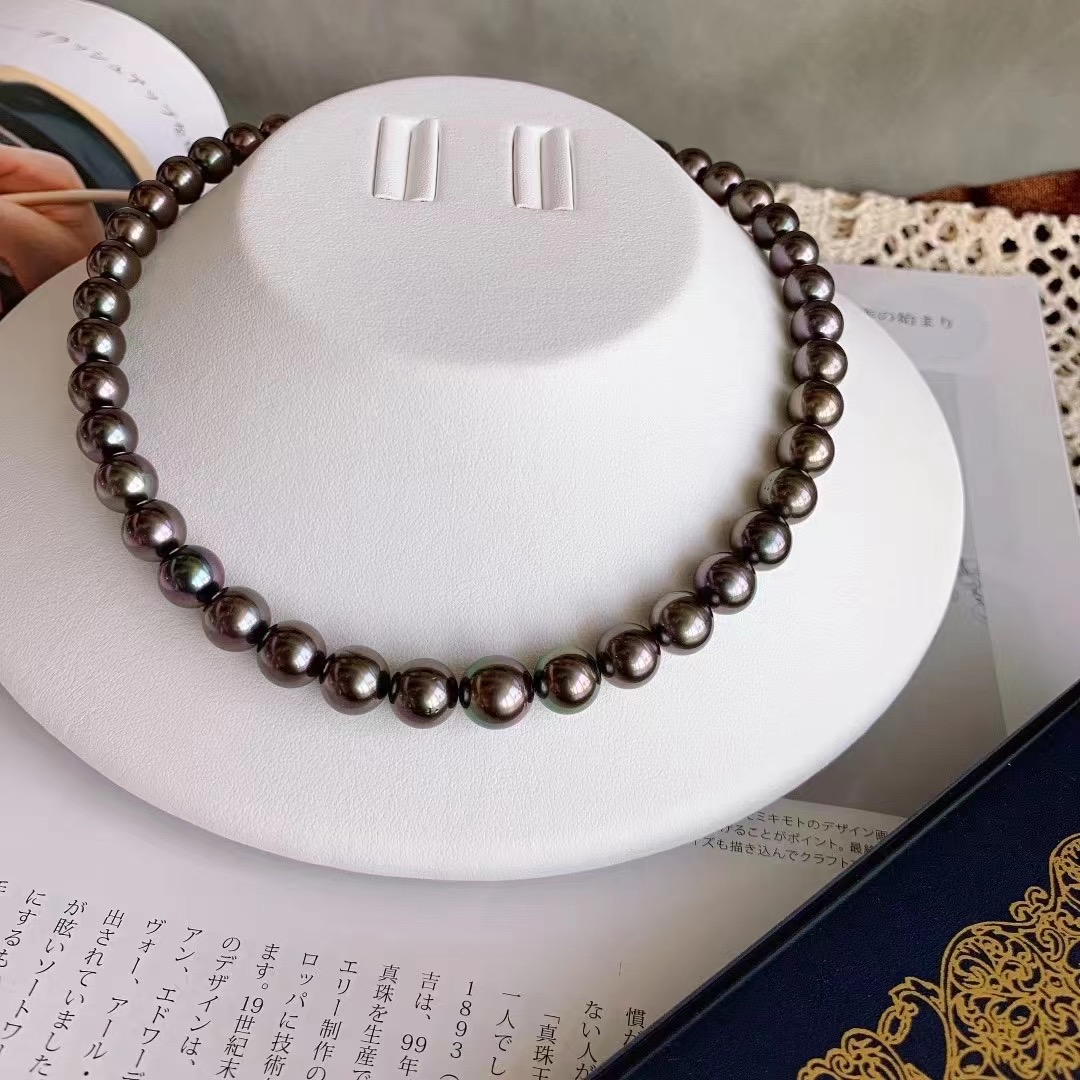
Cool undertones thrive with white gold, platinum, and Sterling 925 silver settings. The blue-white cast of a high-luster Akoya pearl (Pinctada Fucata, typically 6–9mm) in a white gold setting on cool skin creates a crisp, clean line. Silver-blue Tahitian pearls (Pinctada Margaritifera, 8–14mm) with their grey body color and peacock overtones hit hardest against cool skin framed in white metal. I’ve set enough Tahitian strands on 0.45mm silk thread with white gold clasps to know this pairing works at the optical level.
Neutral undertones get latitude. You can wear yellow gold or white gold. Rose gold flattering pearls is a topic I’ll address directly below, because rose gold occupies an interesting middle ground—warm but with pink undertones that cool-toned women can sometimes borrow.
Rose Gold Flattering Pearls: The Bridge Metal That Surprises
Rose gold is alloyed with copper—typically 20-gauge copper content in the mix gives it that pink blush. Here’s what matters at the bench: that copper warmth sits between yellow gold’s brassiness and white gold’s starkness. For women with neutral undertones, rose gold settings on freshwater pearls with a lavender or pink body color (typically 7–8mm rounds, tissue-nucleated, from Hyriopsis Cumingii mussels) create a monochromatic blush effect that yellow gold can’t replicate. The copper in the alloy picks up the faint pink in the pearl’s nacre.
For warm undertones, rose gold and peach-colored freshwater pearls or light golden South Sea pearls work. The metal doesn’t compete. It extends the warmth. I’ve built enough rose gold earring posts to tell you the metal’s weight matters too—a 14K rose gold post at 0.8g per earring with a 9mm pearl has a different drape on the earlobe than a heavier 18K setting. The pearl sits closer to the skin with lighter settings, which intensifies the color interaction.
A word on rose gold and cool undertones: proceed with caution. Some women with cool undertones and very fair skin find rose gold makes them look flushed or ruddy. Others, particularly those with cool undertones and darker complexions, wear rose gold brilliantly because the contrast reads as intentional. The pearl itself becomes the mediator—a white South Sea pearl with silver overtones in a rose gold setting on cool dark skin creates three distinct color notes that the eye processes as deliberate design.
Pearl Types and Skin Tone Pairings at the Bench Level
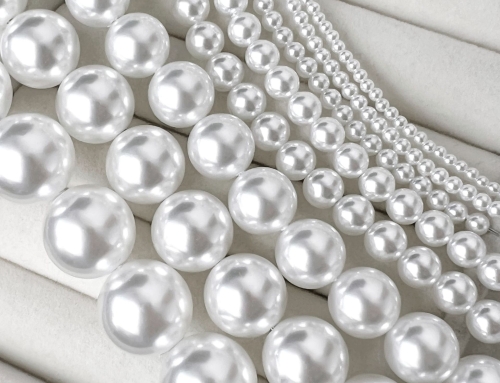
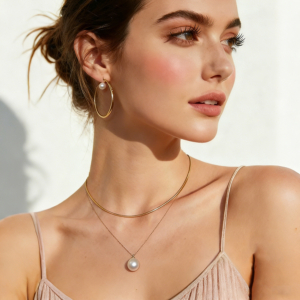 I’m going to lay out specific pairings based on years of observation at the workbench, not based on what moves inventory fastest. Freshwater pearls (typically 5–11mm, from Hyriopsis Cumingii, tissue-nucleated or bead-nucleated) offer the widest natural color range—white, cream, pink, lavender, peach. Akoya pearls (6–9mm, Pinctada Fucata, bead-nucleated) run white to cream with rose, silver, or cream overtones. Tahitian pearls (8–14mm, Pinctada Margaritifera) span grey, black, green, aubergine, and peacock. South Sea pearls (9–16mm, Pinctada Maxima) range from white to deep gold.
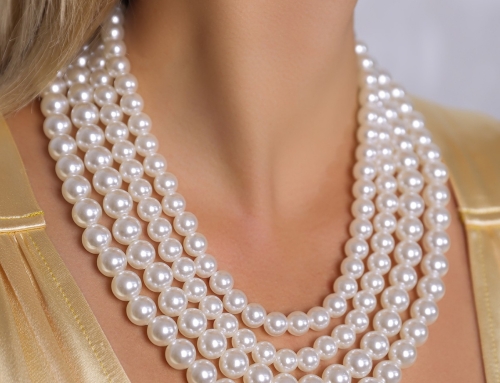
Warm undertones pair naturally with: cream and golden South Sea, peach freshwater, champagne Akoya, and Tahitian pearls with strong green or aubergine overtones. The yellow and golden nacre pigments share a wavelength range with warm skin’s melanin distribution.
Cool undertones pair naturally with: white South Sea with silver overtones, white Akoya with rose overtones, silver-blue Tahitian, and lavender freshwater. The blue and pink nacre undertones align with the vascular undertones visible through cool skin.
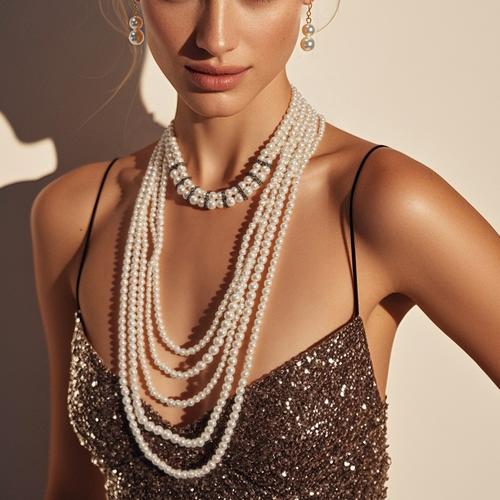
Neutral undertones: You’ve got the full deck. White, cream, gold, grey, lavender, peach—they’ll all read well. Your selection can be driven entirely by wardrobe and occasion rather than physiological constraint.
Exact Values: Pearl Specifications Against Metal and Skin Types
I’m including a table of exact physical measurements because numbers matter. When you’re spending real money on pearls—and direct coastal trade prices still run $800–$4,000 for a quality strand—you should know the weight, the metal composition, the silk gauge, and the species. Transparency is the only defense against the standard 600% luxury markup.
| Pearl Type | Species | Diameter (mm) | Strand Weight (g) | Silk Thread (mm) | Setting Metal | Best Skin Undertone |
|---|---|---|---|---|---|---|
| Freshwater White | Hyriopsis Cumingii | 7.0–8.0 | 38–42 | 0.45 | Sterling 925 | Cool / Neutral |
| Freshwater Peach | Hyriopsis Cumingii | 7.5–8.5 | 40–44 | 0.45 | 14K Rose Gold | Warm |
| Freshwater Lavender | Hyriopsis Cumingii | 7.0–8.0 | 37–41 | 0.45 | Sterling 925 / White Gold | Cool |
| Akoya White (Rose Overtone) | Pinctada Fucata | 7.0–7.5 | 35–39 | 0.45 | 18K White Gold | Cool |
| Akoya Cream (Silver Overtone) | Pinctada Fucata | 7.5–8.0 | 36–40 | 0.45 | 18K Yellow Gold | Warm / Neutral |
| Tahitian Peacock | Pinctada Margaritifera | 9.0–11.0 | 52–62 | 0.50 | 18K White Gold | Cool |
| Tahitian Aubergine | Pinctada Margaritifera | 9.0–11.0 | 52–62 | 0.50 | 18K Yellow Gold | Warm |
| South Sea White (Silver) | Pinctada Maxima | 10.0–13.0 | 58–72 | 0.50 | Platinum / 18K White Gold | Cool |
| South Sea Golden | Pinctada Maxima | 10.0–13.0 | 58–72 | 0.50 | 18K Yellow Gold | Warm |
These weights assume a standard 18-inch strand with approximately 45–50 pearls, individually knotted. The silk thread gauge matters. At 0.45mm for smaller pearls (7–8mm range), the knots sit proportionally between each pearl. At 0.50mm for larger pearls (9mm+), the thread carries the additional weight without stretching over time. I’ve seen strand failures from jewelers using 0.35mm thread on 10mm pearls. Don’t accept that. Ask what gauge silk was used. A reputable bench jeweler will tell you without hesitation.
Yellow Gold vs White Gold Pearls: The Chemistry of the Clasp
Yellow gold (14K is 58.3% pure gold alloyed with silver and copper; 18K is 75% pure gold) carries warmth. When a yellow gold clasp sits against warm-toned skin, the metal reflects golden light upward into the pearl. This subtle bounce illumination affects how the pearl reads from three feet away—which is the distance most people will see it. White gold (same purity ratios, but alloyed with palladium, nickel, or zinc, and typically rhodium-plated) reflects cooler light. On cool-toned skin, that cool light sharpens the pearl’s luster.
Here’s what most retailers won’t tell you: rhodium plating on white gold wears off. After 18–24 months of daily wear, the plating thins and the slightly yellowish natural white gold alloy begins to show through. For cool-toned women, this shift can alter how the pearl reads against the skin. Re-plating costs $40–$80 and most customers don’t budget for it. If you’re cool-toned and committing to white gold, consider platinum instead. It’s heavier (a platinum clasp runs about 2.8g vs. 2.0g for 18K white gold on a standard strand), costs more upfront, but never needs re-plating and never shifts color.
For warm-toned women, yellow gold doesn’t have this maintenance issue. The alloy is stable. The color is inherent, not plated. An 18K yellow gold clasp at 2.0–2.2g will look the same in ten years as it does on day one, assuming you don’t drop it on concrete.
Modern Trends of Pearl Color Skin Tone Match for Women: What’s Actually Shifting
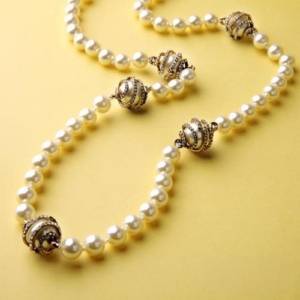 Five years ago, the pearl color skin tone match conversation at retail counters was rigid. Warm skin got cream and gold. Cool skin got white and silver. That orthodoxy is dissolving, and I’m glad. What’s replacing it is more interesting: intentional contrast. I’m seeing cool-toned women deliberately choose golden South Sea pearls in white gold settings. The contrast between the warm pearl and cool skin reads as editorial, deliberate, fashion-forward. The key is owning the contrast rather than having it look accidental. A single 12mm golden South Sea pearl on a 16-inch Sterling 925 chain against cool pale skin—that’s a statement. A full strand of 10mm golden pearls on cool skin in yellow gold? That’s a mistake that reads as a hand-me-down that doesn’t fit.
Another modern shift: mixed-metal pearl builds. I’ve fabricated pieces combining 18K yellow gold links with white gold pearl settings on the same strand. The mixed metal frames the pearls ambiguously, which means the strand adapts across skin tones. A woman with neutral undertones can wear it year-round as her skin shifts between summer warmth and winter coolness. The metals do the mediating.
Tahitian pearls with mixed overtones—peacock with green and pink flashes—are being set in rose gold more frequently. Five years ago, Tahitian in rose gold was rare. Now it’s gaining traction, particularly among women with darker warm skin tones. The rose gold pulls the pink in the peacock overtone forward, while the darker warm skin absorbs the green flash. The result is a pearl that appears to shift color as the wearer moves.
Global Warming, Shellfish Mortality, and Why Pearl Sourcing Transparency Matters Now
I won’t write a pearl guide without addressing what’s happening in the water. Pinctada Maxima oysters in the South Pacific are experiencing mortality rates that have risen sharply since 2016. Ocean acidification and temperature spikes stress the mollusks. A 2°C sustained increase in water temperature during the 18–24 month culturing period causes higher nucleus rejection rates and thinner nacre deposition. Thinner nacre means lower luster, shorter lifespan, and pearls that won’t hold up to decades of wear.
Fair-trade certified sourcing isn’t a badge. It’s a baseline. The coastal communities in French Polynesia, Indonesia, and the Philippines that cultivate these oysters depend on predictable harvests. When water temperatures spike unpredictably—and they have, with increasing frequency since 2019—entire culturing cycles are lost. Farmers who operate on thin margins absorb those losses. Direct coastal trade, where buyers purchase at harvest from farming cooperatives rather than through three layers of distributors, keeps more money in those communities and gives you a better pearl at a lower price because the 600% markup chain is severed.
At PearlsNation, every strand comes with documentation of origin—the specific atoll or bay, the harvest season, the culturing method. A 10mm South Sea pearl from a Pinctada Maxima oyster raised in the waters off Northern Australia has different nacre characteristics than one from Indonesia. The Australian pearl, grown in cooler, more stable waters, typically deposits nacre more slowly but with tighter crystalline structure. That translates to higher luster and durability. You should know which you’re buying.
Bench Recommendation: Build Your Pearl Wardrobe From the Skin Outward
Here’s my direct advice after nearly two decades setting, stringing, and repairing pearls. Start with one strand that matches your undertone exactly. If you’re cool, go with white Akoya or white South Sea in white gold or platinum—7.5–8mm for daily wear, 9–10mm if you want presence. If you’re warm, cream or light golden South Sea in yellow gold, same size range. Get that one piece right, with 0.45mm or 0.50mm silk thread depending on pearl diameter, properly knotted between each pearl. That’s your anchor. From there, branch into contrast pieces—Tahitian studs for cool tones, lavender freshwater for warm tones in rose gold settings. The anchor piece always works. The contrast pieces are experiments. Most women I work with end up with three to five pieces that rotate based on season, outfit, and mood. They don’t need 20. They need the right ones, built honestly, priced transparently, and matched to the skin they’ll live against for the next 30 years. That’s not a luxury. That’s just good bench work.