The Baroque Pearl Renaissance: Why Imperfection Is Everything
Let’s address the obvious question first: why now? Why are fashion insiders, gallery owners, and style disruptors abandoning perfectly spherical pearls for these wonderfully asymmetrical forms? The answer lives in the cultural shift toward authenticity. A perfectly round pearl represents control—nature forced into compliance. A baroque pearl represents surrender—nature allowed to express itself fully. In an era where personal style has become the ultimate currency, wearing something intentionally imperfect signals confidence that no mass-produced accessory can replicate.
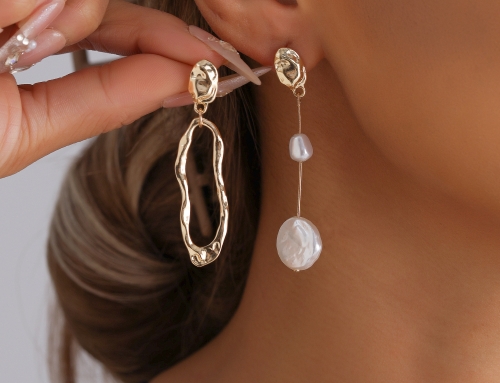
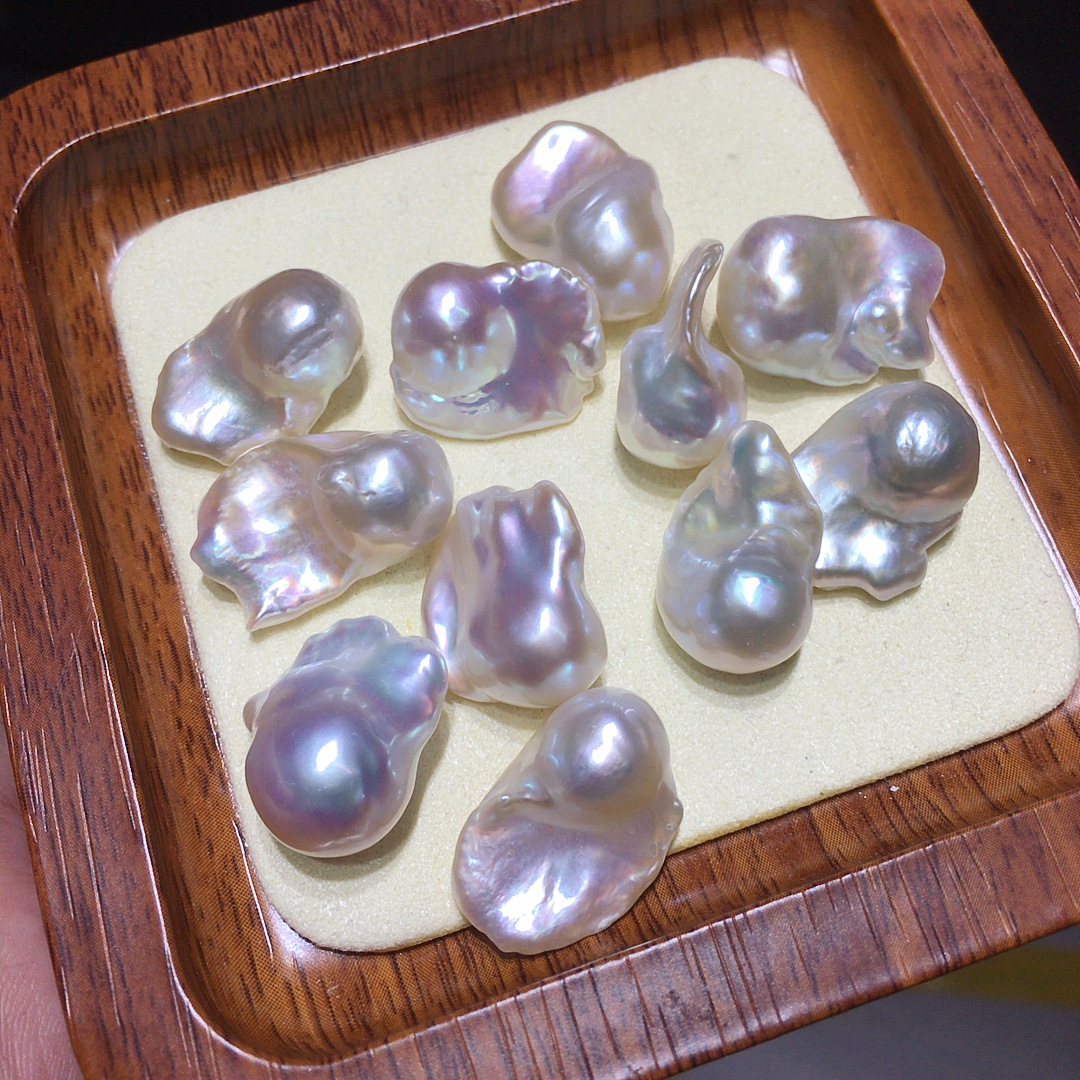
The sculptural quality of baroque pearls means no two are ever identical. Your necklace carries a geometry that belongs exclusively to you. The elongated drops, the bulbous curves, the way a single pearl might twist asymmetrically on its silk thread—these aren’t flaws. They’re architectural details that transform a strand of pearls into wearable art. When I’m curating collections for the studio, I look for pearls that hold tension in their shapes, pieces that feel almost kinetic, as if they might rearrange themselves the moment you look away.
What excites me most about the current baroque moment is how thoroughly it dismantles the old-guard associations. These aren’t your grandmother’s pearls—unless your grandmother was a radically chic conceptual artist who collected Isamu Noguchi sculptures and wore Rick Owens. The modern baroque pearl wearer understands that elegance and edge aren’t opposites. They’re collaborators.
Sculptural Pearl Jewelry: The New Architecture of Adornment
When I use the term sculptural pearl jewelry, I’m being precise, not poetic. Baroque pearls function the way a well-placed objet d’art functions in an interior—they anchor a composition, they draw the eye along unexpected trajectories, they introduce organic softness against hard geometries. A single dramatic baroque pendant on a leather cord can do what an entire gallery wall of framed prints attempts: it creates a focal point that feels both deliberate and effortless.
Think about the negative space around the pearl. The way a heavily textured, almost craggy baroque pearl interacts with a simple chain. The tension between the pearl’s baroque silhouette and the clean line of a collarbone. These are the details that separate someone who wears jewelry from someone who understands it. Sculptural pearl jewelry operates in three dimensions. It catches light differently as you move. It casts tiny, shifting shadows against your skin. It rewards the observer who pays attention.
In the studio, we’ve been experimenting with mixed-media compositions—baroque pearls interspersed with raw brass spacers, with matte onyx beads, with unexpected pops of neon enamel. The goal isn’t to tame the pearl’s wildness but to amplify it through contrast. A pearl that looks almost like a tiny Henry Moore sculpture deserves a setting that honors its artistic integrity, not one that tries to force it into conventional prettiness.
Organic Shaped Pearl Jewelry: Nature’s Anti-Algorithm
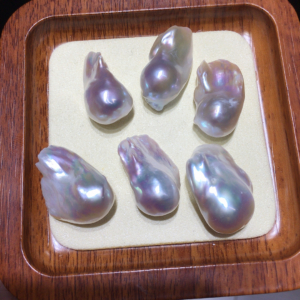
There’s something deeply satisfying about organic shaped pearl jewelry in a world increasingly dominated by algorithmic perfection. Every baroque pearl carries the record of its creation—layers of nacre deposited unevenly, responding to microscopic irritants, building something extraordinary out of disruption. When I hold a particularly sculptural specimen in my palm, I can trace the ridges and valleys with my thumb and feel connected to a process that took years, that happened in saltwater far from any human intervention.
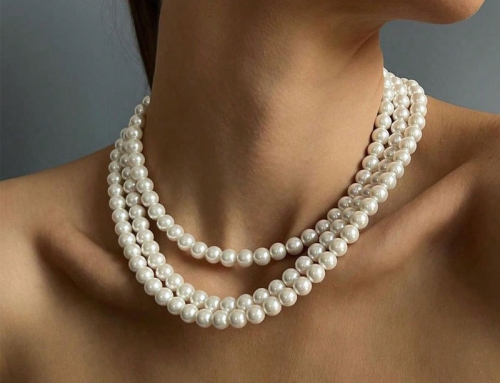
This organic quality translates directly into how these pieces wear. A strand of baroque pearls moves differently than a strand of perfect rounds. It has more texture against the skin, more presence. The pearls shift and settle in ways that feel alive. For the wearer, this creates a more intimate relationship with the jewelry—you’re constantly aware of it, constantly rediscovering it. That’s the opposite of commodity jewelry that you put on and immediately forget.
The rise of organic shaped pearl jewelry also reflects a broader cultural exhaustion with homogeneity. We’ve spent years scrolling through feeds of identical aesthetics, identical products, identical faces. Baroque pearls resist that flattening. Each one is a small act of defiance against the algorithm, a reminder that the most beautiful things in the world are the ones that can’t be perfectly replicated or filtered into sameness.
How to Style Baroque Pearls: The Un-Rules
Every styling guide you’ve ever read about pearls has probably told you they’re for special occasions, for twin sets, for playing it safe. Burn that guide. Here’s what actually works when you’re learning how to style baroque pearls in the real world, where clothes have architecture and personal style has teeth.
Rule One: Let Asymmetric Outerwear Do the Heavy Lifting
Baroque pearls thrive against asymmetry. A sharply cut blazer with an exaggerated single lapel. A wrap coat that folds dramatically across the body. A deconstructed trench with raw-edged seams. The irregular silhouette of the pearls echoes the irregular silhouette of the garment, creating visual harmony that feels intentional rather than studied. I pair a chunky baroque strand with a jacket that has one side longer than the other—the pearls fill the negative space on the shorter side, balancing the composition. This is styling as sculpture. You’re composing a three-dimensional image every time you get dressed.
The key is confidence in the clash. Don’t try to make the pearls match the outfit’s formality level. That’s the old way of thinking. Instead, let the tension between the pearl’s organic shape and the garment’s architectural lines create the interest. A sharply angular shoulder pad next to a softly undulating baroque pearl—that’s a conversation worth having.
Rule Two: Distressed Denim Is Your Canvas
The fastest way to make baroque pearls feel current and grounded is to pair them with denim that has seen some life. Raw hems, frayed knees, vintage washes with authentic wear patterns. The contrast between the pearl’s luminosity and denim’s utilitarian texture is electric. A simple white t-shirt, high-waisted distressed jeans, and a single dramatic baroque pearl on a fine chain—that’s a complete look. No further accessories needed. The pearl does all the work.
I often style our studio pieces for shoots with Japanese selvedge denim that’s been worn in over years. The deep indigo against the pearl’s iridescence creates a color story that feels both grounded and elevated. Add a pair of clean white sneakers or a sharply pointed boot, and you’ve achieved that elusive balance between effort and nonchalance that defines genuine style.
For evening, swap the t-shirt for a silk camisole but keep the distressed denim. Add a substantial baroque pearl strand—something with heft and presence, pearls that demand to be noticed. The juxtaposition of silk, destroyed denim, and sculptural pearls communicates that you understand fashion well enough to break its conventions intentionally.
Rule Three: Gender-Neutral Aesthetics Demand Bold Pearls
The most exciting development in pearl styling is the complete dissolution of gendered expectations. Baroque pearls, with their sculptural, almost brutalist qualities, lend themselves beautifully to gender-neutral styling. A crisp, oversized button-down worn open over a baroque pearl strand. A workwear jacket in heavyweight cotton canvas with pearls visible at the neck. A minimalist black turtleneck and tailored trousers with a single long baroque pearl drop. These are looks that transcend category.
What makes baroque pearls particularly suited to gender-neutral aesthetics is their departure from the dainty. These aren’t delicate, fussy gems. They have weight and presence. They can hold their own against heavier fabrics, against the structure of menswear-inspired tailoring, against the utilitarian edge of workwear references. A baroque pearl doesn’t soften a masculine silhouette—it complicates it in the most interesting way.
In the studio, we’re seeing more clients across the gender spectrum gravitating toward single dramatic baroque pendants on longer chains, toward strands with deliberately irregular spacing, toward pieces that feel more like collected artifacts than traditional jewelry. The pearl becomes a punctuation mark in an outfit rather than a declaration of femininity. That shift is profound and permanent.
Style Comparison: Baroque Pearls Across Aesthetics
| Aesthetic Direction | Pearl Profile | Key Pairing | Vibe |
|---|---|---|---|
| Brutalist Luxe | Large, heavily textured baroque with sharp contours | Oversized concrete-gray wool coat, black leather gloves | Architectural severity meets organic form |
| Deconstructed Prep | Mixed baroque strand with irregular spacing | Distressed selvedge denim, white oxford with collar askew | Heritage codes deliberately fractured |
| Gallery Opening Minimalist | Single elongated baroque drop on fine chain | Black merino turtleneck, wide-leg trousers, architectural flats | Quiet confidence, zero explanation required |
| Gender-Fluid Evening | Chunky baroque strand, 18-20 inches | Oversized silk charmeuse button-down, tailored wool trousers | Elegance liberated from expectation |
| Streetwear Inflected | Baroque pearl choker with metal hardware elements | Boxy hoodie in heavyweight cotton, cargo pants, combat boots | Luxury codes remixed with utility |
Authentic Baroque Pearl Necklaces: What the Market Isn’t Telling You
Let’s have a candid conversation about authentic baroque pearl necklaces. The market is awash in imitations, in pearls that have been artificially shaped to look organic, in freshwater pearls passed off as their more valuable saltwater cousins. Knowing the difference matters—not just for value but for the integrity of what you’re wearing. An authentic baroque pearl forms its shape naturally. The irregularities are genuine, not manufactured. When you hold a true baroque pearl to the light, the luster moves across its uneven surface in a way that no artificial process can replicate.
At PearlsNation, we source directly from family-operated farms in the South Seas where cultivation practices prioritize the health of the oysters and the surrounding marine ecosystem. This direct-to-consumer model eliminates the traditional markup chain—the importer, the wholesaler, the boutique buyer—and passes those savings directly to you. A strand of authentic baroque South Sea pearls that might command four figures in a Madison Avenue boutique can be yours for a fraction of that, simply because we’ve stripped away the intermediaries who add cost without adding value.
Transparency isn’t just a marketing position for us. It’s the operational DNA of everything we do. When you purchase a baroque pearl necklace from our collection, you know exactly which farm it came from, the conditions under which it was cultivated, and the fair-trade wages paid to the artisans who hand-knotted each pearl on silk. That knowledge becomes part of the piece’s meaning. You’re not just wearing a beautiful object—you’re wearing a story of ethical creation.
Pearl Grading: What Actually Matters for Baroque Specimens
Traditional pearl grading systems were designed for round pearls. Apply them rigidly to baroque specimens, and you’ll miss the point entirely. For baroque pearls, I evaluate on four dimensions: luster (the quality and depth of light reflection), surface character (the texture and topography that make each pearl unique), orient (the subtle play of iridescent color beneath the surface), and silhouette (the overall shape and how it reads from a distance). A baroque pearl with exceptional luster and a fascinating silhouette will always outperform a round pearl with mediocre shine. Luster is non-negotiable. Everything else is character.
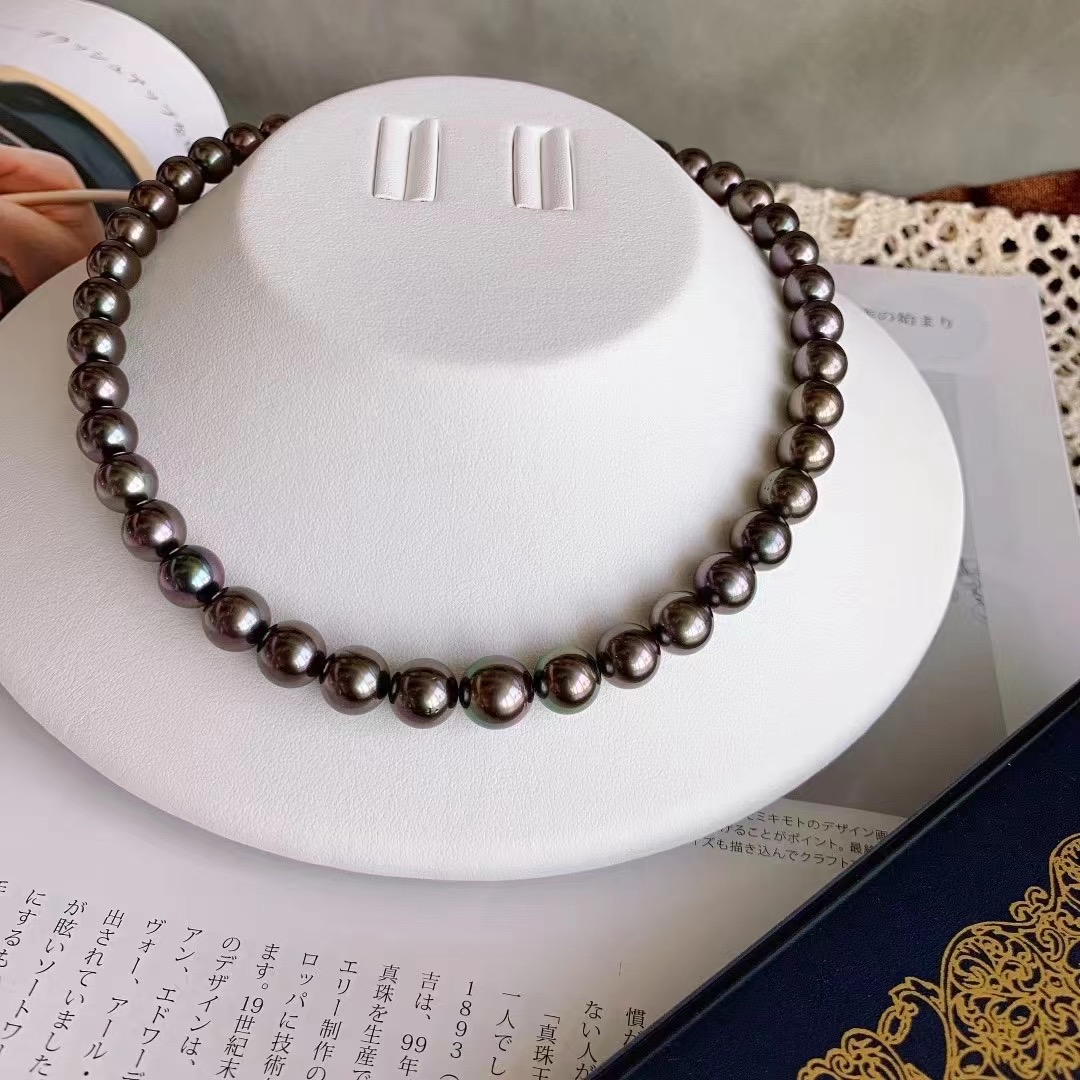
This grading philosophy informs our entire collection. We reject pearls that, regardless of shape, lack that deep, almost liquid luster that defines a truly exceptional specimen. A pearl should glow from within. It should look like it contains its own light source. This quality can’t be faked with coatings or treatments, and it’s the first thing I teach new team members to identify.
The Studio Perspective: Curating Your Baroque Pearl Wardrobe
After years of styling clients, photographing collections, and living with these extraordinary pieces, I’ve developed a framework for building a meaningful baroque pearl collection. Start with a single dramatic piece—a pendant, a short strand, something that speaks to you viscerally. Live with it. Learn how it interacts with your existing wardrobe. Notice which outfits it elevates, which combinations surprise you. Let that relationship inform your next acquisition.
Resist the urge to buy a “complete set” all at once. Baroque pearls reward slow collecting. Each piece should feel distinct, should serve a different purpose in your styling vocabulary. A chunky collar-length strand for day. A long rope of smaller baroque pearls that can be doubled or knotted. A single showstopping pendant for evening. These pieces will work together when you want them to, but they’ll also stand confidently alone.
The baroque pearl necklaces styling secrets that matter most aren’t secrets at all—they’re principles of attention and intention. Pay attention to proportion. A pearl’s size should relate deliberately to your frame, to the neckline it sits against, to the scale of your other accessories. Pay attention to occasion, but don’t be ruled by it. Baroque pearls at a morning coffee meeting, worn with a crisp shirt and no makeup, communicate something far more interesting than pearls reserved exclusively for evening galas.
What I want you to take from this guide isn’t a set of rules but a permission slip. Permission to wear your baroque pearls with a hoodie. Permission to mix them with industrial metals and utilitarian fabrics. Permission to treat them not as precious objects to be protected but as expressive tools to be deployed. The most stylish people I know don’t save their best jewelry for special occasions. They wear it to the grocery store, to the studio, on the subway. They let it become part of their daily visual language. That’s when baroque pearls stop being accessories and start being signatures.
Care That Honors the Pearl
Baroque pearls require more thoughtful care than their round counterparts precisely because of their irregular surfaces. Those beautiful ridges and valleys can trap residue, can be abraded by careless storage, can lose luster if exposed to the wrong chemistry. Here’s the routine I’ve developed over years of handling museum-quality specimens: after each wear, gently wipe each pearl with a soft, lint-free cloth—nothing treated, nothing abrasive. The natural oils from your skin can dull luster over time, and a quick wipe prevents buildup. Store your baroque pearls flat in a soft pouch, never hanging. The silk thread needs to rest without tension. Keep them away from direct sunlight, from perfume, from hairspray. Once a year, have the strand re-knotted by a professional. The knots between pearls prevent friction and protect against loss if the strand breaks—for baroque pearls with their varied surfaces, this protection is even more critical.
These aren’t onerous rituals. They’re small acts of stewardship that extend the life of something beautiful, that maintain the relationship between you and the object. Good jewelry care is ultimately about attention—the same quality that makes you choose baroque pearls in the first place.
Frequently Asked Questions
- Are baroque pearls less valuable than round pearls?
- Not inherently. While perfectly round pearls command high prices due to rarity, exceptional baroque pearls with outstanding luster and dramatic silhouettes can be equally valuable—and often more interesting. The valuation hierarchy is shifting as baroque aesthetics gain prominence. Luster and surface quality matter more than shape conformity.
- Can baroque pearls be worn daily?
- Absolutely, with mindful care. Baroque pearls are no more fragile than round pearls. The key is the after-wear wipe-down and proper storage. I wear my favorite baroque strand multiple times per week, often layered with a simple gold chain. Daily wear develops a relationship with the piece that occasional use never achieves.
- How do I authenticate a baroque pearl necklace?
- Look at the luster. Authentic nacre produces a deep, complex reflection that seems to come from within the pearl. Imitations look surface-level shiny. Examine the surface with magnification—real baroque pearls show natural growth patterns, not mold marks. Purchase from sellers who provide provenance information and stand behind their authentication with guarantees.
- What length is most versatile for a baroque pearl strand?
- An 18-inch strand sits at the collarbone and works with the widest range of necklines—crew necks, V-necks, open collars, everything short of a turtleneck. For layering, a 36-inch rope offers maximum flexibility: wear it long, doubled, or knotted. Start with the 18-inch, expand to the rope when you’re ready.
- Do baroque pearls work for minimalist aesthetics?
- Brilliantly. A single baroque pearl on a fine chain is the ultimate minimalist statement—it provides texture and interest without violating clean lines. The organic shape offers contrast against restrained silhouettes. Minimalism benefits from one unexpected element, and a baroque pearl delivers that perfectly.
- How does direct-to-consumer pricing work for baroque pearls?
- Traditional pearl retail involves multiple markups: importer to wholesaler, wholesaler to distributor, distributor to retailer. Each step adds 30-50%. By sourcing directly from farming communities and selling without intermediaries, DTC models eliminate those layers. The savings are real—often 40-60% below traditional retail for equivalent quality.
Baroque pearls are having their definitive moment, and this time, it’s not a trend—it’s a permanent reconfiguration of how we think about pearl jewelry. The sculptural, the organic, the asymmetrical have claimed their place alongside the classic and the conventional. Walk into any compelling space in this city—a gallery in Tribeca, a concept store in Williamsburg, a restaurant where the lighting is deliberately dim and the crowd is deliberately interesting—and you’ll see baroque pearls on people who understand that style is about conviction, not compliance. Be one of them. Wear the pearl that looks like it has a story. Because it does. And now, so do you.