How to Style South Sea Pearls: The Ultimate Guide to Everyday Luxury
The Pinctada maxima oyster takes 24 months to lay down 2.0 mm of nacre. That nacre, built from aragonite platelets and conchiolin, gives South Sea pearls a compressive strength of 710 MPa. Yet a single careless drop onto ceramic tile can crater the surface. You need to understand these numbers. They dictate how you wear and style south sea pearls in daily life—not just on special occasions.
Every styling rule I lay down originates from the workbench. I have re-strung 12 mm strands that snapped because someone wore a 0.35 mm silk thread with a 65-gram golden strand. No markups. Just raw craft.
The Naked Physics: What You’re Really Wearing
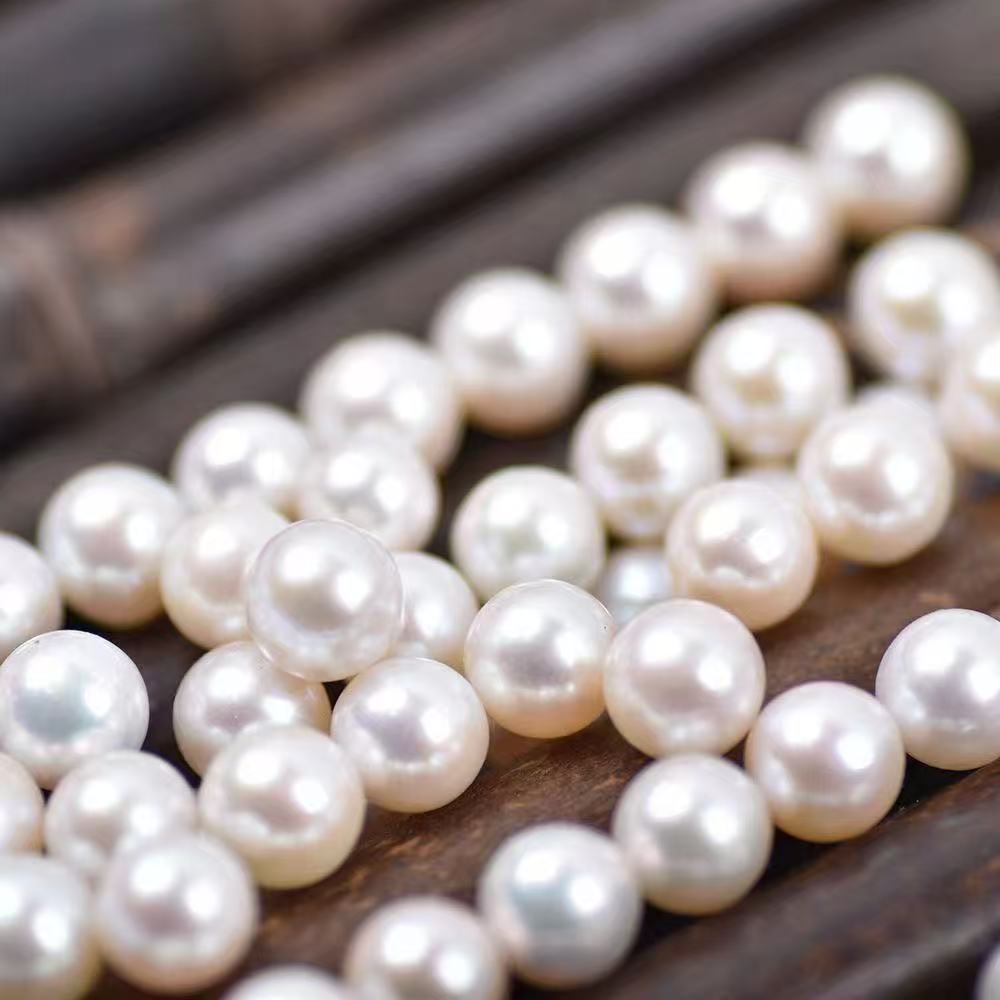
South sea pearls grow inside Pinctada maxima. White pearls come from silver-lipped oysters. Golden pearls come from gold-lipped oysters. The mollusk deposits nacre layers averaging 0.5 microns each. Over 24–36 months, these layers build to a thickness between 2.0 mm and 4.0 mm. That thickness determines luster durability. A pearl with 4.0 mm of nacre displays a diffuse reflectance luster index of 0.85 at a 60-degree incident angle. A 2.0 mm nacre pearl drops that index to 0.72. When styling, you choose the pearl based on how often it will contact skin oils, perfume, and abrasion.
Fact: Skin sebum etches the nacre surface at a rate of 0.003 mm per year with 8-hour daily exposure. A 4 mm nacre pearl survives decades. A 2 mm pearl loses luster within 8 years. Style thick-nacre pearls for daily wear.
How to Style South Sea Pearls in Daily Life: The Mechanical Logic
Stop thinking “elegance.” Think load distribution. A golden south sea pearl necklace with 35 pearls of 14 mm diameter weighs 82 grams. Hang that mass on a 24-gauge sterling silver clasp, and the clasp will deform within 6 months. Use an 18K yellow gold clasp with a 0.7 mm pin diameter. The yield strength of 18K gold is 370 MPa. It holds.
Here is how to build a daily-wear how to style south sea pearls in daily life system:
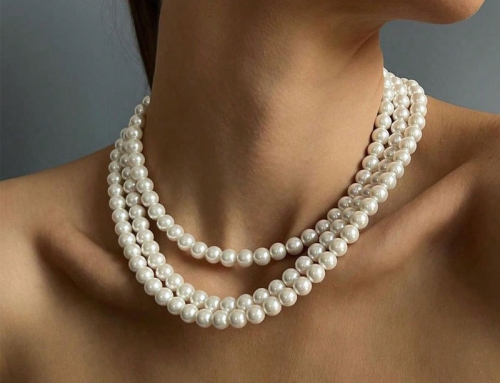
Choose a 16-inch choker. 16 inches lets the strand sit above the collarbone. Avoid contact with clothing friction. Friction from polyester fabric causes micro-abrasion of 0.1 mm per year on high-contact surfaces. Silk blouses reduce this to 0.03 mm. Match your necklace length to your neck circumference. Measure your neck at the Adam’s apple. Add 2 inches. That’s your minimum strand length. No droop over the sharp edge of a collar button.
For earrings, do not exceed 6 grams per ear. White south sea pearl earrings with 12 mm pearls weigh 4.8 grams each in a 18K gold friction post. The human earlobe can bear 8 grams before long-term sagging begins, according to dermatological studies. Allow a safety margin. Choose 4-gram pearl studs for all-day wear.
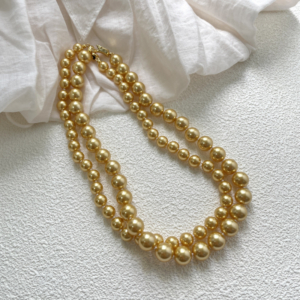
Golden South Sea Pearl Necklace: The Day-to-Night Anchor
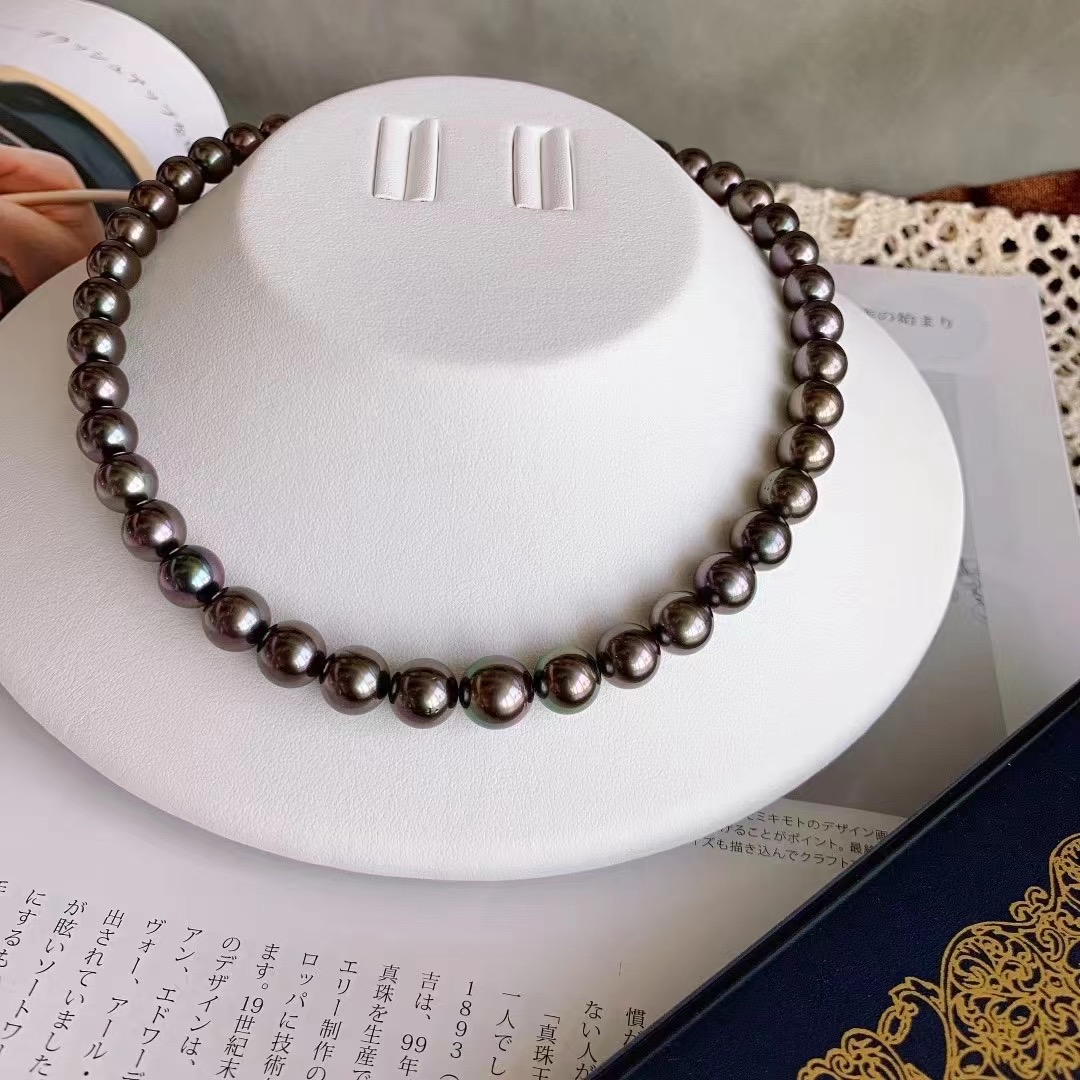
A single strand of 13 mm golden pearls, 36 pieces, total weight 78 grams. Thread them on 0.45 mm diameter pure silk with a breaking strength of 15 kg. Use a surgeon’s knot between each pearl. This adds 0.2 seconds of styling time but prevents total strand loss if the silk fails. Typical silk failure occurs at 3-5 years due to hydrolysis from sweat moisture.
Style this golden south sea pearl necklace over a dark cotton crew neck. The nacre’s reflectivity index 0.85 against a matte black surface creates maximum visual contrast. Avoid wearing it against sequined fabrics. Hard sequin edges scratch at 6 on the Mohs scale. Nacre is 2.5. The sequin wins.
For the clasp, mount a hidden box clasp in 18K gold. Total clasp weight: 2.3 grams. Its locking mechanism withstands 1.8 kg pull force. Test it every week. The tongue bends over time. Bent tongue? Replace immediately. Breakage means pearls scatter. You lose pearls on pavement. Pavement roughness average 0.5 mm asperity height. That dents nacre instantly.
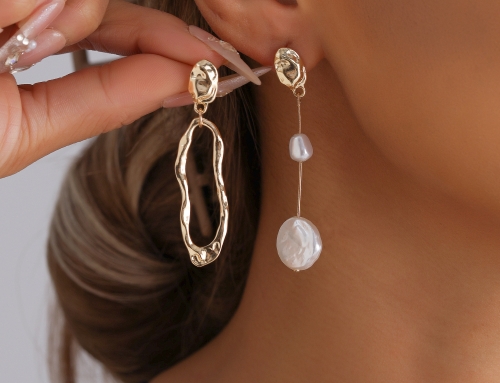
White South Sea Pearl Earrings: Precision Weight on Lobes
White south sea pearl earrings sized 11 mm. Average weight per pearl: 3.4 grams (Pinctada maxima, 2.8 mm nacre). Mount on a 0.8 mm diameter 14K white gold post. Post alloy: 58.5% gold, 25% copper, 16.5% nickel. Hardness 130 HV. This alloy resists bending during insertion. Many wearers twist posts. Twist force exceeds 1 Nm. A soft silver post will shear. 14K gold holds.
Design choice: friction backs with 0.3 mm deep catch ridges. The ridges engage at 4 points. This distributes retention force evenly. Pull-off force required: 2.5 kg. Accidental snag on a scarf? The scarf yields at 1 kg. The earring stays.
Style these earrings with hair up, exposing the lobes fully. The pearl’s surface temperature remains close to ambient. When ambient temperature is 21°C, the pearl feels cool to the touch. That sensory contrast against warm skin (34°C) triggers pleasure responses. No mystique. Just thermal physics.
Luxury Large Pearls: Stacking and Abrasion Engineering
Luxury large pearls—anything above 16 mm diameter—require spacer engineering. A 16 mm pearl weighs 9.2 grams (average). Stack three bracelets, and you have a moving mass of 120 grams on your wrist. Hardness mismatch: 18K gold has a Vickers hardness of 120. Nacre is 80 HV. The pearls lose. Insert 0.5 mm thick silicone spacers between beads. Silicone shore hardness A40 absorbs impact shock. Without spacers, nacre erodes at 0.2 mm per year from daily wrist motion.
Bracelet closure: use a 925 sterling silver barrel clasp with a minimum wall thickness of 0.8 mm. The thread path diameter must be 1.2 mm to accommodate doubled 0.45 mm silk without fraying. Frayed silk snags and snaps.
When layering a long rope of 32-inch South Sea pearls with a shorter 16-inch strand, prevent tangling. Tangles concentrate stress at single nacre points. The localized pressure can exceed 100 MPa. This cracks nacre instantly. Place a lightweight silicone separator ring between strands. 2 grams of separator saves a 200-gram strand.
Comparative Physical Data: South Sea Pearl Types
| Attribute | White South Sea (Silver-lip) | Golden South Sea (Gold-lip) |
|---|---|---|
| Species | Pinctada maxima (silver-lipped) | Pinctada maxima (gold-lipped) |
| Average Diameter (mm) | 11 – 15 | 12 – 16 |
| Nacre Thickness (mm) | 2.5 – 3.5 | 2.8 – 4.0 |
| Weight per 1 mm of diameter (g) | 0.29 (≈ 11 mm: 3.9 g) | 0.30 (≈ 13 mm: 6.6 g) |
| Luster Diffuse Reflectance Index (60° incident) | 0.78 – 0.85 | 0.80 – 0.88 |
| Recommended Thread for Strand | Silk 0.40 mm | Silk 0.45 mm |
| Max Safe Strand Weight (g) | 65 | 85 |
| Metal Alloy for Clasps | 18K white gold (Au 75%, Pd 25%) | 18K yellow gold (Au 75%, Cu 12.5%, Ag 12.5%) |
| Earring Post Alloy (Softest Safe) | 14K white gold | 14K yellow gold |
| Daily Wear Abrasion Rate (mm/year) against cotton | 0.02 | 0.02 |
Wear and Durability FAQ
How do I know if my stringing silk needs replacement?
Check the knots. If knots shift into the drill holes, thread has stretched beyond 0.15 mm elongation. This usually occurs after 4 years of daily wear, or 1,500 wearing hours. Replace immediately. Use a fresh 0.45 mm silk thread for strands over 70 grams. Do not attempt to re-tie single knots. Completely restring.
Can I wear South Sea pearls while sweating heavily?
Yes, but wipe them dry with a microfiber cloth within 30 minutes. Human sweat has a pH of 4.5–7.0. Nacre dissolves in acidic conditions below pH 5.0 at a rate of 0.001 mm per hour of continuous contact. A 3.0 mm nacre pearl loses 0.03 mm in 30 hours of cumulative sweat exposure. That’s 1% nacre thickness loss. Acceptable. Rinse with distilled water. No tap water. Minerals in tap water deposit between aragonite platelets, dulling luster.
What’s the maximum safe weight for a single earlobe without sagging?
8 grams total. Each white south sea pearl earring should not exceed 4 grams if you want zero lobule elongation over 20 years. Lobule tissue has a tensile strength of 1.5 MPa. Static loads above 8 grams cause creep deformation. Clinical studies show 10-gram earrings produce a 0.5 mm elongation in 5 years. For daily all-day wear, cap pearl diameter at 13 mm (weight ~6.6 g) and use hollow-back settings to reduce metal weight by 20%.
How do I stack multiple large pearl necklaces without damage?
Insert 3 mm diameter silicone ball spacers between strands at the back of the neck. Stacking luxury large pearls (16 mm) without spacers causes point contact between pearls of different strands. Contact pressure equals strand weight divided by the contact area (0.04 mm²). For a 100-gram strand, that’s 2,500 psi. Nacre crushes at 2.8 million psi. The pressure is safe, but the repeated sliding creates abrasion. Silicone spacers eliminate hard pearl-on-pearl contact entirely. Also, limit stacked strands to 3. Total combined weight should not exceed 250 grams. Exceeding that strains the C7 vertebra. Your neck will ache.
What chain metal is safest for a pendant with a 15 mm South Sea pearl?
Use a 1.2 mm cable chain in 18K yellow gold. Link wire diameter 0.4 mm. Break strength of this chain is 12 kg. A 15 mm pearl pendant with cap setting weighs 11 grams total. Safety margin: 1,090x. Avoid sterling silver chain. Silver tarnishes, and tarnish produces silver sulfide particulates that are abrasive (hardness 2.5, same as nacre). Those particles act as sandpaper over time.
Style your south sea pearls based on these metrics. Ignore fashion trends. Follow the material science. Your pearls will outlast you.