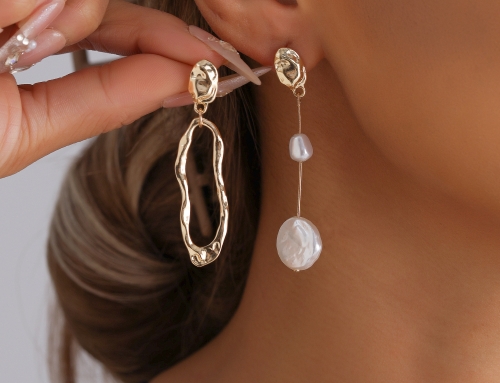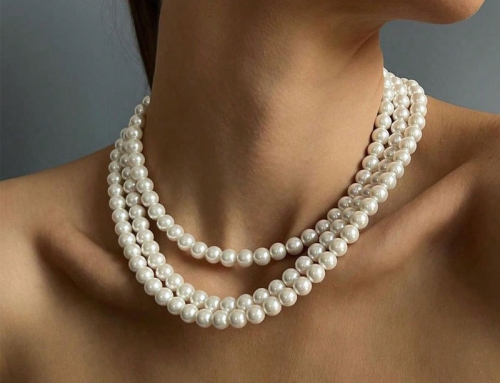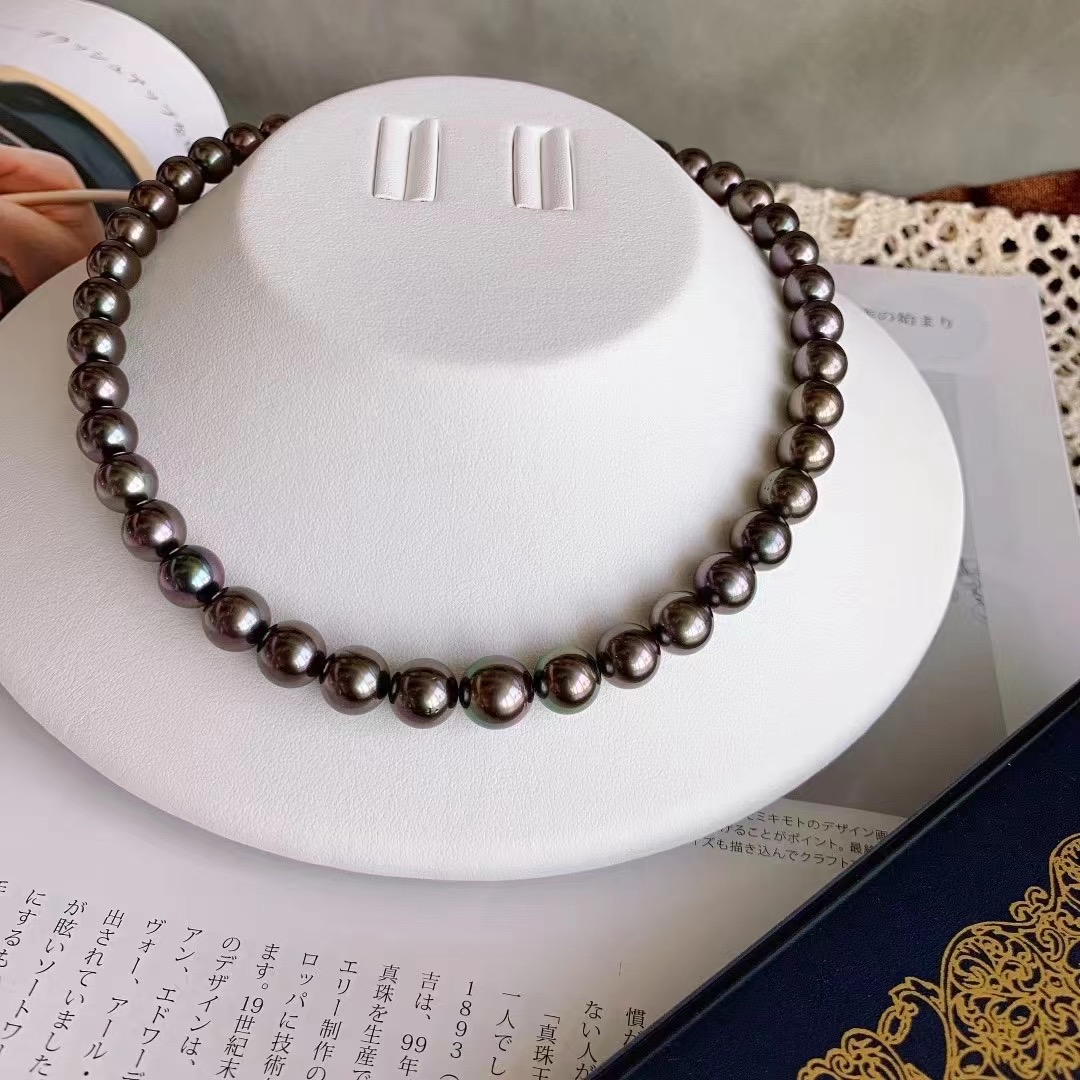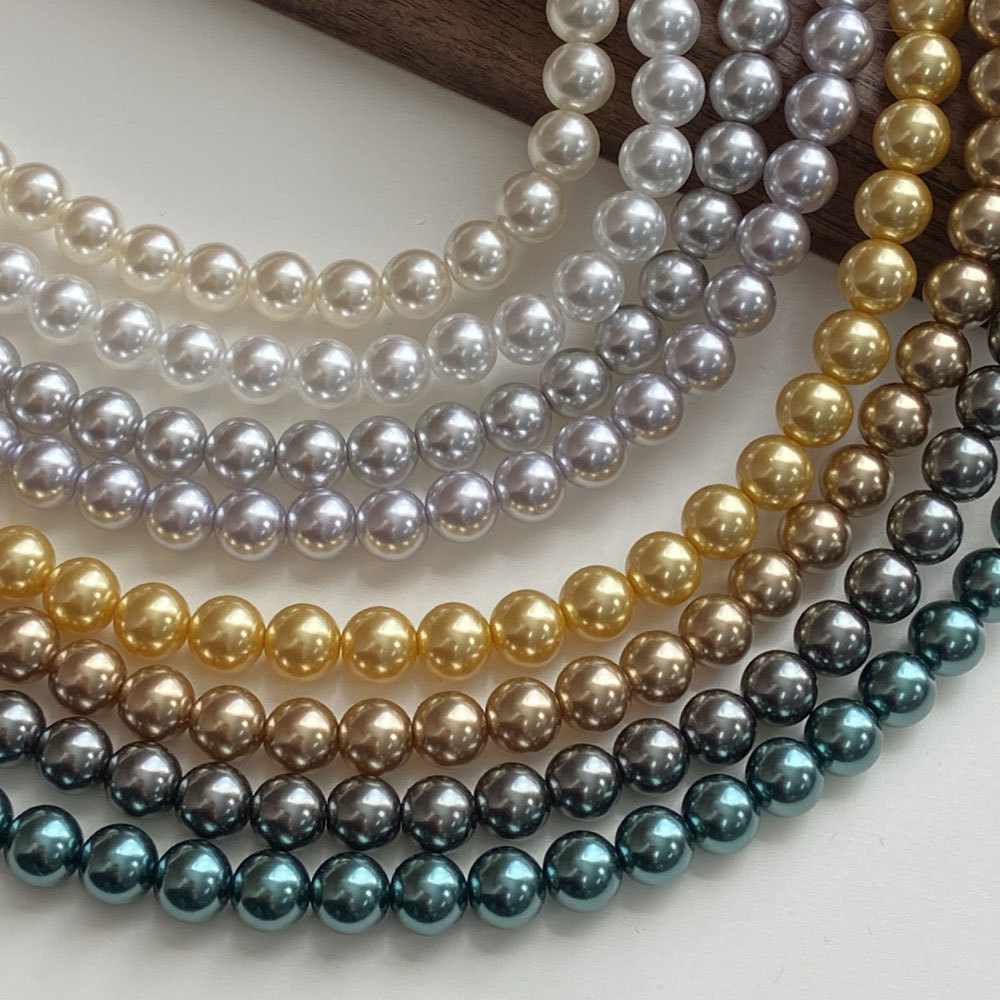
Morning light spills across the worn oak floorboards of our SOHO design loft, catching the dust motes suspended like tiny phosphorescent plankton in a sunlit current. Outside, the cobblestones of Greene Street still glisten from last night’s rain. Inside, velvet jewelry trays cover the long butcher-block table—Baroque pearls with their deliciously irregular silhouettes nestle against whisper-thin gold chains, while a scattering of deep Tahitian rounds gleam like captured midnight. I’ve been arranging and rearranging these pieces for an hour now, chasing that perfect, uncontrived harmony. This is the heart of intentional pearl layering—not a random stacking of strands, but a deliberate composition that tells a story only you can wear.
Why Intentional Pearl Layering Matters Now
Pearls are having a renaissance, but not the prim, perfectly spherical pearls of a 1950s tea party. Today’s pearl wearer craves texture, contrast, and the quiet confidence of looking like she assembled her jewelry instinctively—even if every piece was chosen with a curator’s eye. Intentional pearl layering is the antithesis of the matching pearl set. It’s a rebellion wrapped in silk.
When I visited our pearl farming partners in the South Sea islands last autumn, I watched a diver surface with a single oyster cradled in her palm. She didn’t open it immediately. She held it to the light, assessing its weight, its subtle ridges, the way the saltwater beaded on its shell. “Every oyster gives what it gives,” she told me. “My job is to honor what arrives, not wish for something else.” That’s the philosophy we bring to layering. You don’t force pearls into uniformity. You let each strand speak its own dialect while the conversation flows between them.
The Environmental Soul of Pearl Adornment
There’s a tenderness to wearing pearls that mass-produced gemstones can’t replicate. Every pearl is a living archive of the water it grew in—the temperature fluctuations, the mineral composition, the gentle rocking of currents. Our Akoya pearls come from farms that actively restore oyster reef habitats, creating sanctuaries for juvenile fish and filtering millions of gallons of seawater daily. When you layer consciously sourced pearls, you’re draping yourself in ocean regeneration. That’s not marketing language. That’s marine biology.
I think often about a pearl farmer named Hiroshi, who tends his oyster lines in Ago Bay with the same devotion his great-grandfather brought to the water a century ago. He told me, through a translator, “The oyster does not rush. Why should I?” In an era of fast fashion and disposable accessories, wearing pearls that took four years to form feels almost radical. Layering them with intention—choosing each strand for its provenance, its energy, its relationship to the others—becomes an act of quiet environmental stewardship.
The Anatomy of an Asymmetric Pearl Stack
Let’s dismantle the old rulebook. The traditional matching set dictates that your earrings, necklace, and bracelet should share the same pearl size, color, and luster. This approach flattens the natural variation that makes pearls mesmerizing. Asymmetric pearl stacks celebrate difference. Imagine a choker of irregular baroque pearls in creamy white, resting just above your collarbone. Below it, a longer strand of grey-blue Akoya pearls with a 2mm size variation from pearl to pearl. And beneath that, a fine gold chain with a single, oversized South Sea pearl pendant hanging off-center. That’s not an accident. That’s architecture.
| Style Profile | Layer 1 (Top) | Layer 2 (Middle) | Layer 3 (Bottom) | Best Occasion |
|---|---|---|---|---|
| The Minimalist | 14″ baroque pearl choker, off-round | 18″ fine gold chain, no pearls | — | Daily wear, office |
| The Romantic | 16″ freshwater seed pearl strand, hand-knotted | 20″ blush pink Akoya strand | 24″ chain with single drop pearl | Date night, weddings |
| The Collector | 15″ Tahitian circled pearl choker | 22″ golden South Sea strand | 30″ mixed baroque strand with gemstone accents | Gallery openings, evening events |
| The Bohémienne | Leather cord with scattered seed pearls | 20″ irregular freshwater strand, dyed indigo | 26″ chain with shell and pearl charms | Weekend markets, beach dinners |
| The Sculpturalist | Torque-style baroque pearl necklace | Single dramatic drop on adjustable chain | — | Creative events, fashion week |
Study that table for a moment. Notice how the lengths shift depending on the narrative you’re building. A 14-inch choker with a 30-inch opera strand creates drama through distance. A 16-inch and 20-inch pairing feels intimate, conversational. The space between strands matters as much as the pearls themselves.
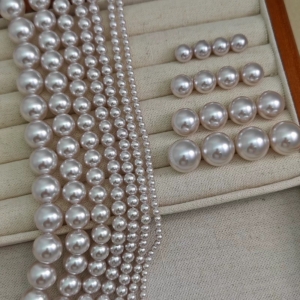
How to Layer Pearl Necklaces Without Looking Overwhelmed
The most common fear I hear in our SOHO showroom is, “I don’t want to look like I’m trying too hard.” Valid. The antidote is leaving negative space. When learning how to layer pearl necklaces, start with two strands before graduating to three. Choose one anchor piece—a strand that feels most “you”—and build outward. If your anchor is a bold baroque choker, let the second layer be a delicate chain with tiny pearl accents. The eye needs somewhere to rest.
Pay attention to neckline physics. A crew neck sweater demands shorter layers that sit above the fabric. A deep V-neck invites a cascading progression of lengths. A bateau neckline wants a single statement strand—layering here fights the architecture of the garment. Fabric and pearl must dance together, not step on each other’s feet.
The Matching Pearl Sets Alternative
Department stores have trained us to believe that pearls should come in coordinated sets—earrings that mirror the necklace that mirrors the bracelet. But oceans don’t produce matching sets. Oceans produce variety. The most compelling matching pearl sets alternative I’ve ever seen was on a client who wore mismatched pearl studs—one white South Sea, one black Tahitian—with a completely unpearled gold herringbone chain. The asymmetry made her look magnetic, self-possessed. People asked her about the earrings all night. Not because they were expensive, but because they were interesting.
Try this: take your existing pearl pieces and intentionally break the set. Wear the necklace from one collection with earrings from another era. Mix freshwater with Akoya. Blend warm champagne tones with cool silver-white. The dissonance creates visual tension, and tension is what makes art memorable.
Authentic Intentional Pearl Layering Styling Secrets
I’ve spent fifteen years watching women interact with pearls in our showroom, at trunk shows, and during private styling consultations. The women who look most effortlessly elegant share a few unspoken habits. I’m going to share them now—these are my authentic intentional pearl layering styling secrets, gathered from observation, not theory.
Secret One: Feel the weight before you commit. Hold the layered strands in your palm. Do they feel balanced? A heavy choker paired with a weightless chain creates a sensory disconnect your body will register even if your mirror doesn’t. Pearls have mass. Respect it.
Secret Two: Clasp placement is everything. When layering, offset your clasps so they don’t stack at the nape of your neck. A clustered clasp situation tangles chains and creates a bulge visible from behind. Rotate each strand slightly so the closures sit at different points along the back of your neck. This tiny adjustment changes how the strands hang in front.
Secret Three: Trust the baroque. Perfectly round pearls demand formality. Baroque pearls invite intimacy. If you want your layering to feel modern and approachable, lead with irregular shapes. An asymmetric pearl stack built around a baroque focal point signals that you understand the rules well enough to break them.
Secret Four: The mirror lies. The photograph tells truth. After you arrange your layers, have someone photograph you from chest height in natural light. Look at the photo with fresh eyes before making adjustments. What reads as “interesting” in the mirror sometimes reads as “busy” on camera. Train your eye with documentation.
The Clasp You Never Considered
Most women ignore their pearl strand’s clasp entirely. This is a mistake. When layering, visible clasps become part of the composition. A ornate vintage clasp on a shorter strand can serve as a deliberate accent near your throat. A minimalist magnetic clasp disappears cleanly. Choose strands with clasps that support—or at minimum, don’t undermine—your layering intention. At PearlsNation, we often custom-fit clasps based on how a client plans to layer, because the engineering matters as much as the aesthetic.
Caring for Layered Pearls: The Quiet Ritual
Pearls are organic gems—porous, living in a sense, responsive to their environment. They absorb the oils from your skin, the faint traces of perfume in the air, the humidity of a summer evening. Layered strands rub against each other microscopically. This contact creates a gentle polish over time, but it can also wear down the nacre if the pearls are of lesser quality. Invest in strands with substantial nacre thickness—0.4mm minimum for freshwater, 0.5mm or more for Akoya. Thin-nacred pearls have no business in a layered stack; they’ll dull within a year.
Store layered sets flat, not hanging. Gravity is patient and persistent—over months, it stretches silk thread incrementally. Lay your strands in individual compartments, or wrap each in a soft cloth within a single drawer. After wearing, wipe pearls with a slightly damp microfiber cloth to remove skin oils before the strands touch each other in storage.
Frequently Asked Questions
Can I mix real pearls with imitation pearls when layering?
You can, but the eye registers the difference even when the conscious mind doesn’t. Imitation pearls have uniform luster; real pearls have depth. When layered together, the imitation pieces absorb light while genuine pearls reflect it from within. The contrast can feel subtly off. If budget constrains your layering experiment, start with a single high-quality freshwater strand and layer it with a simple gold chain—no imitation necessary.
What’s the ideal length difference between layered pearl necklaces?
Aim for 2 to 4 inches between strands. Less than 2 inches and they’ll tangle into a single visual mass. More than 6 inches creates a gap that breaks the compositional flow. My personal sweet spot is a 16-inch choker with a 20-inch matinee and an optional 26-inch opera for a three-strand stack.
How do I prevent tangling when layering multiple pearl strands?
Tangling happens when chains share the same plane. Offset your clasp positions, choose strands with slightly different chain weights, and consider using a multi-strand clasp converter if you’re layering the same combination frequently. Also, simpler chains between pearls—fewer links, smoother surfaces—reduce friction points that snag neighboring strands.
Are there necklines that should never be paired with layered pearls?
Turtlenecks and mock necks overwhelm layered strands—choose a single bold pearl pendant instead. Strapless necklines, counterintuitively, love layered pearls because the bare skin provides a clean canvas. Off-the-shoulder tops work beautifully with asymmetrical stacks that follow the diagonal line of the neckline.
How do I transition layered pearls from day to evening?
Remove the shortest strand. A three-layer daytime stack becomes a more formal two-layer evening look by lifting away the choker. Alternatively, swap a casual leather-cord pearl piece for a fine chain with a luminous drop pearl. The evening transition should feel like a reveal, not an addition.
Is intentional pearl layering appropriate for professional settings?
Absolutely—with restraint. Two strands maximum, both under 22 inches, in muted tones (white, cream, grey, soft gold). The intention reads as thoughtful rather than decorative. Save the three-strand sculptural stacks for creative workplaces or after-hours events.
Building Your Layering Wardrobe: Where to Begin
Start with one strand you already love. Study it. What length is it? What pearl size? What energy does it project? Then come to us—or to your trusted jeweler—and find a second strand that contrasts with it in exactly one dimension. If your current strand is white and round, add a grey and baroque piece. If it’s short and heavy, add a longer and lighter strand. Change one variable at a time. This deliberate incrementalism is the essence of intentional pearl layering—each addition is considered, never compulsive.
I once worked with a client who inherited her grandmother’s perfectly matched Akoya strand. It was beautiful but felt sepia-toned—a relic. We layered it with a raw baroque freshwater strand in a slightly longer length, and suddenly the vintage pearls looked avant-garde instead of antique. The grandmother’s legacy wasn’t erased; it was elevated. That’s the alchemy available to you when you layer with purpose.
Final Thoughts
Pearls are not passive accessories. They’re mineralized time, formed in the darkness of a living creature, brought to light by human hands that have repeated the same motions for millennia. When you layer them with intention, you’re participating in a chain of care that stretches from the seabed to your skin. Honor that lineage by choosing well, combining thoughtfully, and wearing with the quiet confidence of someone who knows exactly why each strand is there.
Come visit us in SOHO sometime. The velvet trays are always out, the light is always golden in the afternoon, and I’ll help you build a stack that feels like yours alone. No matching sets required. Just an open mind and a willingness to let the pearls tell their own story.