The Philosophy Behind the Contrast
Why does this pairing resonate so deeply right now? Because we’re living in an era that rejects singular narratives. The softness of a pearl—formed through years of patient layering inside an oyster—meets the immediacy of a heavy gold chain with pearl accents, and suddenly you’re not choosing between delicate and bold. You’re wearing both. You’re telling the world you contain multitudes.
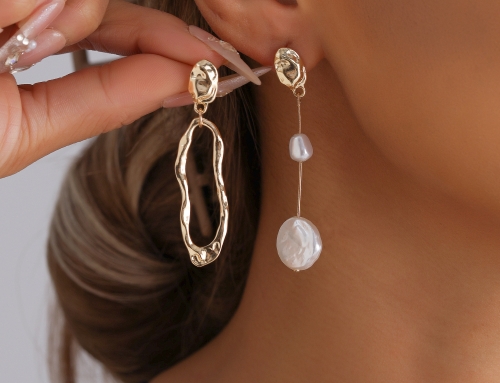
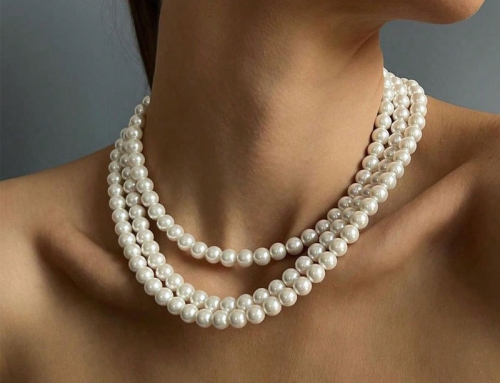
I’ve watched this aesthetic migrate from underground Brooklyn warehouses to the front rows of Paris Fashion Week over the past three seasons. My clients at PearlsNation arrive seeking edgy modern pearl jewelry that doesn’t sacrifice the integrity of either material. They want the pearl to look like a pearl—lustrous, sovereign, unmistakably genuine—and they want the hardware to feel substantial enough to anchor a ship.
The magic lives in refusal. Refuse to let your pearls gather dust in a velvet box reserved for weddings. Refuse to believe that industrial chains belong exclusively to streetwear. The chunky metal and pearl necklace you’ve been eyeing isn’t a trend piece—it’s a wardrobe infrastructure investment.
Anatomy of the Perfect Mixed-Material Piece
Before you style, understand what you’re working with. Not all pearls-and-hardware combinations are created equal. The ratio matters. The finish matters. The weight distribution matters enormously when you’re wearing something for twelve hours straight.
A well-constructed heavy gold chain with pearl should distribute its weight across your collarbone, not pull forward uncomfortably. The pearl should be secured with a setting that protects its surface without hiding its iridescence. Look for bezel settings that cradle rather than cage—or better yet, drilled pearls threaded directly onto substantial links, which creates the most organic integration I’ve seen in twenty years of design work.
The Weight-to-Luster Ratio
Here’s what I tell every client who walks into my studio: the chain should feel expensive in your palm before you even see the pearl. When you pick up a piece and the metal has heft, your brain registers quality before your eyes do. Combine that with a pearl that shows sharp, mirror-like reflection—not the chalky dullness of freshwater imitations—and you’re holding something transformative.
Style Architectures: Building Looks Around the Contrast
Let’s get tactical. Below is my working style matrix for integrating pearls and chunky hardware into your existing wardrobe architecture. I’ve road-tested every combination on real bodies in real New York settings—from gallery openings in Chelsea to corner booth dinners in the West Village.
| Style Architecture | Hardware Profile | Pearl Type | Outerwear Pairing | Energy Level |
|---|---|---|---|---|
| Brutalist Romantic | Gunmetal curb chain, 8mm links | White South Sea, 10-12mm | Asymmetric wool blazer, single lapel | Gallery opening intensity |
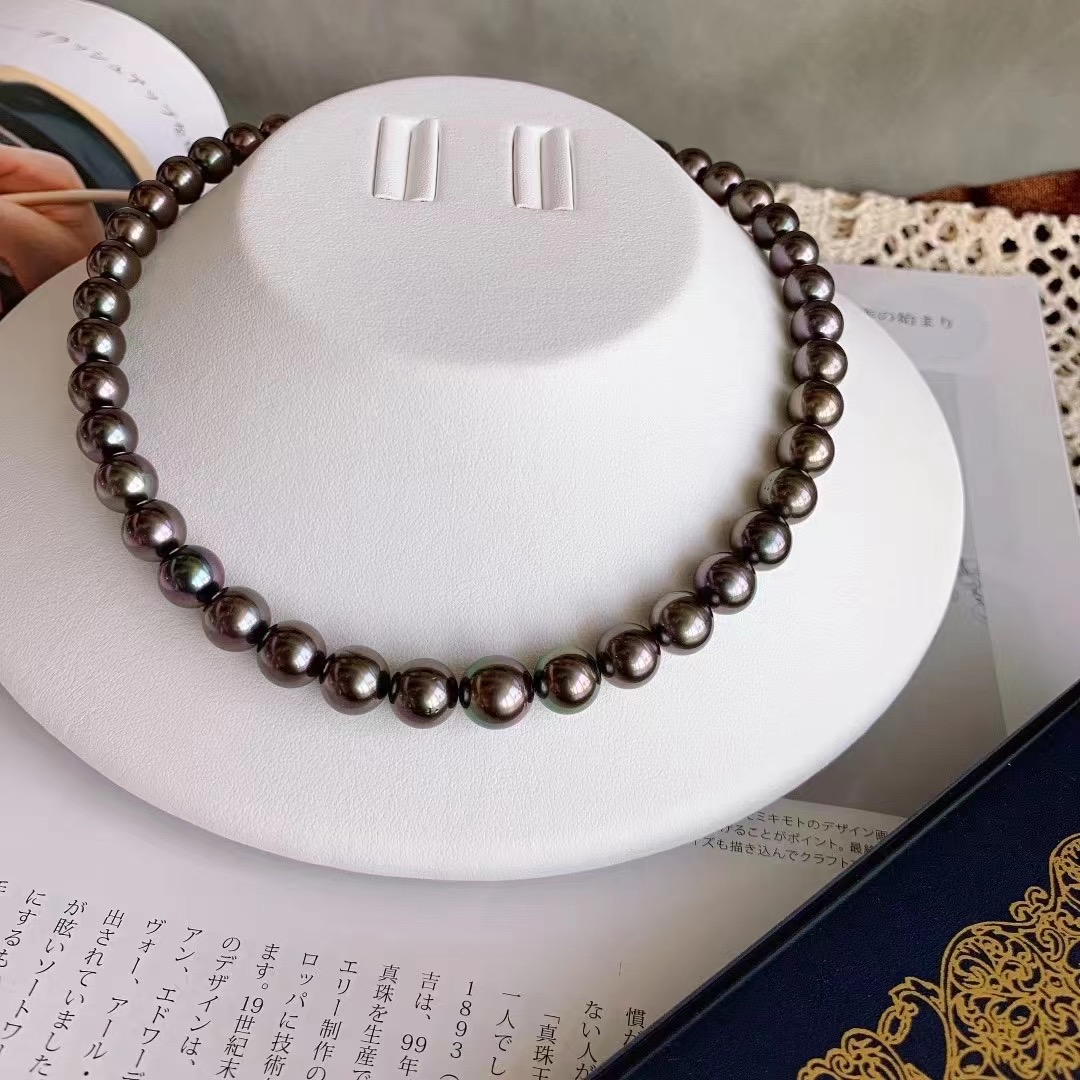
| Soft Industrial | Polished gold box chain, heavy clasp | Tahitian, dark grey, 9-11mm | Oversized cashmere cardigan, no buttons | Sunday brunch ease |
| Deconstructed Prep | Matte silver Figaro chain | Akoya, cream rose, 7-8mm | Distressed denim jacket, raw hem | Weekend errand cool |
| Fluid Minimalist | Single substantial gold link pendant | Golden South Sea, 13-15mm | Gender-neutral oversized trench | Boardroom to bar seamless |
| Layered Dissident | Mixed-metal choker set (3 chains) | Baroque freshwater, irregular shapes | Motorcycle leather, epaulettes optional | Concert crowd magnetism |
Each architecture above works across gender expressions. I’ve fitted the Brutalist Romantic on a cis male client in a razor-sharp black turtleneck and on a non-binary creative director in an asymmetric draped blazer. The effect shifts but never diminishes.
Asymmetric Outerwear: The Canvas That Changes Everything
Let’s talk about the outerwear specifically, because it’s the single most powerful framing device for your edgy modern pearl jewelry. An asymmetric blazer—one where the lapels don’t match, or the hem cuts diagonally—creates negative space that begs for a statement necklace. The irregularity of the garment mirrors the irregularity of the pearl-hardware contrast. Symmetry would flatten the tension. Asymmetry amplifies it.
I keep a rack in my studio dedicated entirely to single-lapel blazers in charcoal, cream, and oxblood. When a client tries on a chunky metal and pearl necklace against a standard symmetrical jacket, the piece looks intentional. Against the asymmetric cut, it looks inevitable—like the necklace and the garment were designed in the same breath.
Try this tomorrow: pull out that blazer you bought impulsively because it had one sharp architectural lapel and one soft draped shoulder. Layer a heavy gold chain with pearl so the pearl sits precisely where the asymmetry peaks. Watch how the conversation between garment and jewelry creates a focal point that draws every eye in the room to your collarbone. It’s not subtle. It’s not meant to be.
Distressed Denim: The Democratic Foundation
Nothing grounds the opulence of pearls quite like denim that’s lived a life. Raw hems, repaired knees, whiskering across the thighs—these textures create a receptive surface for luxury rather than competing with it. When I style a client in destroyed jeans and a chunky metal and pearl necklace, the pearls read as earned rather than inherited.
The contrast of pearls and chunky hardware against distressed denim short-circuits the old class signifiers that used to govern jewelry. A pearl on a heavy chain against a faded Levi’s jacket says you understand both materials intimately—that you could walk into a dive bar or a private members’ club and belong equally in both.
My styling rule for denim: the more destroyed the jeans, the more pristine the pearl should be. Maximum contrast yields maximum impact. A flawless 12mm South Sea pearl against a jacket with actual holes in it creates the kind of dissonance that photographs beautifully and feels even better to wear.
Gender-Neutral Aesthetics: Pearls Without Pronouns
The most significant shift I’ve witnessed in my two decades behind the design bench is the complete dissolution of gendered jewelry categories. Pearls and chunky hardware belong to everyone, full stop. The chunky metal and pearl necklace has become a unifier across the gender spectrum precisely because it refuses to choose sides—it’s neither purely delicate nor purely aggressive.
I design for bodies, not binaries. A fluid silk shirt open at the collar, worn by any human with a pulse, provides the perfect runway for a heavy gold chain with pearl. The soft drape of the fabric echoes the organic curve of the pearl. The exposed sternum creates a vertical line that the chain follows downward. The gold catches light differently on different skin tones, which is part of the beauty—the same piece transforms depending on who wears it.
When shopping for gender-neutral pearl-and-hardware pieces, prioritize adjustable chain lengths. A piece that can shift from 18 to 22 inches accommodates different neck sizes, different necklines, and different expressions of self that may vary day to day. Flexibility isn’t a concession—it’s a design principle.
Buying Genuine Pearls and Chunky Hardware with Confidence
The market is flooded with imitation pearls and hollow chains that feel weightless in your hand. If you’re serious about buying genuine pearls and chunky hardware with confidence, you need to know what separates a heritage piece from a one-season imitation.
The Pearl Authenticity Test
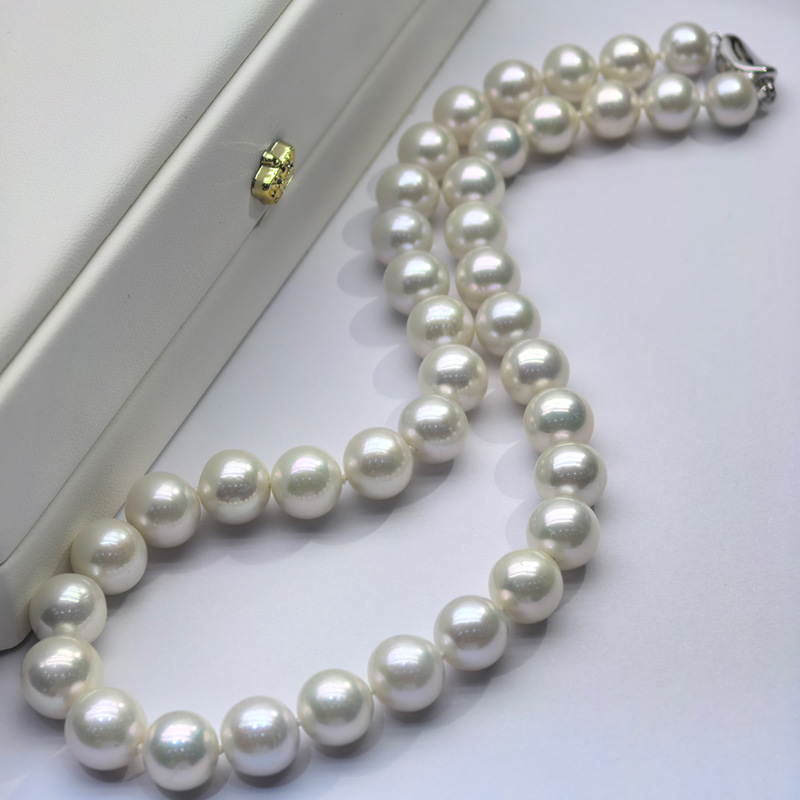
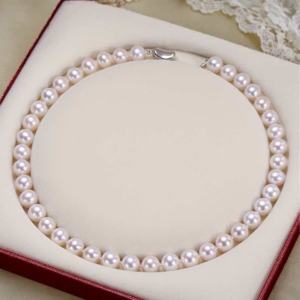
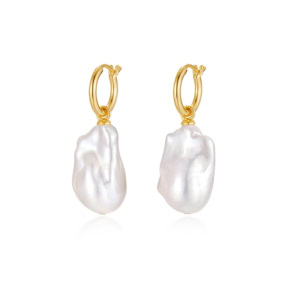
Real pearls have subtle surface imperfections—tiny ripples, slight variations in shape, organic asymmetries that prove they grew inside a living creature. Perfectly spherical, identically matched pearls at a suspiciously low price point are almost certainly cultured freshwater imitations or, worse, synthetic beads dipped in pearlescent coating. Rub two pearls gently together. Genuine nacre feels slightly gritty, not glass-smooth. This friction test takes three seconds and separates investment from regret.
Hardware That Earns Its Name
Chunky hardware should be solid or at minimum heavily plated over a substantial base metal. Pick it up. Does it feel cold initially and then warm slowly in your palm? That’s metal with density. Does it feel suspiciously lightweight and warm up instantly? Walk away. Look at the clasp mechanism—stamped clasps with visible seam lines indicate cost-cutting. Forged clasps with smooth, seamless construction signal craftspeople who cared enough to invest in findings that won’t fail mid-wear.
At PearlsNation, we operate on a direct-to-consumer model that eliminates the traditional 6-8x retail markup. When you’re buying genuine pearls and chunky hardware with confidence, you should know exactly where your materials came from. Our South Sea pearls are sourced from fair-trade farms in the Philippines and Australia where divers are paid living wages, not piece rates. Our gold chains are fabricated in Italian workshops with multi-generational expertise. No mystery. No markup theater. Just materials and craft, priced transparently.
Questions to Ask Before You Buy
- What is the pearl’s origin? South Sea, Tahitian, and Akoya have different luster profiles and durability. Know which you’re purchasing.
- Is the chain solid or hollow? Hollow chains dent and kink. Solid chains develop patina and last decades.
- What’s the clasp weight rating? A heavy chain demands a clasp engineered to match. Undersized clasps are the first point of failure.
- Can the pearl be removed or replaced? Modular designs let you swap pearls as your collection grows. Fixed settings don’t.
- What’s the return policy on worn pieces? If a brand doesn’t stand behind how their jewelry performs on your body, find a brand that does.
Caring for the Contrast: Maintenance That Preserves the Tension
The very qualities that make pearls and chunky hardware compelling—the softness of nacre, the weight of metal—also demand thoughtful care. Pearls are organic gems with a Mohs hardness of just 2.5 to 4.5. Your gold chain, by contrast, ranks around 2.5 to 3.0 but won’t scratch in the same way because it’s malleable rather than brittle. Store them together? Never. The chain will abrade the pearl’s surface over time.
Here’s my non-negotiable care protocol:
- Separate storage. Keep your pearl-and-hardware pieces in individual soft pouches or lined compartments. The chain should never rest directly against the pearl in a drawer.
- Last on, first off. Pearls are porous and absorb perfume, hairspray, and skin oils. Apply your fragrance and skincare first, let them dry completely, then put on your jewelry. Remove it before you wash your face at night.
- Wipe, don’t soak. After wearing, gently wipe pearls with a barely damp microfiber cloth. Never submerge them—the silk thread used in knotted pearl strands swells and weakens when wet.
- Professional restringing annually. If your piece features knotted pearls, have them restrung every twelve to eighteen months depending on wear frequency. Stretched silk is a disaster waiting to happen.
- Polish the hardware separately. Use a gold or silver polishing cloth on the chain only, being careful not to let the cloth’s abrasive residue transfer to the pearl surface.
FAQ: Pearls and Chunky Hardware
Can I wear a heavy gold chain with pearl to formal events?
Absolutely—but calibrate the rest of your look. A substantial chain with a single large pearl paired with clean architectural evening wear (think column dress, sharp tuxedo) reads as sophisticated rebellion. Avoid pairing it with other statement jewelry. Let the pearl-and-hardware piece hold the spotlight alone.
Will a chunky metal and pearl necklace damage my clothing?
Quality hardware with smooth, well-finished links shouldn’t snag fabrics. However, very fine knits and loosely woven linens require caution. Test the chain by running it gently over the inside of your wrist. If you feel any catch or drag, avoid delicate fabrics. Pearls themselves are smooth and fabric-friendly.
How do I know if pearls are genuine when shopping online?
Look for retailers who provide specific origin information (not vague “imported” labeling), offer a satisfaction guarantee with reasonable return windows, and show unretouched photos rather than heavily edited product images. Genuine pearls will show slight natural variations in a group shot. Identical pearls in product photography are a red flag for synthetics. When buying genuine pearls and chunky hardware with confidence, work with brands that welcome your questions rather than hiding behind marketing copy.
Are pearls and chunky hardware appropriate for everyday wear?
Yes—with one caveat. Remove your piece before swimming, heavy exercise, or anything involving abrasive contact. Pearls are softer than most gym equipment surfaces. The hardware will survive; the pearl won’t. For daily office or social wear, a well-constructed piece can absolutely become your everyday signature.
What’s the best chain length for a chunky metal and pearl necklace?
For most bodies, 18 to 20 inches sits at the collarbone and works with crew necks, open collars, and V-necks alike. If you’re layering over a turtleneck, extend to 22-24 inches. Adjustable chains with multiple clasp points give you the most versatility across different necklines and outfit architectures.
Can men wear pearls and chunky hardware?
Men have been wearing pearls for centuries—from Maharajas in India to rock icons in the 1970s to contemporary designers on runways worldwide. A heavy gold chain with pearl on a masculine-presenting frame against a simple white tee or a black cashmere sweater looks undeniably powerful. The gender-neutrality of this aesthetic isn’t a trend; it’s a return to historical norms that predate the arbitrary gendering of jewelry in the mid-20th century.
Where We Go From Here
The conversation between pearls and chunky hardware isn’t finished—it’s barely begun. Every season I see new interpretations emerge from young designers who refuse to accept the old dichotomy between precious and industrial. They’re welding bezels directly onto curb chains. They’re threading baroque pearls onto oxidized silver links thick enough to tow with. They’re creating work that demands to be touched.
Your job isn’t to follow a formula. It’s to trust your instincts. When you try on a piece and it makes you stand differently—shoulders back, chin lifted, breathing deeper into your chest—that’s the one. The technical specs matter for quality assurance, but the final decision should always be visceral.
Walk into a room wearing genuine luster against forged metal. Let people wonder how you made something so soft and something so hard belong together so effortlessly. You don’t have to explain it. The contrast speaks for itself.