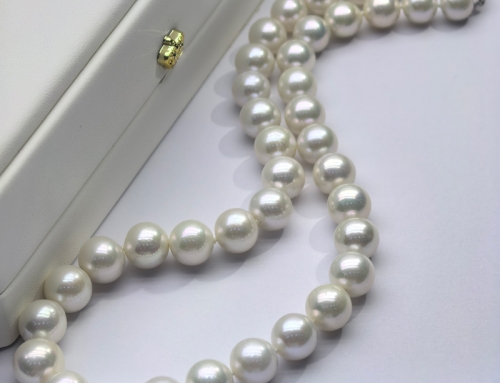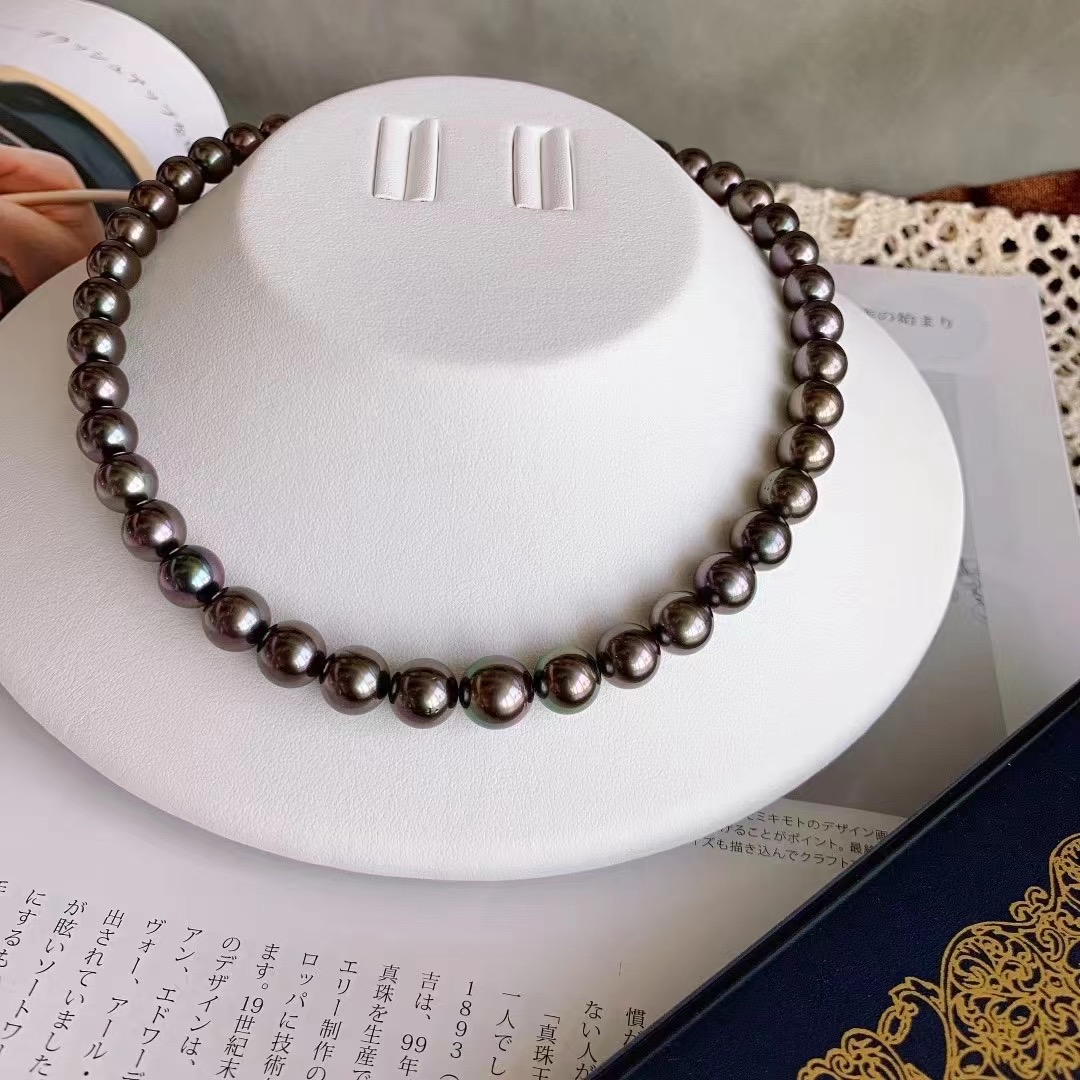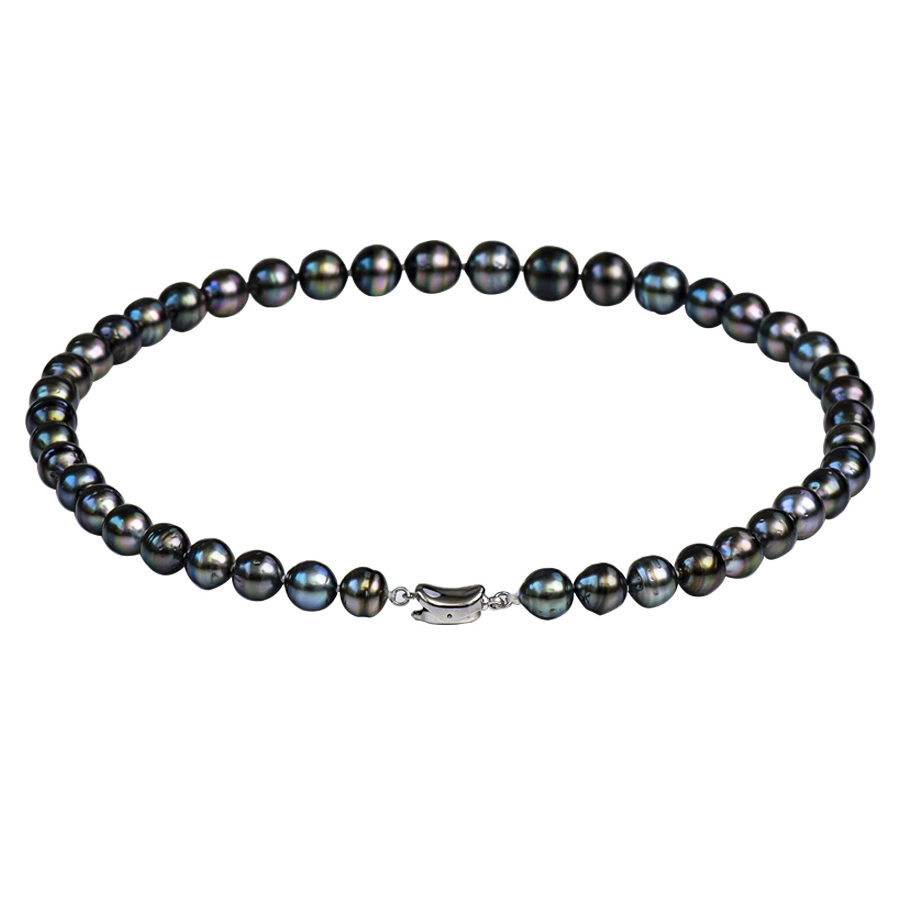
Determining the authenticity of a pearl necklace requires a combination of keen observation, tactile assessment, and sometimes professional evaluation. Genuine pearls, whether natural or cultured, have unique characteristics that distinguish them from their synthetic counterparts. One of the primary indicators of a genuine pearl necklace is the luster and surface quality of the pearls. Genuine pearls have a deep, rich luster that emanates from within, often described as a glow. This inner luster contrasts with the more superficial, glassy sheen of imitation pearls. In addition, real pearls tend to have slight imperfections on their surface, such as small bumps or uneven shapes, which add to their organic charm. In contrast, imitation pearls usually have a uniformly smooth surface.
Another way to determine the authenticity of a pearl necklace is to touch and feel it. Genuine pearls feel slightly gritty or sandy when rubbed against each other or against your teeth due to their natural layers of nacre. This gritty sensation is absent in imitation pearls, which tend to feel smooth and slippery because they are often made of glass or plastic. In addition, real pearls tend to be cooler to the touch than their synthetic counterparts and warm up slowly when held in the hand.
Weight also plays an important role in identifying a genuine pearl necklace. Genuine pearls are generally heavier than faux pearls due to their dense nacre composition. When held in comparison to a faux necklace, a real pearl necklace will have a noticeable weight difference that cannot be easily replicated with synthetic materials.
For those seeking more definitive verification, professional gemological services offer reliable assessments using advanced techniques such as radiography and spectroscopy. These methods reveal internal structures unique to genuine pearls, including concentric growth rings that indicate natural formation processes. Professional jewelers can also examine pearls’ drill holes; genuine pearls often have concentric ridges around the hole due to the layering of mother of pearl, while imitation pearls have smoother, more uniform drill holes.
Finally, it’s important to consider certification and provenance when purchasing a pearl necklace. Reputable dealers and jewelers offer certificates from accredited gemmological laboratories that attest to the authenticity of the pearls. This documentation not only confirms the authenticity of the pearls, but also provides information about their quality and origin. In addition, purchasing from established and trusted sources reduces the risk of acquiring counterfeit pearls.
In summary, identifying a genuine pearl necklace involves careful observation of luster, surface quality, texture, weight and, if necessary, professional verification. By combining these methods, one can confidently determine the authenticity of a pearl necklace and ensure that it is a genuine piece worthy of investment.