Reading the Pearl Grading Scale Without the Fluff
You don’t need a gemologist’s loupe to decode the pearl grading scale, but you do need to understand how light moves across nacre. Most retailers spin the A–AAAA system like a marketing ladder. In practice, the increments between AA+, AAA, and AAAA often boil down to a 5–10% jump in surface cleanliness and reflection sharpness. That tiny shift changes how a strand behaves tucked under a denim collar or trailing down an open blazer. I treat pearl grade like fabric weight: a crisp AAA akoya behaves like Japanese selvedge denim, structured and clean. A softer AA+ freshwater reads more like washed linen, forgiving and matte.
Luster sits at the top of every grading rubric. On a strand of 7.5–8.0mm Japanese Akoya (Pinctada fucata), a true AAA rating means you can distinguish the reflection of a window frame half a meter away. The image stays crisp, not smeared. Move down to AA+, and that same reflection becomes a soft blur. The difference isn’t always visible under boutique track lighting; it’s obvious in the flat noon sun. I check pearls against a white sheet of paper—harsh, honest light—before deciding where they’ll sit on my neck. The pearl grading scale ties directly to daily wear because high-luster pearls demand proximity. I keep 7.0mm AAA akoya strands close to the collarbone, often against bare skin, so the mirror finish catches motion. Lower-graded pearls, especially 9.0mm freshwater AA+ with soft orient, I let hang longer, nested inside a button-down, where the diffuse glow works like a second skin tone.
The AAA to AAAA Divide: What The Pearl Source Really Means
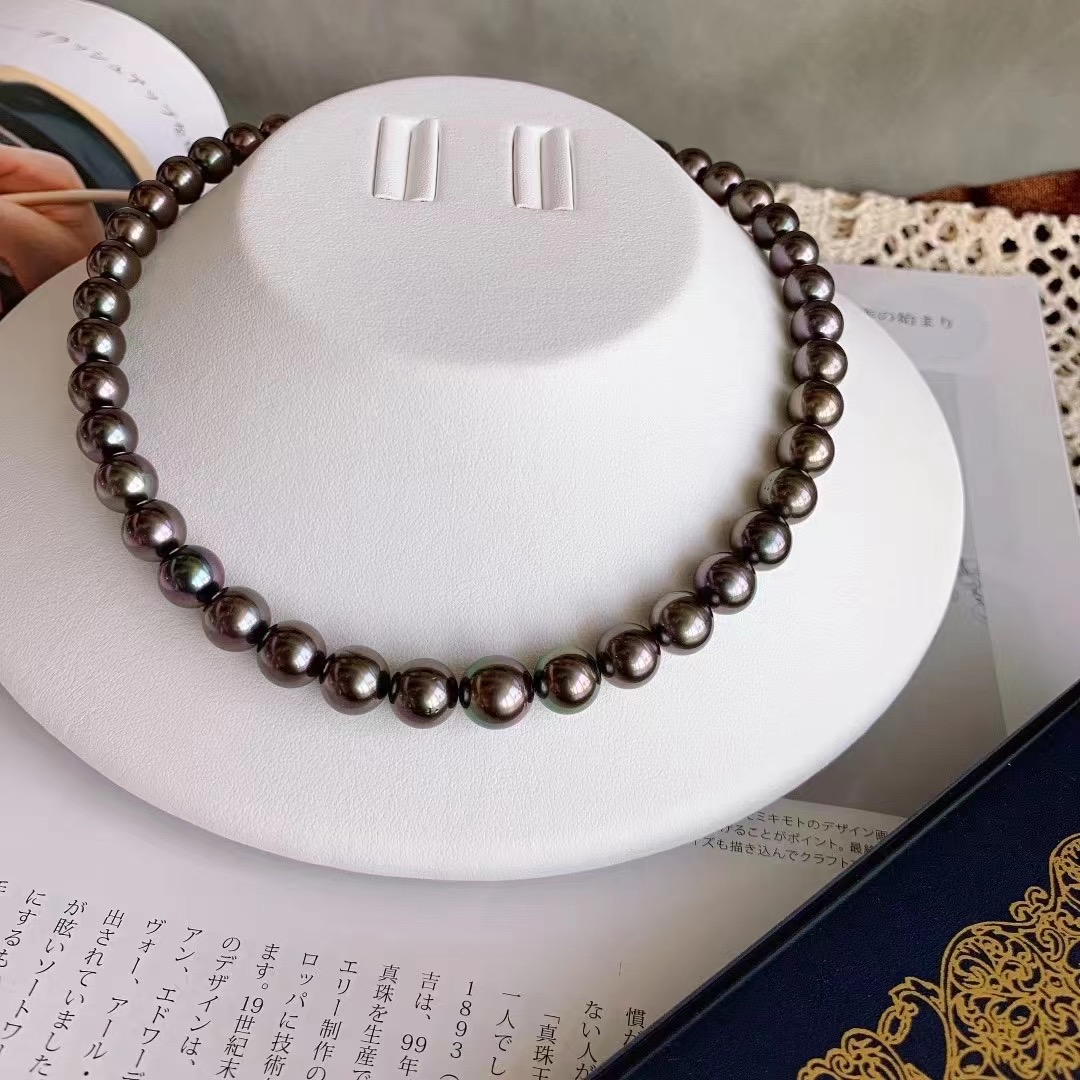
The Pearl Source grading system breaks into Freshwater, Akoya, Tahitian, and South Sea pillars, each with its own A–AAAA scale. When you see the pearl source aaaa vs aaa debate, it’s really about surface mapping. Their AAAA Tahitian (from Pinctada margaritifera) allows no more than 5% visible blemishing across the pearl’s visible hemisphere, and the luster must reflect like polished gunmetal. AAA Tahitian still reflects, but you’ll spot a faint satin quality and up to 15% surface markings. That 10% difference isn’t theoretical—it changes how you layer. I’d take a single 11.0mm AAAA dark peacock Tahitian, drill it halfway, and suspend it from a 1.2mm sterling wheat chain. Against an oversized linen shirt, the near-perfect surface draws the eye like a wet stone. An AAA of the same size gets framed differently: I’d pair it with two smaller 8.0mm AA+ drops on a earring, letting the slight surface character blend into a busier composition.
For The Pearl Source’s akoya line, their AAA grade demands that at least 80% of the pearl surface be clean under 10x magnification. AAAA pushes that to 90% and ramps up the reflection to “excellent.” That shift doesn’t matter much in a 5.5mm stud worn on a gym run, but on a 16-inch strand of 7.5mm akoyas resting against a stark white tee, the AAAA strand will read crisper, almost glossy. I wear AAA more often for daily layering because the tiny surface irregularities—faint pinpricks you can’t see without squinting—create a texture that pairs well with matte silver chains. AAAA pearls feel too formal for my Saturday uniform of a cropped utility jacket and raw silk scarf; AAA settles into the look without screaming “investment piece.”
Pearl Paradise and the Nuance of Freshwater Grading
Pearl paradise grading system follows a Gem, AAA, AA+, AA scale for their freshwater pearls. Their Gem Grade sits at the top: mirror-like metallic luster, 95–100% clean surface, and near-round to round shape in sizes 7.0–11.0mm. It’s a high bar that rivals some saltwater akoya. I keep a single strand of 8.5–9.0mm Gem Grade freshwaters—43 pearls on 0.45mm silk, double-knotted between each—and I reach for it when I want the sharp reflection of akoya without the weight on my wallet. The lusters are comparable, but the color palette skews cooler, more silvered. These I style with a heavy 18K rose gold watch and a slouchy cashmere crewneck, the pearls just grazing the ribbing. The contrast between the metallic freshwater surface and the nubby knit is what makes the grade pay off.
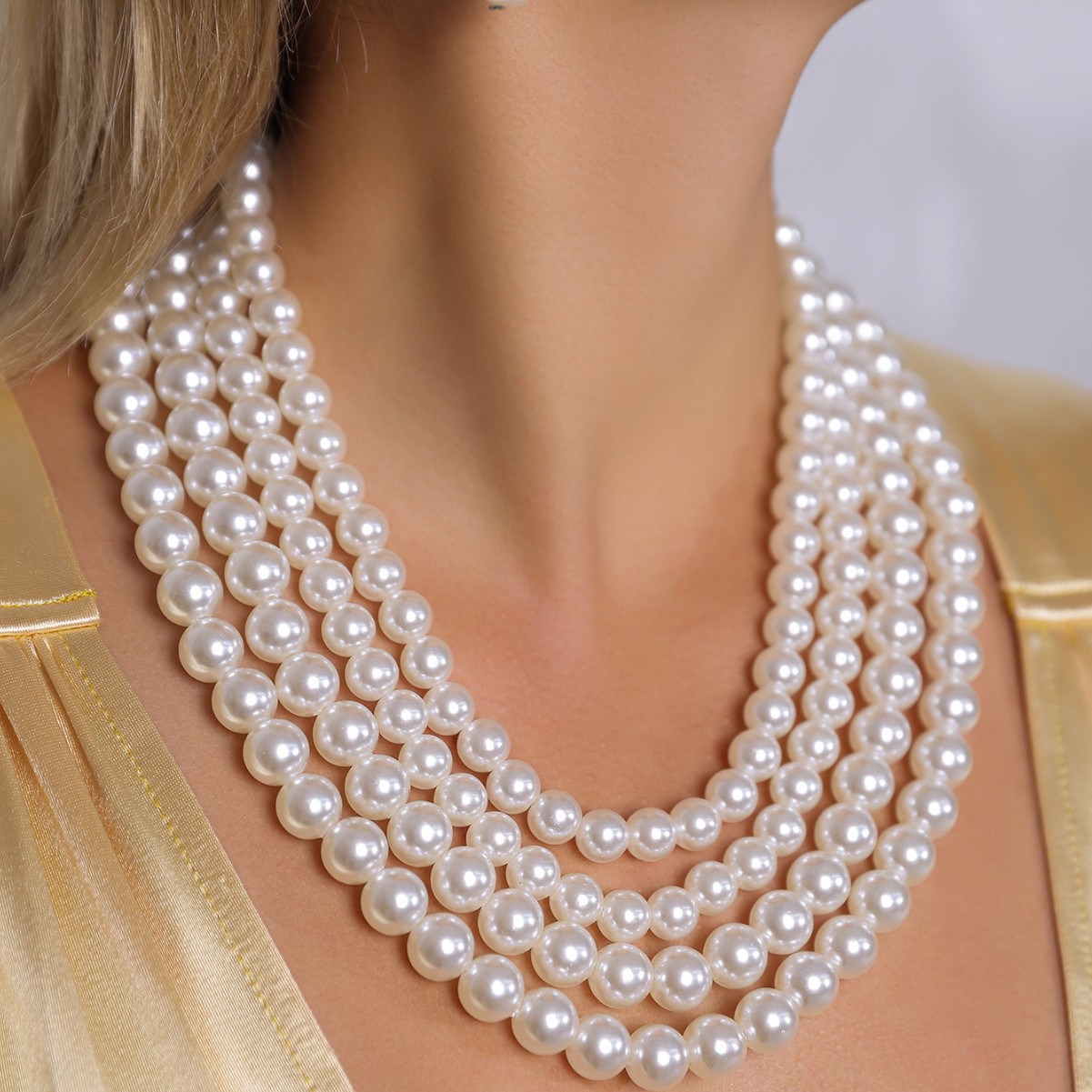
Pearl Paradise’s AAA freshwaters are 80–85% clean, with a high luster that still carries a distinct reflection but loses that razor-sharp edge. This grade is my workhorse. I use a 36-inch rope of 7.0–8.0mm AAA fresh whites—hand-thread on 0.5mm silk—wrapped three times around the neck. Against a chunky collarless blazer in heathered grey, the triple loop creates a soft gleam that reads more fabric than gemstone. I’ve worn the same rope in the rain, inside a motorcycle jacket, and still the nacre holds (freshwater nacre averages 0.8–1.2mm thickness, unlike bead-nucleated saltwater species). The dull matte that develops after months of skin contact isn’t damage; it’s a patina that softens the grade into something more casual.
How Are Pearls Graded? The Five Factors That Hit the Skin
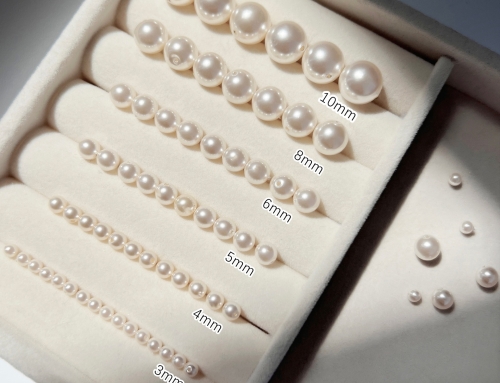
Every pearl grading scale—whether from The Pearl Source, Pearl Paradise, or a local jeweler—weighs five factors: luster, surface quality, shape, size, and nacre thickness. Color is a sixth wildcard. Luster is the first filter. I test it by holding a strand against white paper and checking if I can count my eyelashes in the reflection. That’s AAA or above. Surface: blemishes are ranked by percentage. A clean 95% surface on an 8.0mm akoya means you have to turn the pearl in direct sunlight to find a small dimple; you won’t see it in candlelight. Shape: round is standard, but baroque and drop shapes now score on artistic merit. I collect baroque South Sea pearls from Pinctada maxima, especially 13.0–15.0mm circled specimens with thick bands of nacre. These are technically AA+ or AAA depending on the ring smoothness, but I wear them higher than any perfect round because the organic form hugs asymmetrical necklines better. Size: millimeter counts. A 7.0mm AAA akoya on a thin sterling chain feels intimate; a 14.0mm AAAA South Sea golden pearl set in 18K gold on a thick 20-gauge chain becomes architectural. Nacre thickness: saltwater pearls need at least 0.35mm for Akoya, but Tahitian nacre hits 1.0–2.0mm. I trust a 2.0mm Tahitian nacre over a decade of daily wear. Freshwater pearls are solid nacre; grading affects what you see, not structural integrity.
Wearing Your Grade: From Office Utility to Weekend Layering
Styling the pearl grading scale in daily life isn’t about matching gem reports to outfits. It’s about letting the luster and surface precision dictate how close the pearl sits to the skin and what fabrics it fights or complements. A pearl with a high AAA or AAAA grade reflects light like wet paint. Put it near the face, and it sharpens your gaze. Lower grades—AA+, even AA—throw a softer, more diffused glow. I exploit that. On a morning when I’m wearing a man’s shirt hacked into a cropped boxy silhouette, I’ll pin a single 9.5mm AA+ pink freshwater pearl on a sterling safety pin at the fourth button. The matte nacre blends into the cotton, creating a quiet highlight that never reads “jewelry.” It works because the grade is humble enough to treat like a button, not a brooch.
AAA Akoya with a Chunky Silver Chain. This is my core uniform. I take a 16-inch strand of 7.0–7.5mm AAA akoya, it’s 45 pearls, hand-knotted on 0.45mm silk. The luster is a cool, white mirror. I layer it directly against a 2.5mm heavy curb chain in tarnished sterling 925—no charm, just the links. The pearls and silver sit at different collarbone heights; I adjust the chain to hang 0.5cm lower so the pearls rest on skin and the metal rides just above. I wear this combo over a washed indigo chambray with sleeves rolled to three-quarter, cuffs unbuttoned wide. The akoya’s sharp reflection cuts through the casual softness without making a fuss. The AAA grade matters here because the silver is intentionally rough; if the pearls were AA+ with dull spots, the whole look would go flat. The contrast demands the grade.
AAAA South Sea for Asymmetrical Drama. A single 12.5mm AAAA golden South Sea (Pinctada maxima) pearl, clean across 98% of its surface, with a deep luster you can read a room in. I had it mounted on a 0.8mm 18K gold wire, threaded through only one ear. That’s it. Worn with hair twisted into a low, tight knot and a heavy cotton poplin trench, the gold pearl drops two inches below the lobe, pulling the eye to the jawline. The AAAA grade ensures that even from a meter away, the surface reads like molten honey. An AAA of equal size would have tiny surface pits that break the illusion. Here, the perfection justifies the singular placement; you don’t need a pair. I’ve worn this earring to client meetings with black merino rollnecks and zero other jewelry—the pearl does all the punctuation.
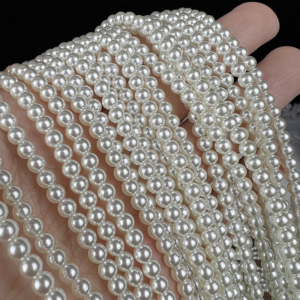
Utility Jumpsuit + Baroque Tin-Cup. I keep a 32-inch tin-cup necklace strung with irregular, semi-baroque freshwater pearls 6.0–7.0mm, graded AA+ for surface (they’re riddled with soft dimples) but with unusually high luster. The pearls are spaced every 2.5cm on 0.5mm silk, no knots between. I drop it over a fatigues-green utility jumpsuit with a zip front and an open collar, the necklace swaying against the heavy cotton. The irregular surfaces and lower clarity grade mean the necklace never looks precious—it moves like a functional chain, catching light only when a pearl twists. This is how I wear pearls on a bike; the AA+ rating almost invites scuffs, and after six months the patina tells a story.
Layering Asymmetrical Earrings. Left ear gets a 7.5mm AAA akoya stud in 14K white gold, snug against the lobe. Right ear wears an earring with three graduated drops: a 8.0mm AA+ Tahitian circled pearl at the top, a 5.0mm AAA akoya in the middle, and a 9.0mm baroque freshwater knot at the bottom, all on a thin 20-gauge copper wire I oxidized myself. The mismatched grades create a gradient of luster—sharp-satin-matte—from top to bottom. Against messy ponytails and oversize knit sweaters, the asymmetry tricks the eye into seeing movement. The lower-grade pearls ground the composition; the high-grade stud anchors the left side so the look doesn’t dissolve into chaos. This is the ultimate “pearl grading scale” styling lesson: mixing grades intentionally mimics the way natural light varies across a surface.
The Thread Count of Pearl Wear: Restringing and Daily Abuse
Grade doesn’t exist in a vacuum. The silk between pearls matters. I restring my daily-wear AAA strands every 8–10 months, using 0.45mm or 0.5mm undyed silk, with a French wire at the clasp. Over time, the thread stretches, dirt embeds, knots compress. An AAA strand worn on loose silk looks like AA by year’s end. I’ve plucked a 7.0mm AAA akoya strand from a drawer after a year of heavy wear; the luster was intact but the silks had grayed, spreading a dingy cast between pearls. After a fresh restring with bright white 0.45mm silk and a new 925 sterling fishhook clasp, the same strand snapped back to AAA clarity. Care is a grading factor too.
For freshwater strands with lower surface grades, I often use a thicker 0.6mm silk in a soft taupe to complement the pearl body color and hide any seam discoloration. A 9.0mm AA+ freshwater strand on taupe silk reads warmer, more organic, and the knots feel plusher against the skin. That tactile shift makes me reach for them on weekends when I’m wearing a thin merino hoodie and want the necklace to feel like a scarf, not jewelry.
I wore my AAA akoya necklace in the shower and the luster went flat. Did I knock it down to AA?
Possibly, but the damage is often to the silk and surface residue, not the nacre itself. Most AAA akoya strands are strung on silk that absorbs water, swells, and traps soap residues. These residues create a cloudy film that mimics luster loss. Get the strand restrung on fresh 0.45mm silk and ask for a gentle polish with a microfiber cloth only—no ultrasonic or chemical dip. The nacre of a bead-nucleated akoya is only 0.35–0.7mm thick; harsh cleaning removes layers fast. After restringing, check luster under daylight: if the reflection still blurs, you’ve abraded the surface permanently, and it’s essentially an AA+ now. Avoid water contact going forward; treat AAA pearls like fine suede.
Can I mix freshwater AAA and saltwater AAAA pearls in one layered look without it looking mismatched?
Absolutely, but you have to treat the freshwater AAA as a texture, not a mirror. Balance the luster distances. Place the AAAA saltwater pearl (say, a 10.0mm Tahitian with razor reflection) closest to your face where the light interacts with skin tones. Use the freshwater AAA (like an 8.0mm metallic strand) further down, closer to fabric. The eye registers the higher luster first, then trails to the softer surface. Avoid setting them on the same plane—keep the saltwater on a shorter choker or a single drop earring, the freshwater on a longer rope or layered further down. The contrast in type of luster (hard vs. soft) creates depth; the grade disparity is actually what makes the stack look intentional, not accidental.