Why Most “Custom” Pearl Jewelry Is Actually Mass-Produced
Walk into a luxury boutique. That “personalized” initial pendant hanging under glass? I’ve watched the same casting mold get used in factories across three continents. The salesperson says it’s custom because someone snapped a gold letter onto a standard-issue pearl. That isn’t personalization. That’s assembly.
At PearlsNation, I deal direct with oyster farmers from the Gulf of Mannar to Tahiti’s atolls. I know what a 9.5mm Pinctada Maxima South Sea pearl weighs dry (roughly 3.8 grams for a near-round). I know the nacre thickness required before a pearl can survive drilling—minimum 0.8mm, though 1.2mm is what I spec for anything getting daily wear. Most jewelry chains don’t discuss these numbers. They don’t want you asking.
Personalized pearl jewelry means something specific in my workshop: you select the exact pearl, you approve the setting alloy, and the engraving happens under a microscope with a 120-degree graver. No shortcuts. No stock parts dressed up as custom.
What Actually Happens When You Order a Custom Birthstone Pearl Bracelet
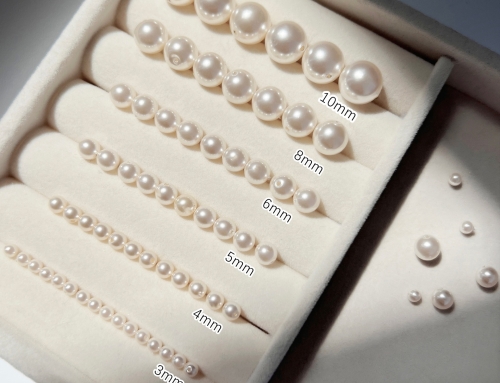
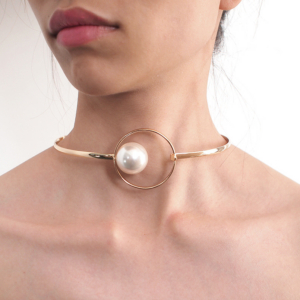 A custom birthstone pearl bracelet crosses my bench about 40 times a month. Here’s the process no catalog shows you. First, pearl selection. Freshwater pearls from Hyriopsis cumingii mussels run 6.0mm to 11.0mm and cost less than saltwater, but their luster has a softer, satin finish. Akoya pearls from Pinctada fucata martensii run smaller—5.5mm to 9.0mm—with mirror-sharp reflectivity. For bracelets, I recommend 7.0mm to 8.5mm Akoya or 8.0mm to 10.0mm Freshwater. Anything smaller gets lost on the wrist. Anything larger requires heavier findings and bumps the total weight past 18 grams, which some clients find uncomfortable.
The birthstone integration isn’t gluing a chip onto a clasp. I recess-set genuine stones—rubies for July, sapphires for September, emeralds for May—into Sterling 925 end caps or 14K gold stations using 1.2mm bezel cups. Each stone gets individually calibrated. A 5mm round cabochon moonstone for June doesn’t sit the same as a 5mm faceted garnet for January. Depths vary. The setter adjusts.
Bracelet threading matters. I use 0.45mm double-knotted silk between each pearl. Synthetic threads fail faster. Silk grabs the knot and holds. Stretch cord? I refuse it entirely for anything over 6.0mm pearls. The weight distribution tears through elastic within eight months of regular wear. I’ve repaired enough of those disasters to know.
Initial Pearl Necklaces: The Engraving Nobody Sees
The initial pearl necklace for her trend exploded on social media. Tiny gold letters dangling beside a single pearl. Charming. Simple. Except most versions use electroplated brass letters weighing 0.3 grams, stamped by machine, with edges sharp enough to snag silk blouses. I’ve handled returns from major retailers where the “gold” letter wore down to nickel-base within six weeks.
My approach uses solid 14K or 18K gold initials, cast via lost-wax method, hand-filed to remove sprue marks, then polished with tripoli compound followed by rouge. Weight starts at 0.9 grams for a 12mm lowercase initial. Yes, that’s heavier. Yes, the pearl needs to be larger to balance visually—8.5mm minimum for a single-pendant drop, 9.5mm preferred. A Pinctada Maxima South Sea pearl at 10.2mm with a 14K initial beside it hangs beautifully on a 16-inch or 18-inch chain.
Chain choice alters the entire look. A 1.1mm box chain in Sterling 925 keeps the necklace under $200 total. A 1.3mm 14K gold cable chain with a spring-ring clasp pushes it toward $500, depending on pearl grade. I tell clients to prioritize the pearl grade over the chain metal. Swap the chain later. Grade-AAA Akoya with razor-sharp luster on a silver chain beats Grade-A dullness on gold every time.
Engraved Pearl Jewelry Gifts That Won’t Disappoint by February
Engraved pearl jewelry gifts spike every December. By February, I get the sad emails. “The engraving wore off.” “The pearl cracked near the drill hole.” Most engraving on pearl jewelry isn’t on the pearl at all—it’s on a pendant backplate, a charm, a clasp. Engraving directly into nacre requires a level of precision most production jewelers skip.
Nacre is soft—2.5 to 4.0 on the Mohs hardness scale. A standard rotary engraver at 20,000 RPM will shred the surface. I use a stationary graver under 10x magnification, working at roughly 15-20 degrees to the surface, never deeper than 0.15mm into the nacre layer. On a pearl with 1.8mm nacre thickness (common in high-grade South Sea), that leaves ample protection for the conchiolin and aragonite layers beneath. On a thin-nacre Akoya at 0.5mm? I won’t touch it. I engrave the setting instead.
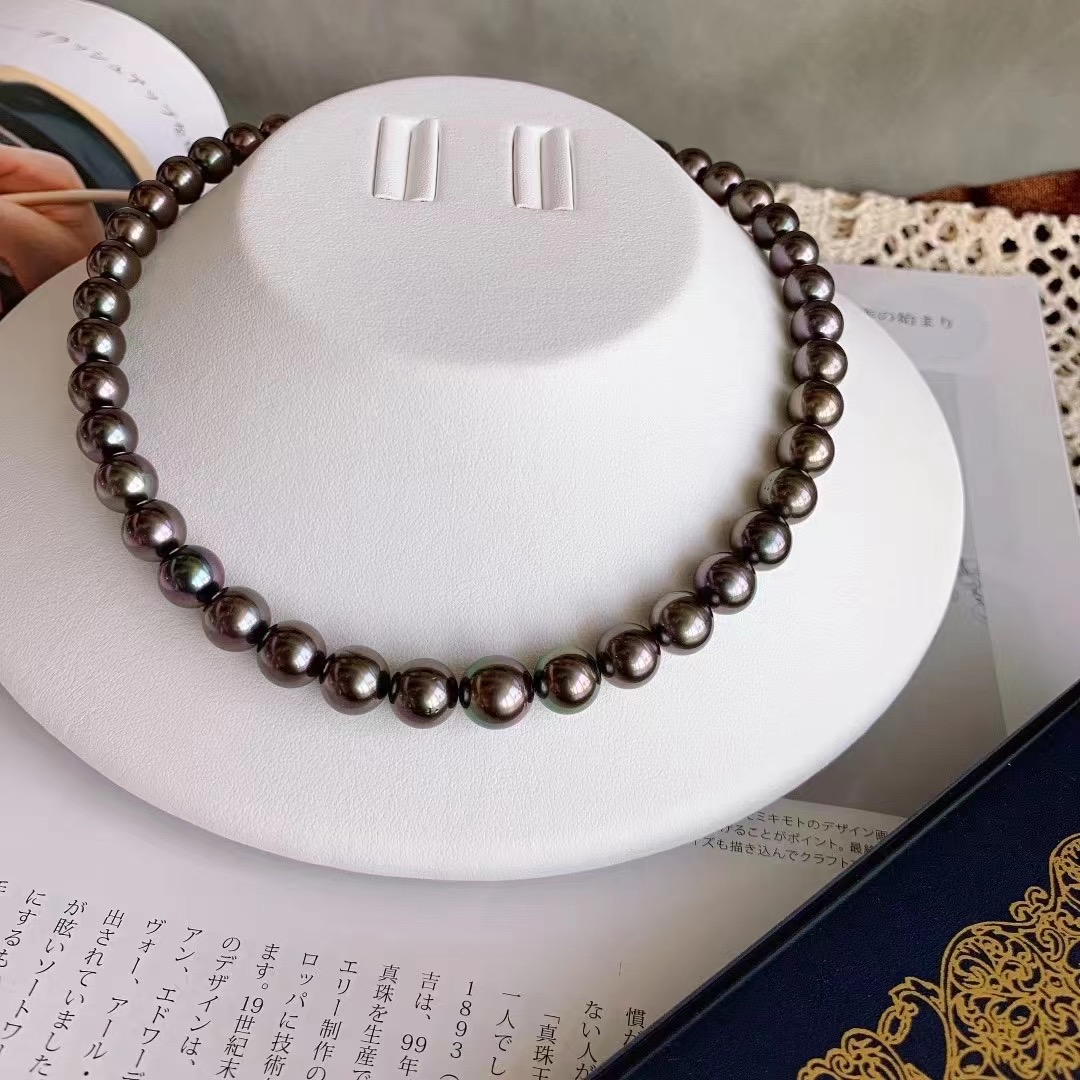
The most requested phrases run short: “Maman,” a date, coordinates, a single word. Long messages require larger pearls—12mm minimum—or a pendant backplate. I’ve engraved “Je t’appartiens” on a 14K gold disc behind a 10.5mm Tahitian pearl. The black-lipped Pinctada Margaritifera oyster produces pearls with thick, dark nacre that holds subtle surface engraving, but the contrast reads poorly. Gold behind the pearl, engraved deeply at 0.3mm with a square graver, lasts decades.
| Component | Material / Alloy | Diameter / Dimensions | Weight | Notes |
|---|---|---|---|---|
| Akoya Pearl (AAA Grade) | Pinctada fucata martensii nacre | 7.5mm – 8.0mm | 2.6g – 3.1g | Nacre thickness 0.6mm – 0.9mm; mirror luster |
| South Sea Pearl (AA+ Grade) | Pinctada Maxima nacre | 9.5mm – 10.5mm | 3.8g – 4.6g | Nacre thickness 1.2mm – 2.0mm; satin to sharp luster |
| Tahitian Pearl (A Grade) | Pinctada Margaritifera nacre | 8.0mm – 11.0mm | 2.9g – 5.2g | Dark body color; peacock overtone common |
| Solid Gold Initial (14K) | 58.5% Au + Cu/Ag alloy | 10mm – 14mm height | 0.7g – 1.2g | Lost-wax cast; hand-filed edges |
| Sterling Silver Chain | 92.5% Ag + 7.5% Cu | 1.1mm box chain, 16″–20″ | 4.8g – 6.3g | Spring-ring clasp; rhodium-plated option |
| Silk Thread (Knotted) | Natural silk, 3-ply twisted | 0.45mm gauge | N/A | Double-knotted between each pearl |
| Birthstone Setting (Bezel) | Sterling 925 or 14K gold | 4.0mm – 5.0mm stone cup | 0.5g – 0.9g | Recess-set; hand-calibrated per stone |
The Global Warming Problem Nobody in Luxury Talks About
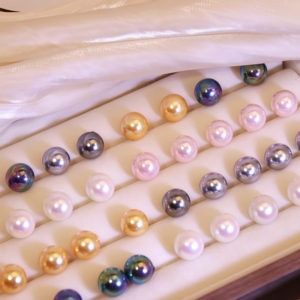 Oysters are sensitive. A Pinctada Maxima requires water temperatures between 24°C and 30°C. When the Indian Ocean warmed 1.2°C above baseline in 2023, farmers in Indonesia lost 18% of their seeded stock. Pearl nucleation failed. The oysters rejected the mantle tissue grafts. Warmer water accelerates metabolism, stresses the animal, and produces thinner nacre layers over shorter cultivation periods.
I source directly from cooperatives that monitor water temperature daily. My South Sea supplier sends me weekly salinity and temperature logs. In 2024, three harvests came in with nacre averaging 1.0mm instead of the contracted 1.4mm. I rejected two of them. That’s the cost of transparency—I lose inventory rather than sell substandard product. Most retailers don’t measure nacre thickness at all. They buy by visual grade and resell at 6x markup.
This matters for personalized pearl jewelry because thin nacre fails at the drill hole. A 0.4mm nacre layer around a 7.5mm Akoya will develop hairline fractures within a year of pendant wear. The pearl chips. The client blames herself for “wearing it wrong.” She didn’t. The pearl was structurally insufficient from harvest.
Modern Trends of Personalized Pearl Jewelry for Women That Aren’t Just Instagram Noise
The modern trends of personalized pearl jewelry for women worth paying attention to in 2025 aren’t about stacking ten necklaces or mixing pearl types—though both can look sharp. The real shift is material honesty. Clients under 35 ask about sourcing. They want GPS coordinates of the oyster bed. They ask whether the gold is recycled (most 14K casting grain already contains 30-60% recycled content, whether advertised or not). They question the markup.
One trend with actual longevity: mixed-metal personalization. A Sterling 925 chain with a 14K gold initial beside a dark Tahitian pearl. The contrast works because the metals don’t compete—silver recedes, gold draws the eye, the pearl holds center. Total raw material cost on that configuration, with an 8.5mm Tahitian at AA grade: roughly $85-$110 at direct-source pricing. I sell it for $245. The department store version, using freshwater dyed-black pearls and gold-plated initials, retails at $195. The material difference is staggering, but the price gap isn’t.
Another trend: asymmetrical pearl sizes on single-strand bracelets. A 9.0mm South Sea center pearl flanked by 6.5mm Akoyas, spaced with 3.0mm 14K gold beads. It breaks the uniformity rule pearl jewelers have enforced for a century. It also allows a lower total pearl count, keeping the price accessible while the single large pearl delivers visual impact. I build these on 0.45mm silk with knots between every bead and pearl—no shortcuts on structure just because the design is unconventional.
Fair-Trade Certification: What It Actually Delivers
Fair-trade pearl certification isn’t a sticker. It’s audit paperwork tracing from seeding technician to harvester to processor. My Tahitian supplier employs 14 technicians who each seed roughly 2,000 oysters annually. Fair-trade premiums fund a community clinic and a water-quality monitoring station. The pearls cost 18-22% more than non-certified equivalents. I accept that margin reduction because the documentation exists and I’ve walked the sorting sheds myself.
When a client asks for an engraved pearl pendant with a birthstone accent and wants it fair-trade certified, I can produce the audit trail. Most jewelers can’t. They’ll say “ethical sourcing” and mean they bought from a wholesaler who signed a form once. Demand specifics. Ask for the oyster species, the harvest date, the nacre thickness measurement. If they can’t answer, the markup isn’t buying what you think it is.
How to Commission Personalized Pearl Jewelry Without Getting Burned
 First, decide whether the personalization touches the pearl or the setting. If you want initials, dates, or coordinates on the pearl itself, you need a pearl with nacre at minimum 1.0mm thick. That eliminates most Akoya under AAA grade and most freshwater under 8.0mm. Budget $180-$400 for the pearl alone, depending on type and size.
If the personalization sits on the setting—a pendant backplate, a charm, a clasp—your pearl options broaden. A Grade-AA 7.5mm Akoya at $45 direct cost does fine with a 14K gold engraved disc behind it. The engraving depth on 20-gauge gold sheet (0.8mm thickness) can go to 0.3mm safely. Deeper engraving risks structural weakness on thin stock.
For the custom birthstone pearl bracelet, specify whether you want the birthstone fixed or interchangeable. Fixed stations last longer—no threads to strip, no lost components. Interchangeable systems use threaded bezels that, on Sterling 925, wear down after roughly 200 rotations. For a piece worn daily, fixed is smarter. For occasional wear, interchangeable offers variety. I build both. I just want you to know the trade-off before you pay.
I ordered a personalized pearl necklace and the initial letter scratched my collarbone. Is that a design flaw or bad materials?
Likely both. Mass-produced initial pendants are stamped from thin sheet metal—often 0.4mm brass with gold electroplating. The edges aren’t filed; they’re tumbled briefly, which rounds corners inconsistently. Run your finger along the back edge. If it catches skin, the finishing was rushed. A properly finished gold initial should have smooth, radiused edges with no tool marks. At minimum, the pendant back should feel as smooth as the front. Also check the bail (the loop connecting the pendant to the chain). Stamped bails often have internal burrs that abrade the chain link. A cast bail with a drilled hole, hand-deburred, won’t do that. If the pendant is under 0.5 grams, it’s probably stamped stock, not custom work.
My engraved pearl faded after six months. Can the engraving be restored, or is the pearl ruined?
Depends on what “faded” means. If the engraving was done on the nacre surface and has simply worn shallow from friction against clothing or skin, a skilled engraver can deepen the existing lines—provided the remaining nacre thickness supports it. You’ll need a jeweler with a microscope to measure the current nacre depth at the engraving site. If the nacre is below 0.5mm, deepening risks exposing the conchiolin layer (which looks chalky and feels rough). In that case, restoration isn’t viable. The pearl isn’t ruined structurally—it just can’t hold surface engraving anymore. If the engraving was on a gold backplate and “faded,” what actually happened is the gold surface wore down. Re-engraving fresh metal behind the pearl solves that. For future pieces: ask for the nacre thickness measurement before agreeing to direct pearl engraving. If they can’t provide it, engrave the setting instead.
Sterling 925 vs. 14K Gold: The Setting Decision That Changes Everything
Sterling 925 is 92.5% silver and 7.5% copper. It tarnishes. It requires occasional polishing. It also costs roughly 1/20th the price of 14K gold by weight. For a custom birthstone pearl bracelet with five pearls and five stone stations, the metal choice swings the total cost from $150 (all Sterling) to $900+ (all 14K gold). I tell clients: put your budget into the pearls and the personalization work. Settings can be upgraded later. A beautifully knotted bracelet on Sterling with genuine birthstones and AAA Akoya pearls will look splendid for years, provided you wipe it down after wear and store it in anti-tarnish cloth.
14K gold—58.5% pure gold alloyed with copper and silver—holds its color indefinitely. It’s heavier (density roughly 13.5 g/cm³ versus Sterling’s 10.4 g/cm³). A 14K gold initial pendant at 1.0 gram feels substantial against a 3.5-gram pearl. The color warmth complements cream and golden South Sea pearls. For white, silver, or blue Akoya overtones, Sterling or white gold reads more coherently.
Direct Coastal Trade: Why I Skip the Middlemen Entirely
My business model confuses industry veterans. I buy directly from pearl farming cooperatives in Indonesia, Tahiti, and Japan’s Ago Bay. No wholesalers. No auctions. I wire payment, they ship DHL, pearls arrive at my workshop within 12 days of harvest. A 9.5mm South Sea pearl that costs $55 at cooperative pricing sells for $280-$350 in my finished pieces. That same pearl, routed through three distributors and a retail buyer, hits $900-$1,200 in a mall showcase. The pearl is identical. The supply chain is the only variable.
This direct model makes personalized pearl jewelry honest in a way traditional retail can’t match. When I quote $245 for an initial pearl necklace on Sterling with an 8.0mm Akoya, I can show you what the pearl cost, what the gold initial cost to cast and finish, what the chain cost, and what my labor added. No mystery. No “brand prestige” fee. Just materials and skilled work, priced accordingly.
Ocean temperatures keep rising. Oyster mortality keeps climbing. Pearl supply is tightening. The smart buyer in 2025 isn’t hunting for the cheapest strand—she’s finding a jeweler who measures nacre, discloses sourcing, and charges for craftsmanship rather than a logo. That’s the entire thesis behind what I build. Nothing more complicated than that.