The Weight of a Single Strand
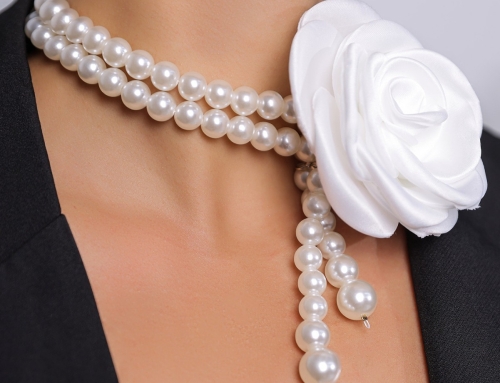
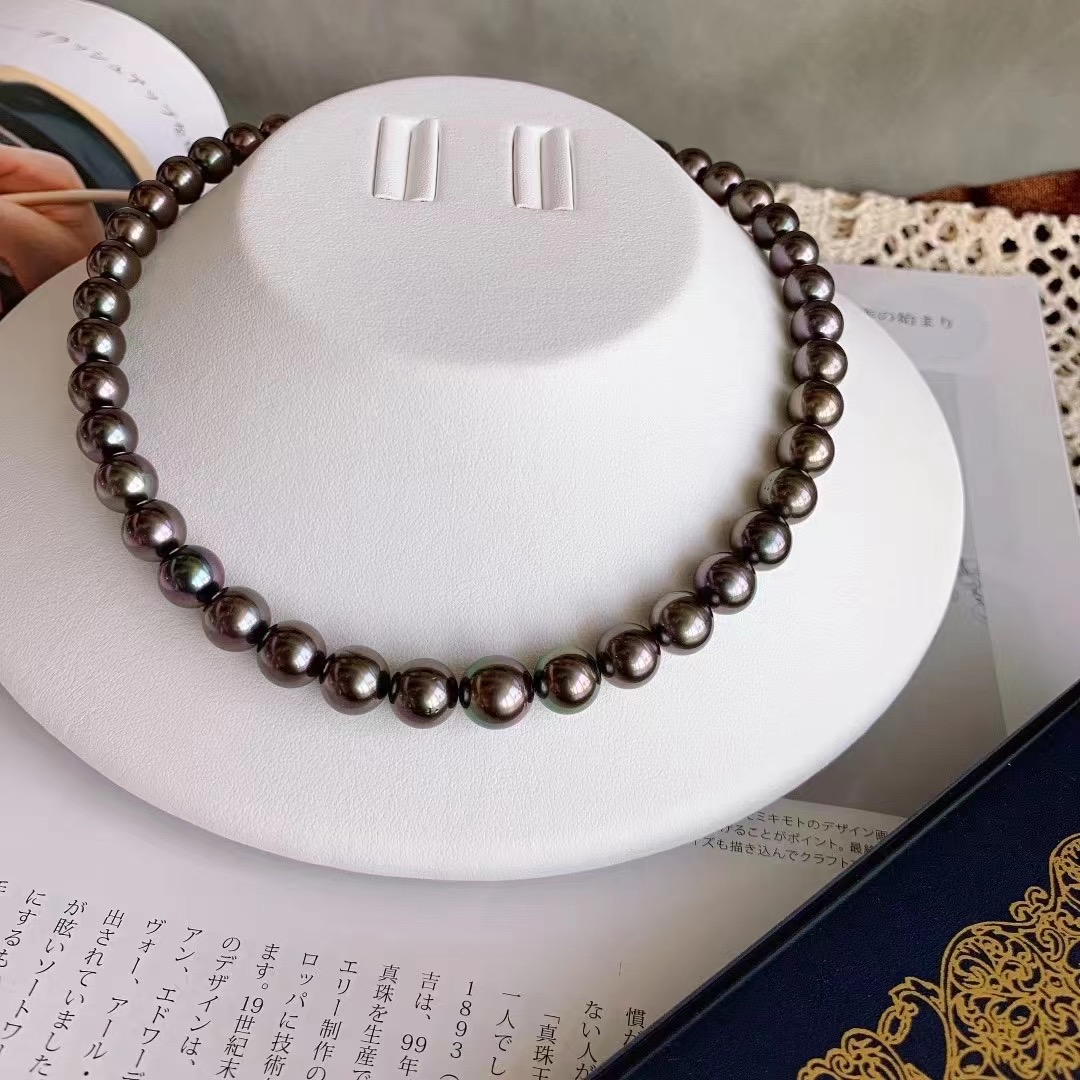
A shipment of loose South Sea rounds hits the workbench. I pour them from the parcel onto a worn chamois leather pad. The clicking sound isn’t musical—it’s geological. These aren’t beads. They are calcium carbonate layers secreted by a Pinctada Maxima oyster over 24 to 36 months. I pick up a 10mm white specimen with a pair of brass tweezers. Under a 10x loupe, the surface isn’t a flat mirror. It’s a terrain of overlapping aragonite platelets. That deep, satiny glow—gemologists call it “orient”—is light refracting through 0.8mm of translucent nacre. When a bride asks me why this strand feels different from something in a mall display case, I hand her the loupe. Look at the pores. Look at the absence of a dull, chalky, peeling coating. This is what “purity and elegance wedding pearls” actually means at a molecular level.
Reading the Nacre: A Metallurgist’s Approach to Softness
Working with silver and bridal pearl jewelry simultaneously demands a split brain. Right now, I am forming a 20-gauge Sterling 925 wire bail on a bench pin. The file bites into the silver with a satisfying drag. Silver is a 2.7 on the Mohs scale of mineral hardness. A South Sea pearl sits at 2.5 to 3.0. That proximity creates a risk during setting. One slip of the bezel pusher, and the steel tip gouges the pearl surface permanently. I don’t just “pick a setting.” I engineer a buffer zone. I solder a 0.5mm 18K yellow gold spacer bead between the 12mm drop pearl and the silver cap. Gold is ductile. It deforms before the nacre does. That’s a genuine, physically-driven styling secret you won’t find in a fashion blog: mixed-metal engineering isn’t just aesthetic contrast; it’s impact protection.
The Silk Thread Spec: Why 0.45mm Matters
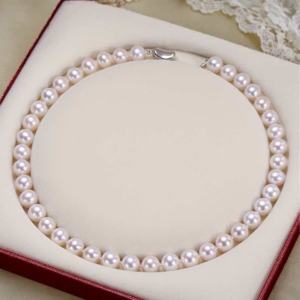
Most bridal strands fail inside, where you can’t see. I knot on pure silk Griffin thread, 0.45mm diameter, carded specifically for fine jewelry. Polyester surgical thread is cheaper and stronger in raw tensile strength, but it has a memory. It kinks. Silk drapes. But here is the cold, hard data a bench jeweler thinks about: a 16-inch strand of 8mm Akoya pearls (species Pinctada Fucata) demands exactly 47 double-knots. I draw the thread through a triangular needle, and pull each knot down tight between the pearls using tweezers. The tension must be identical. Too loose, and the silk stretches, leaving ugly gaps during the ceremony. Too tight, and the strand acts rigid, stressing the drill holes at the pearl’s edges. A classic wedding pearl necklace for brides should buckle slightly when placed on a flat surface, not roll into a tight coil. That geometry speaks louder than any sparkle.
| Component | Specification | Physical Value | Alloy / Material | Trade Note |
|---|---|---|---|---|
| Center Pearl | Round South Sea | 11.2mm diameter, 3.8g | Nacre (Pinctada Maxima) | Luster: “Mirror to Metallic” |
| Strand Pearls | Near-Round Akoya | 7.5mm diameter, 0.8g each | Nacre (Pinctada Fucata) | Surface: “Clean to Lightly Blemished” |
| Knotting Thread | Griffin Silk Cord | 0.45mm gauge | 100% Natural Silk | Pre-stretched 18% |
| Clasp | Hand-Fabricated Fishhook | 2.4g total weight | Sterling 925 Silver | Hardness: Dead Soft Annealed |
| Earring Findings | Leverback with Guard | 0.8mm wire thickness | 18K Yellow Gold | Safety Clutch: Double Lock |
| Bridesmaid Bracelet | Single Pearl Station | 8.5mm pearl, 6.5″ chain | 925 Silver / Freshwater Pearl | Chain: 1.2mm Cable Link |
Purity Is Measured in Microns, Not Metaphors
 A bride emailed me last July. She had worn her mother’s vintage pearl strand in a humid garden, and the nacre had peeled off in sheets, revealing a chalky resin core underneath. That’s what happens when you have a 0.15mm nacre coating applied by a machine, not an oyster. When I curate purity and elegance wedding pearls, I measure the nacre depth with a digital caliper at the drill hole. A true and authentic bridal pearl jewelry piece starts at a minimum of 0.5mm nacre thickness on the sides. High-quality Tahitian drops (from Pinctada Margaritifera) routinely clock in at 1.0mm to 1.5mm. I’ve sectioned damaged pearls on the band saw just to confirm the layering. The bride doesn’t ask for a cross-section photo, but I sleep better knowing the nacre ratio exceeds 80%. The warmth of the pearl against a satin dress isn’t just romantic; it’s physics. A thick nacre layer acts as an insulator, so high-quality pearls feel cool initially but warm quickly against the skin. Cheap imitations stay cold.
Draping on Fabric: The Collarbone Rule
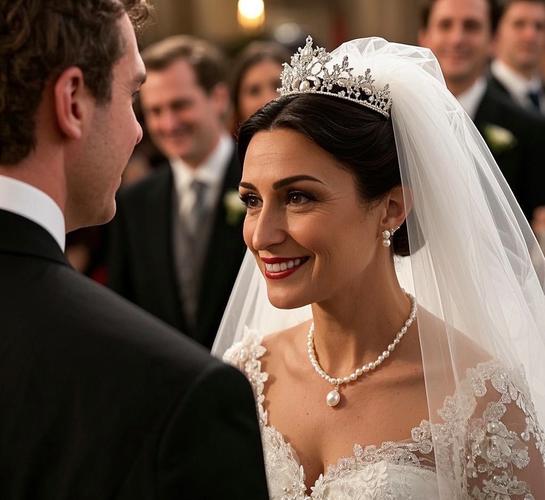
A wedding dress has a structural geometry. A plunging V-neckline creates an acute angle. A straight strapless Bodice creates a horizontal line. Placing a pearl strand requires a ruler, not a mirror. A 16-inch choker length falls high on the neck. It works with off-shoulder gowns. But a 16-inch strand of 11mm South Sea pearls won’t sit flush; the pearl diameter eats the inner circumference. A 19-inch strand of 7.5mm pearls sits lower, tracking the clavicle precisely. I recently hand-knotted a dynamic mixed-length strand for a New York bride: 15-inch front drop, connecting to a 20-inch back drop, joined by a custom twisted silver torque hinge I formed from a 14-gauge sheet. The hinge allowed the pearls to follow the V-back of her crepe dress without twisting. Wedding pearl necklaces for brides succeed or fail entirely on this physics—how the rigid curvature of a knotted cord interacts with the moving geometry of a human body.
Tool Markings on Bridesmaid Gifts: The Value of Asymmetry
Batch production is a lie. I don’t stamp out identical bridesmaid pearl gift sets. A set of six sterling silver bracelets took me 14 hours at the soldering station. I use hard silver solder flowing at 745°C, a reducing flame from a Smith Little Torch, and a titanium pick to reposition the small 4mm jump rings while the metal glowed orange. Each bracelet features a single 8.5mm button-shaped freshwater pearl on a 1.2mm cable chain. I file the sharp burrs off the wire ends with a #4 cut file by Grobet. Under 10x magnification, each bracelet has slightly different file strokes. That hand-sawed texture is my fingerprint. When the bridal party opens these gifts, they aren’t receiving identical widgets; they are receiving six distinct pieces of a morning’s labor. The silver has a satin brush finish, achieved by dragging 0000 steel wool longitudinally. That texture resists smudges better than a high-polish finish. That’s the kind of practical, bench-level wisdom that saves a bridesmaid from constantly wiping her bracelet on her chiffon dress.
Authentic Bridal Pearl Styling Secrets: The Hidden Wire
Earrings fail from stress fractures, not bad design. A heavy 12mm drop pearl dangling from a flimsy French wire hook will snap the wire at the bend within a month. Here’s my authentic bridal pearl jewelry styling secrets breakdown: I fabricate leverback findings from 18K gold wire, 0.8mm thick. I fuse the connection point, not solder it. Fusing uses the same metal, melting the grain structure together without introducing a weaker solder alloy. The pearl dangle hangs from a closed 0.7mm loop, hard-drawn. The loop has a tiny soldered bead inside the pearl’s drill hole cup. You cannot see this fix from the outside. It’s invisible engineering. The bride dances, the pearl swings, the leverback clicks shut with a positive mechanical engagement. The joint doesn’t articulate on a microscopic gap that will snag hair. I grind and polish the edge of that locking lever under a microscope to a 45-degree beveled chamfer. Everything about a wedding day is chaotic. The jewelry should be a sealed system.
The Drill Hole and the Knot: Anatomy of a Connection
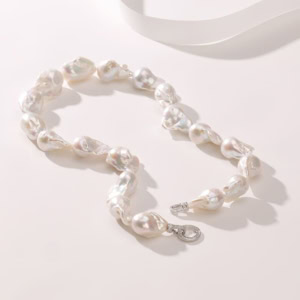 Pearl drill holes are not neutral. A fully-drilled 7.5mm Akoya has a hole of 0.8mm. A half-drilled pearl for stud earrings has a hole depth of roughly 4mm, ending in a slight cone. When I insert a sterling silver post into a half-drilled pearl, I use a two-part epoxy with a working time of 5 minutes. I score the post with a separating disc to create mechanical ridges. I fill the drill hole precisely two-thirds full. If you overfill, the paste hydraulically locks before the post seats fully, leaving an embarrassing 0.5mm gap between pearl and metal cup. That gap collects sweat, foundation makeup, and eventually, a disgusting grey residue. The fix is brutal: drill out the old epoxy, ream the hole slightly larger, and start again. I’ve fixed this mistake from other jewelers too many times to romanticize the pearl setting process. Purity in wedding pearls means invisible seams. The crisp, flushed edge between a perfectly clean nacre and a polished silver cup is the true hallmark of a bench jeweler’s concentration.
Lighting Under the Veil / The Luster Drop
Luster is an optical phenomenon. It’s the sharpness of reflected light, not the pearl’s color or shape. A wedding has brutally inconsistent lighting: bright window light at the prep house, dim amber candles at the altar, harsh flash at the reception. Brides need to test pearl earrings under a single fluorescent tube. If the pearl reflects a bright, compact disc of light with a sharply defined edge, it has high luster. If the reflection is a fuzzy, diffuse wash, the nacre is too thin, too organic, or too porous. A top-grade metallic-luster South Sea pearl will show a direct reflection of a windowpane grid. I often set these in minimal bezels with an open back so ambient light from the white dress bounces up and illuminates the pearl’s lower hemisphere. This trick eliminates the dark shadow under the pearl that makes it look like a dead ball. The entire piece activates. That’s the most actionable of authentic bridal pearl jewelry styling secrets: the open cup.
Assembling the Bridal Suite: A Timeline
I don’t assemble a suite in a day. I stage it. Morning 1: sort 50 loose pearls by body color, overtone, and luster. I match three pairs of earrings for a bride and her two sisters, ensuring the champagne overtones match. Morning 2: hand-fabricate the silver findings. Use a saw frame with a 2/0 blade to cut the triangle gallery wires for the pendant. Afternoon 2: string the main strand using the double-knot technique, breaking only once for coffee. Each knot gets a gentle tug against a leather pad. Morning 3: final polish with a soft unstitched muslin wheel and white diamond compound, avoiding the pearls completely. Wash the silver in hot soapy water, steam clean, and seal in an anti-tarnish bag. The result is a set of wedding pearl necklaces for brides that weighs around 42 grams total. The silver feels cool, the pearls feel velvety. The clasp has a satisfying, precise snap. The bridesmaid pearl gift sets get a final rubdown with a soft Selvyt cloth.
After the Wedding: The Chemistry of Storage
Pearls are organic. Chemically, they are calcium carbonate in a conchiolin matrix. They dissolve in acid, including human sweat, which has an average pH of 4.5 to 7. A ring on a sweaty hand will erode. After the reception, instruct the bride to wipe the strand with a clean, slightly damp microfiber cloth. No ultrasonic cleaners. The violent cavitation of bubbles will fracture the nacre layers along the growth rings of the pearl. I’ve seen a South Sea pearl split right down the middle in an ultrasonic bath. A safe storage rule: no plastic bags, no cedar-lined boxes. The oils in cedar can react. Keep the strand flat in a silk pouch. The 0.45mm silk thread will last for years, but a professional restringing should occur every 24 months under regular wear. The bench jeweler’s responsibility isn’t just selling an object; it’s ensuring the nacre doesn’t peel, the silver doesn’t snap, and the silk doesn’t rot. That’s the long game of authentic bridal pearl jewelry.
I wore my pearl strand in the shower and now the luster looks washed out, almost chalky. Is the nacre ruined?
The chalky appearance is surface etching. Tap water contains dissolved minerals and often chlorine or chloramine in municipal systems. These chemicals, combined with soap scum, adhere to the aragonite platelets and cause micro-corrosion. The nacre isn’t necessarily delaminated yet. Start by wiping the strand (pearls and silk) with lint-free microfiber lightly dampened with distilled water—do not immerse the strand. The silk thread is 0.45mm natural Griffin, and if it gets waterlogged and stretches, the knots between 7.5mm pearls will shift, creating gaps. Dry the strand flat. If the luster doesn’t return, the surface damage is permanent. A bench jeweler can very lightly buff the nacre with specialized soft compounds, but each micron removed is a permanent loss. Keep pearls away from washing routines.
My clasp keeps slipping open on my 925 silver pearl bracelet. Can I just tighten it with pliers at home?
Probably not. A sterling silver fishhook clasp relies on a specific spring tension in the wire or a tongue mechanism. Using common household pliers (usually with serrated jaws) will gouge the 925 silver permanently, introducing micro-cracks. If the clasp is a simple hook, the issue is usually that the wire has been bent past its elastic limit. The fix involves annealing the silver (heating to 650°C until it glows dull red) to relieve the stress, then re-bending and quenching. This requires a jeweler’s torch and a borax-based flux to prevent fire scale. If the clasp features a mechanical box tongue, the tiny hardened spring inside has fatigued. This spring typically measures 0.3mm thick hardened steel or gold, and you can’t adjust it. It must be replaced. Bring the piece to a bench jeweler who can fabricate a new clasp insert, ensuring the new 14-gauge wire loop matches the existing chain link diameter precisely.