Why a Freshly Sawed Silver Setting Changes the Birthstone
The bench is littered with 20-gauge Sterling 925 filings right now. I’ve been hand-sawing a collet for a 9.5mm Pinctada Maxima pearl, and the tooth of the blade leaves a specific texture on the silver. That texture isn’t a flaw. It’s a grip. It’s what keeps a bezel from slipping when you push a high-dome Australian pearl into the seat. June birthstone jewelry isn’t about a generic white orb sitting in a catalog setting. It’s about that specific click when the nacre, sitting at a 0.8mm thickness, settles against a 0.45mm pure silk thread knot.
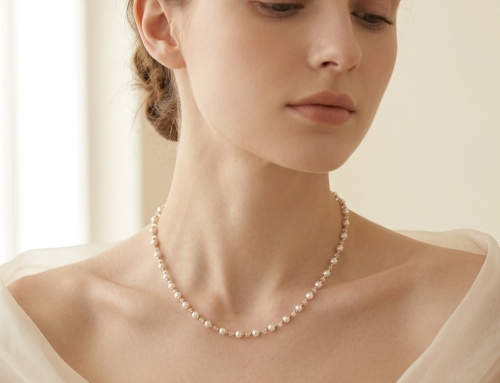
Many buying guides for june birthstone jewelry skip the grit. They won’t tell you the weight of a choker strung on double-knotted silk versus one strung on synthetic nylon. Silk weighs next to nothing. 14 inches of 0.45mm silk can weigh under 0.5 grams, but it absorbs the organic oils from Pinctada Margaritifera (Tahitian) pearls differently than a plastic fiber. You feel the difference in the drape. A nylon strand repels skin oil and slides stiffly across the clavicle. A silk strand settles. It warms up. That’s the first styling secret no one gives you.
Authentic June Birthstone Jewelry Styling Secrets From The Workbench
The 0.8mm Nacre Check: Density Before Luster
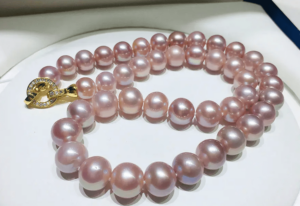
Before discussing outfits, we talk about survival. A pearl destined for a daily-wear ring—especially a june birthday jewelry gift meant to be worn while typing or driving—needs a nacre depth of at least 0.6mm. I reject anything under 0.4mm for ring applications. South Sea Pinctada Maxima pearls give us 2.0mm to 4.0mm of crystalline calcium carbonate laid down in concentric aragonite layers. Freshwater pearls often sit around 0.5mm to 1.2mm. Thin nacre chips off the drill hole edge. You’ll see it under a 10x loupe as a ragged, peeling rim. That rim scrapes the silk thread until it frays.
When I set a 10mm baroque pearl into a 925 silver ring, I don’t rely on glue. I use a sawed-in-place bearing with fine tension prongs. The setting’s weight—roughly 8.5 grams for a heavy signet style—counterbalances the pearl’s organic buoyancy. If the ring is top-heavy, it spins on the finger. All day long, the pearl faces the palm, not the air. A Stylish ring that doesn’t face the world is just a failed mechanism.
Thread Tension: The 0.45mm Silk Equation
Hand-knotting sounds romantic. It’s actually a tension discipline. For a 16-inch strand of 7.5mm Akoya pearls, I cut exactly 42 inches of 0.45mm pure silk. I soak it in distilled water for 10 minutes. Wet silk stretches. If you don’t pre-stretch the thread during stringing, the knots will loosen within a week of wear, exposing gaps of bare thread between pearls. Gaps collect dead skin cells and lotion. The string turns grey. The pearls start grinding against each other—nacre rubbing nacre without a silk buffer produces microscopic chalky abrasions around the drill holes.
Knotting tension is the invisible architecture of authentic june birthstone jewelry styling secrets. A French wire finish at the clasp (14K yellow gold with a magnetic safety catch) needs precisely 3 passes of wire through the gimp. Any fewer, and the wire pulls free. Any more, and the wire crimps, creating a sharp edge that saws against the end pearl. I bend the finished wire into a graceful, 2mm-radius loop using round-nose pliers. That loop becomes the quietest, most functional detail on the whole strand.
Heavy Gauge Earrings And The Pearl’s Epithelial Story
Drop earrings pose a balance problem. A 12mm South Sea drop weighs approximately 3.2 carats (or 0.64 grams) on its own. Attach that to a Sterling 925 ear wire, 0.8mm thick, and the total weight can reach 4.5 grams per earring. That’s an acceptable daily load for a pierced lobe, but only if the post is set at a 93-degree angle, not 90. A 90-degree post leaves the pearl dropping straight down, pulling the front of the lobe forward unnaturally. A slight rearward cant distributes the weight evenly across the piercing channel.
The symbolic meaning of pearls often dwells in purity and tears. I see it differently. A pearl is a record of the oyster’s epithelial cell migration. When we graft a nucleus into Pinctada Margaritifera in French Polynesia, the oyster starts secreting a periostracum layer—a protective, protein-rich coating. This coats the irritant before the prismatic calcite layers form. Each pearl you wear is essentially a fossilized immune response. Wearing them as pearl birthstone gifts isn’t soft symbolism; it’s wearing a hardened biological memoir.
Metal Markings: Sterling 925 vs. 18K Gold Logic
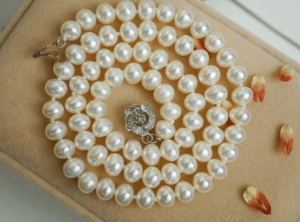
When combining metal alloys with pearls, galvanic corrosion is a real threat. A Sterling 925 finding, made of 92.5% silver and 7.5% copper, will tarnish naturally when exposed to sulfur compounds in the air. If that tarnished silver touches a pearl’s nacre in a humid environment, the copper oxide can transfer microscopically, staining the aragonite platelets. I isolate silver findings from direct pearl contact using a 14K gold intermediary bezel or a small silicone bumper hidden inside the drill channel.
For june birthday jewelry gift pieces intended as heirlooms, 18K yellow gold (75% gold, 25% alloyed copper and silver) provides a nearly inert surface. It doesn’t tarnish aggressively and its warm tone contrasts the cool body-color of a high-luster Akoya. A 20-gauge 18K gold ear hook, weighing roughly 1.1 grams, can last decades with minimal polishing. The patina it develops over decades adds warmth that complements the pearl’s deepening orient.
The Color Map: Bodycolor, Overtone, And Orient
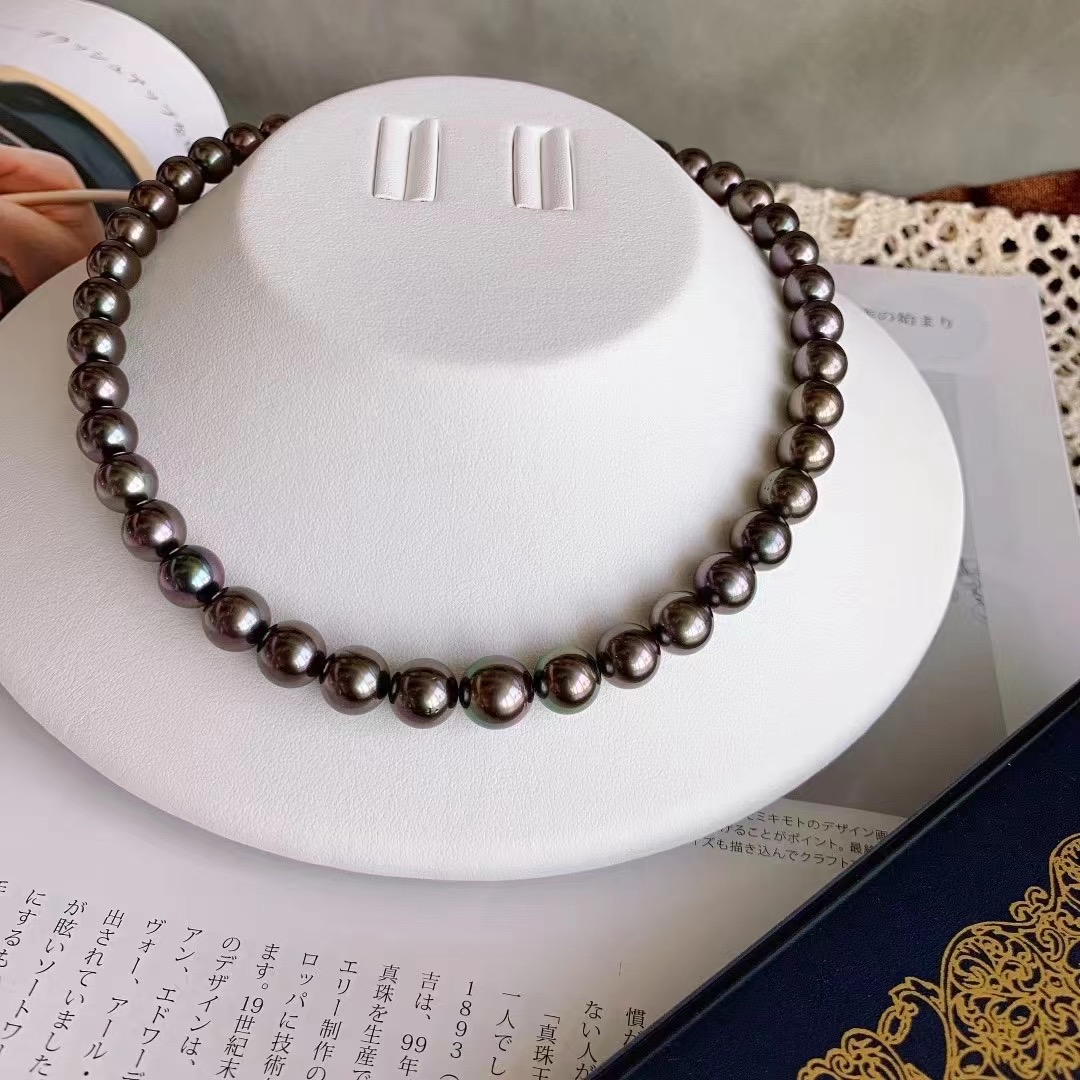
Lighting changes everything. A white South Sea pearl with a silver overtone looks flat under warm 2700K incandescent light. Under 5000K daylight-spectrum LEDs, the greenish-blue orient flashes. For a mixed-strand styling approach combining June’s birthstone with other gems, I ignore fancy color names and focus on spectral compatibility. The bodycolor is the base hue—creamy white, charcoal grey, or champagne gold. The overtone sits on top, a translucent wash. Orient is the prismatic shimmer deep within the nacre’s platelet layers.
Pairing a Tahitian pearl (peacock overtone, dark grey bodycolor) with faceted moonstone cabochons in a june birthstone jewelry bracelet creates a clash of refractions. The moonstone exhibits adularescence—a blue-white billowing light. The pearl exhibits a more structured, concentric reflection. They don’t fight; the pearl anchors the softer moonstone shimmer. Setting both in matte-finished silver (achieved with a 000 steel wool rub) removes glare, letting the organic optics dominate.
When The Silk Snaps: Understanding Organic Material Limits
Silk has enemies: perfume, hairspray, and time. A strand of pearls worn twice weekly with a spritz of alcohol-based fragrance behind the ears will see thread degradation in 12 to 18 months. The silk becomes brittle. The knots lose their pliability. I’ve restrung hundreds of strands where the thread looked intact externally, but the internal fibers had dessicated into dust. A gentle tug broke the strand cleanly at the clasp knot.
This is why a true pearl birthstone gifts presentation must include a care insert explicitly stating restringing intervals. On the bench, I restring my personal 8mm Akoya strand (45 pearls, 17 inches) every 14 months, regardless of appearance. I wash the pearls first in distilled water with a single drop of pH-neutral soap, dry them on a lint-free chamois for 24 hours, and inspect each drill hole with a 0.9mm reamer to remove any residual thread gunk. This maintenance is not optional; it is the ritual of ownership.
Pearl Shapes And The Myth Of Perfect Spheres
Perfectly spherical pearls make up less than 1% of a Pinctada Maxima harvest. Most are semi-baroque, button-shaped, or circled. A circled Tahitian pearl—where concentric rings wrap around the equator—is not a defect. The organic grooves trap shadow, creating a stripe of darker intensity that moves as the pearl rotates. I set circled pearls into pendant cages where the pearl sits freely, able to spin on a 0.65mm gold post. The wearer can rotate the pearl throughout the day, shifting the shadow line.
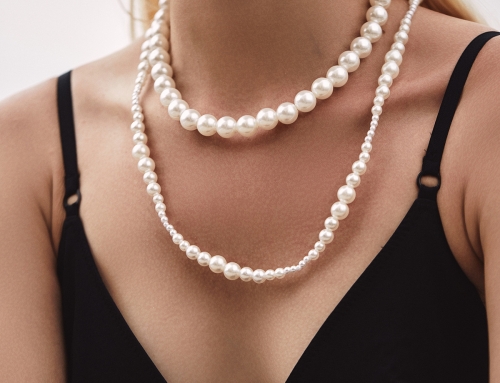
In styling authentic june birthstone jewelry styling secrets, I advise against matching pearl shapes in a single strand. Mixing drop shapes with near-rounds creates visual rhythm. The drops hang lower, acting as pendant anchors, while the rounds fill the necklace’s upper arc. This irregularity looks organic, not manufactured. The bench truth: it is far harder to drill an off-center hole through a baroque drop shape than through a sphere. You must align the rotational axis with the pearl’s visual center of gravity, or it will lean awkwardly on the string.
Clasp Mechanisms And Daily Function
A clasp is the partnership between metallurgy and fingernails. A 14K gold fishhook clasp with a safety figure-eight catch weighs approximately 0.9 grams and accommodates a 3-strand pearl necklace beautifully. But the small spring mechanism inside can fatigue. After 5,000 cycles, the tiny spring steel can lose tension. For june birthday jewelry gift bracelets, I use ball-and-socket clasps. A 9mm diameter ball clasp in Sterling 925 with a bayonet twist lock offers positive tactile feedback. You hear a small click when it locks. That click assures the wearer the bracelet isn’t falling off.
Magnetic clasps are popular but dangerous for knotted strands. The strong neodymium magnets can tug on other metallic objects and, over time, the abrupt snap-shut action hammers the final silk knot into mush. I pad magnetic clasps with a 1mm silicone O-ring to absorb the shock. It’s a small bench modification that extends the life of the entire strand.
The Cold Drink Test: Why Pearls And Condensation Clash
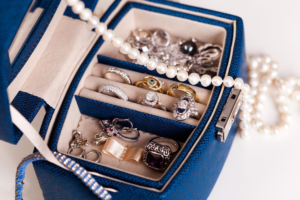
Wearing a pearl ring while holding an iced coffee leads to condensation forming on the metal setting. That moisture, drawn by the cold from the glass, seeps into the microscopic space between the pearl’s drill hole and the metal post. Repeated cycles of wetting and drying cause the nacre around the drill hole to expand and contract, leading to hairline cracks. I’ve retrieved a stunning 8.5mm freshwater pearl from a ring setting where the inner nacre had developed a 120-degree fracture arc. It looked intact until I rotated it under a light, and the crack caught the reflection.
This is the unglamorous reality behind caring for june birthstone jewelry. It’s respecting the 4% water content in the nacre structure and not shocking it with thermal extremes. Pearls enjoy the humidity of human skin but recoil from steam, saunas, and dishwater. My rule: last on, first off. Pearls get dressed after perfume and hair products settle. They are removed before cooking or cleaning.
Record-Keeping On The Bench: Pearl Provenance Files
Every strand I knot gets a small archival tag with a unique ID. I record the oyster species, farm origin (e.g., Australian Paspaley, Vietnamese akoya), nacre measurement at the drill hole, exact length of silk used, knot count, and clasp style. This data stays with the piece. Handwritten on a simple 3×5 card, it’s slipped into the jewelry box. For pearl birthstone gifts, I include provenance because it transforms the object from a decorative bauble into a biological artifact. Someone someday will need to restring it, and they will know precisely which silk gauge and knot tension I used.
The Subtle Weight Of A True June Pearl Gift
A strand of 45 Akoya pearls, 7.5mm each, 16 inches long, with a 14K gold clasp and French wire, weighs roughly 36 grams. That’s the weight of 6 U.S. quarters. It’s substantial enough to feel grounding on the skin without dragging. When someone receives june birthstone jewelry, they’re feeling the cumulative mass of years of nacre deposition, the patient layering of aragonite platelets by a living mollusk, then the careful drilling by a human hand wielding a 0.9mm tungsten carbide bit under water coolant, then the stringing by fingers that know exactly when to tighten a knot against the pearl’s equator.
The styling secret is not what matches a neckline. It’s understanding the material so deeply that you can tell if the knot will hold for 14 months, if the clasp will fatigue, if the nacre will chip. That knowledge changes how you wear it. You stop seeing pearls as delicate icons of June. You start seeing them as resilient biological structures that demand collaboration, not just admiration.
Frequently Asked Problems & Solutions
I accidentally wore my strand in a chlorinated pool. Now the surface feels rough. Is the nacre etched permanently?
Chlorine attacks the protein matrix between aragonite platelets. The roughness you feel is the exposed crystalline edges. At PearlsNation, we test nacre hardness before and after contamination using a Mohs scratch test (pearl nacre sits around 3.5). A chlorine-damaged pearl can lose 0.05mm to 0.1mm of surface depth. Polishing might restore some softness, but I’ve rarely seen full luster return. The strand needs individual pearl inspection. If etching is superficial (under 0.03mm loss), gentle repolishing with a soft chamois and jeweler’s rouge on a low-speed buff might help. Severe cases require replacing the damaged pearls. Never wear pearls in treated water.
My new pearl ring tilts sideways every time I type. Is the setting loose or was it set wrong?
A tilting pearl ring indicates a center of gravity miscalculation. If the pearl’s drill hole is off-axis relative to the ring shank, the entire mass rotates to find equilibrium. The fix is not tightening the post; it’s checking the alignment under a millimeter gauge. A 10mm pearl with a 0.9mm drill hole must have its rotational axis parallel to the finger within 2 degrees. If the pearl tilts more than 5 degrees at rest, we usually need to re-drill or recast the setting with adjusted prong positioning. Weight-distribution is the silent mechanic of pearl ring comfort.
I see tiny black spots spreading on my white South Sea pearls. Are they rotting from the inside?
Those spots are likely from the original bead nucleus. South Sea pearls in Pinctada Maxima are nucleated with a mother-of-pearl bead made from freshwater mussel shell. If the nacre coverage is thin (under 0.6mm over the nucleus) and the pearl experiences extreme humidity shifts, the organic residue in the bead’s concentric layers may discolor and bleed through. It’s not rot; it’s tannin-like migration. There is no remedy except enjoying them as nature’s notations or replacing the affected pearls. This is why authentic june birthstone jewelry styling secrets emphasize checking the drill channel for a visible brown core before purchasing.
Can I string freshwater pearls on fishing line instead of silk? The store said it’s more durable.
Technically, yes—but fishing line (nylon monofilament) is abrasive. Its smooth, hard surface creates friction points against the nacre’s drill hole edges. Over 18 to 24 months of wear, the constant micro-movement saws a groove into the pearl’s interior, creating a “keyhole” effect. Silk, being a natural protein fiber, compresses gently and holds the knot with friction. Nylon knots slip unless double-wrapped, adding bulk. I stock 0.45mm pure silk (Grade A, 15-strand twisted) precisely because it breaks gracefully over time through gradual fraying, rather than snapping catastrophically without warning like plastic line. Use silk. Restring every 12 to 18 months. Your pearls will outlast you.