The 0.3mm Rule
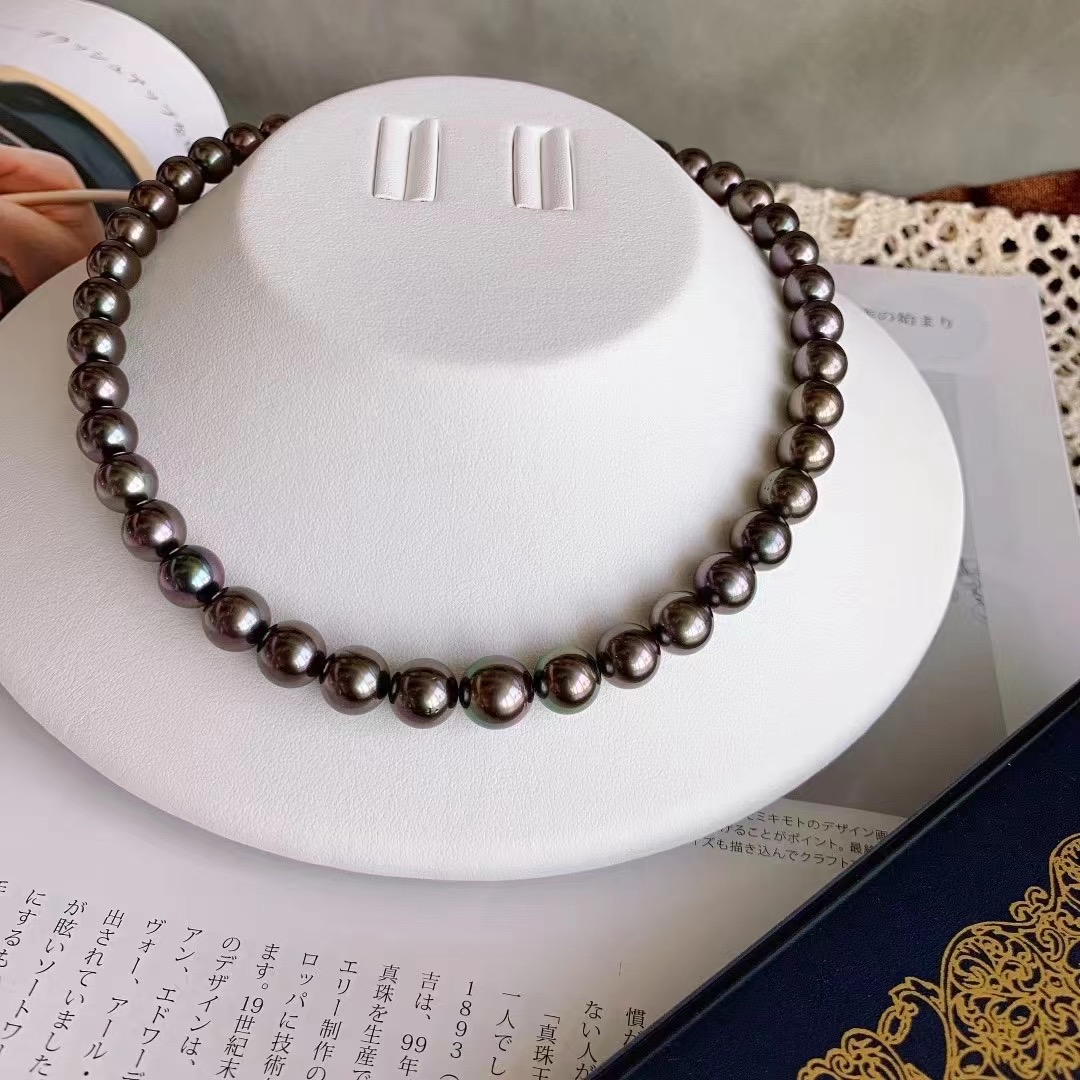
Forget subjective descriptions of “luster” for a moment. True pearl strand matching starts with a digital caliper. Laying 43 pearls on a silk board, I don’t look for the pretty one. I look for the 0.3mm deviation. A strand graduating from 8.5mm to 9.0mm over 18 inches feels intentional and fluid. A strand that jumps from 8.2mm to 9.1mm randomly looks cheap, a visual glitch on the collarbone. That discrepancy happens when a jeweler rushes sorting to save labor. My rule for uniformity in pearl jewelry: the human eye registers a size difference at roughly 0.5mm. I hold matching tolerance to half that. Anything looser is a bead necklace, not a cultured pearl strand.
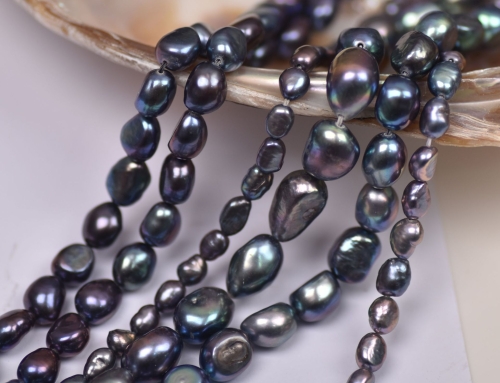
Color matching requires a north-facing window. Daylight LEDs skew blue and mask green undertones. I’ve rejected entire Pinctada Maxima harvests because the orient flash shifted from rose to sickly lime under a 4000K bulb. The body color must be monochromatic—creamy silver, not silver with one champagne outlier hitting the drill hole. Overtone is the interference of light through aragonite platelets. If one pearl flashes pink and its neighbor flashes neutral white, the thread tension pulls unevenly to the eye, creating a visual warp even if the silk is straight.
Grading the Drill Hole and the Knot Logic
Perfect matching collapses if the drill hole widens. Akoya pearls (Pinctada Fucata) with 7.5–8.0mm diameters typically accept a 0.45mm silk thread. I use a 21-gauge needle. If a sorter included a pearl with a 1.0mm drill hole—common in lower-grade Freshwater—the knot slips inside the nacre cavity. The pearl slides, a gap appears, and the strand kinks permanently. I finger-test every finished knot by pulling 2lbs of lateral tension. A properly matched strand has knots that sit flush against a drill hole no larger than 0.7mm. The knot serves as a buffer. Without it, 0.3mm of thread rubs against sharp nacre edges with every movement, and silk frays within 60 wears.
| Specification | Value |
|---|---|
| Pearl Type | Pinctada Fucata (Akoya) |
| Diameter Range | 8.5–9.0mm (0.5mm graduation) |
| Strand Length | 18 inches (Princess) |
| Nacre Thickness (Min) | 0.45mm (X-ray verified) |
| Thread | 0.45mm natural silk (Cardinal #40) |
| Clasp | Sterling 925, 3.8g filigree fishhook |
| Surface Grade | Blemishes B1 (Clean to eye @16 inches) |
| Matching Tolerance | ±0.2mm body, Monochrome overtone |
How to Buy a Pearl Strand Without Getting “Warm-Toned” Fooled
Retailers often market mismatched overtones as “champagne warmth.” Code for: we couldn’t sort out the yellowed nacre. How to buy a pearl strand with integrity involves checking the overtone in your own shadow. Cup your hand over the strand while wearing a matte white shirt. The shirt reflects ambient light neutrally. Under this shadow, a quality White South Sea strand (Pinctada Maxima, silver-lipped) holds a cold, icy edge. Inferior matching reveals a patchwork of ivory-yellow and silver. That happens when a strand uses pearls from two different oyster age groups. Younger oysters deposit thinner nacre, refracting warmer body color. A strand should come from a single harvest year, ideally a single grafting technician’s batch to maintain crystalline structure consistency.
Check the clasp assembly before buying. A heavy 14K gold ball clasp on a delicate 7.0mm strand is a red flag. The weight of the clasp—often over 4 grams—drags the silk downward at the nape of the neck. After 30 minutes of wear, the clasp rotates to the front. A matched set must balance counterweight. For a strand under 45 grams total pearl weight, I cap the clasp at 2.8 grams. Sterlingsilver 925 with a safety latch works, and I sometimes add a small 2.5mm pearl at the jump ring to hide the metallic hinge. A good jeweler thinks about gravitational pull, not just sparkle.
Matching Pearl Earrings to a Strand: The Edge-to-Ear Gap
Matching pearl earrings doesn’t mean cloning the strand diameter. If the strand center pearl is 9.0mm, a 9.0mm stud sits too far off the earlobe. The face’s proportions demand a slight scale-down. I recommend a 0.5 to 1.0mm reduction: an 8.0mm stud for a 8.5–9.0mm strand. The earring becomes a complement, not a heavy drop pulling the piercing. The nacre quality must match, however. Pairing an Akoya strand with a high-luster 0.6mm nacre with a Freshwater stud with 1.2mm nacre creates a texture clash. Freshwater nacre looks softer, satin-like, while Akoya looks metallic. In direct office lighting, one gleams and the other absorbs light. You look mismatched, not styled.
For drop earrings, I use the strand’s drill orientation as a guide. Akoya strands typically string half-drilled center pearls of 0.6mm depth. A matching drop earring should use the same half-drill on a 0.5mm 14K gold post. If the stud version uses full-drill pearls with a metal cap, light travels through the drill hole and deadens the center glow. The earring dims. A matching pair requires identical drill technique and metal backing so that light reflection geometry remains symmetrical between your ears and your neck. This optical consistency is what separates a collector’s set from a random assembly.
The Urban Silhouette Concept
Wearing an 18-inch matched Akoya strand with a band tee and raw Japanese denim creates friction—and that friction is style. The precision of 0.2mm matching tolerance lands hard against rough cotton. The string’s rigidity stems from hand-knotting every pearl with a surgeon’s knot, doubled. This stiffness holds the strand slightly away from the collarbone, catching air. I advise how to style pearl strand matching in daily life by breaking the “special occasion” inertia. An oversized men’s cotton poplin shirt, unbuttoned low, creates a flat canvas. The matched pearls, with their cold metallic overtone, slash a rigid, shiny line across soft fabric. The contrast in texture signals intentionality.
Utility wear loves asymmetry. I clip a single 9.0mm Akoya pendant on a 20-gauge sterling chain at 20 inches. Then I layer the matched strand at 17 inches (I shorten the standard strand by a temporary knot clasp). The off-set length creates a double-row effect without the bulk of a formal double-strand clasp pressing into the spine. The pendant pearl needs to match the strand’s overtone strictly—otherwise, a greenish pendant floats a centimeter above a pinkish strand and your eye crossfires, ruining the minimal look.
Asymmetrical Placement and the Lapel Trick
I sometimes break a matched strand’s loop. Not physically cutting—I unhook the clasp and weave the strand through a blazer’s lapel buttonhole. Half the pearls rest on the chest, half trail inside the jacket. The silk thread catches on the wool fibers, holding the placement. This works for South Sea strands (Pinctada Maxima, 10.0–11.0mm) because the larger nacre surface catches the fabric’s friction. The trick works best with a single-button, slightly textured wool blazer. A smooth polyester lapel slips, and the strand pools at your belly button within minutes. I’ve tested this during an 8-hour gallery opening; the placement held with zero adjustment.
Another utility move: convert the strand into a wrap bracelet. A 7.0–7.5mm Freshwater strand wraps four times around the wrist bone if the total length is 32 inches. The small diameter keeps the wrap flat. Pearl strand matching serves here because a mismatched bracelet wrap reveals color bands—one coil silver, one coil cream. Monochrome matching ensures the four coils read as a solid cuff. I finish with a safety pin made of sterling wire, hidden under the coil facing the palm. The pin holds the wrap’s tension and doesn’t require a clasp, making the piece feel entirely modern.
Cleaning Protocol That Preserves Matching
Silk absorbs skin oil and weakens. I re-string matched strands every 18 months, sooner if worn against bare skin daily. Between wears, a dry microfiber wipe removes sebum before it seeps into knot cavities. Never use ultrasonic cleaners on a matched strand—the vibration micro-fractures nacre at the drill hole edges. A fracture line reflects light differently, turning a perfectly matched pearl into a slightly chalky outlier. For deeper cleans, a barely damp cotton swab with distilled water touches only the pearl equator, avoiding the drill hole. I’ve seen 5-year-old strands maintain exact matching integrity this way. Neglect the silk, and the strand stretches unevenly, altering the spacing between pearls. Even if color matches, the irregular gap rhythm breaks the visual flow.
Silver clasps with rhodium plating maintain a white metal look next to cool-toned pearls. Unplated silver tarnishes within weeks, leaching a yellowish reflection onto adjacent Akoya pearls. The pearl doesn’t change—the reflected light does. A matched strand relies on consistent environmental reflection. I check my sterling clasps for rhodium wear every three months and replate if necessary. Gold-filled clasps work for champagne-toned Freshwater strands only when the gold tone is 14K yellow; 18K looks brassy against soft cream. The metal’s refractive index needs to harmonize with the pearl’s body color undertone, or the eye detects discord at the nape.
Is 0.8mm nacre durable enough for weekly wear on an 8.0mm Akoya?
0.8mm of nacre on an 8.0mm Akoya is robust for weekly wear, provided the pearl hasn’t been bleached aggressively. The critical threshold sits at 0.4mm; below that, the aragonite layers weaken and you risk chipping near the drill hole within a few years. I’ve X-rayed worn strands where 0.35mm nacre had worn through to the mother-of-pearl bead nucleus in 18 months. At 0.8mm, you have a solid buffer against friction from cotton collars and occasional light bumps. Just keep the strand away from alcohol-based perfumes sprayed directly on the neck. Alcohol dehydrates conchiolin, the protein binding the nacre platelets, causing micro-crazing that looks like faint spiderweb lines. Those lines ruin the uniform surface profile and make one pearl catch light differently from its neighbor.
I wore my freshwater strand in the shower twice and now it looks chalky. Can it be saved?
Water itself isn’t the primary enemy—it’s the combination of hot water, soap residue, and the rapid drying cycle. The chalkiness is likely soap scum lodged between aragonite crystals, not nacre dissolution. You can try to recover the luster by gently wiping each pearl with a soft cotton cloth moistened with distilled water only, then buffing dry with a clean microfiber cloth. Do not submerge the strand; the silk thread has already swollen and weakened from the shower, and the internal knot tension has shifted. The strand needs re-stringing immediately. The silk inside the drill holes may be beginning to rot, which will stain the nacre from within. If the chalky appearance persists after a distilled water wipe, the nacre surface has likely been etched by alkaline soap. Etching is permanent. The matching appearance is compromised because the etched pearls scatter light instead of reflecting it sharply, creating a dead spot in the strand.
I bought loose pearls hoping to match them myself. The drill holes differ. What’s the fix?
Differing drill hole diameters in a single “matched” lot signal poor sorting at the source. You have three options, none ideal. First, use a thicker silk thread, such as 0.65mm, to fill the larger holes, but this forces you to widen the smaller holes with a diamond-tipped reamer—risky without a jig, as one slip cracks the nacre edge. Second, accept that the larger-hole pearls will slide over knots, so you reinforce those specific knots with a dab of clear gem-grade adhesive, which stiffens the strand locally and alters drape. Third, cull the outliers entirely. Use a digital caliper (0.01mm precision) to measure every drill hole. Group pearls within 0.2mm tolerance and build a shorter strand or a bracelet from the consistent group. Keep the rest for single-pendant settings. If you proceed with mismatched holes, the silk will wear unevenly; within six months, you’ll feel sharp thread against your neck where it has abraded against wide-hole edges.
The heavy gold clasp keeps rotating to the front. Is there a simple counterweight trick?
This happens because the clasp mass exceeds the pearl mass imbalance tolerance. For a 45g strand, a 4g clasp creates a pivot point at the nape. A straightforward fix: add a small, matched pearl—2.5mm to 3.0mm in diameter—dangling from a 7mm jump ring attached directly to the clasp tongue. This adds approximately 0.8g of counterweight, but more importantly, it adds friction against the skin or collar, anchoring the clasp at the back. Alternatively, switch the clasp to a lightweight Sterling 925 hook-and-eye with a safety latch, which typically weighs under 2g. The hook style distributes weight along a 12mm curve rather than concentrating it in a ball. I often replace heavy decorative clasps on vintage strands with modern, minimalist sterling findings for precisely this ergonomic reason. The strand shouldn’t require constant adjustment; a matched set involves mechanical balance, not just aesthetic matching.