Shape Dictates Price More Than Luster—And Nobody Tells You That
Walk into any high-end jewelry counter and the salesperson points straight to the round pearls. Always. They call them “AAA quality” and mark them up 700%. A perfectly spherical Pinctada Maxima pearl measuring 12.5mm diameter with 1.2mm nacre thickness might wholesale at $380 from a Broome auction house. That same pearl, set into a basic 18K gold stud, hits the glass case at $3,200. The shape isn’t the only factor—but it’s the one they exploit hardest.
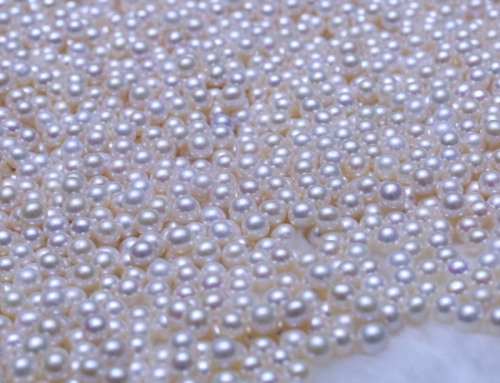
I’ve sat across from Vietnamese akoya farmers in Ha Long Bay who sort through 2,000 pearls to find 40 true rounds. The rest—the drops, the buttons, the asymmetrical baroques—get sold at a fraction. Not because they’re inferior. Because the market fetishizes the sphere. An authentic pearl shape guide doesn’t rank shapes from best to worst. It tells you what each shape costs to produce, why it costs that, and how to wear it without looking like you raided a 1950s safe deposit box.
Global surface ocean temperatures hit 21.1°C in early 2024, the highest in recorded history. Pinctada Margaritifera, the black-lipped oyster producing Tahitian pearls, stops secreting consistent nacre above 28°C water temperature. Farmers in the Tuamotu Archipelago lost 40% of their seeded stock last cycle. The perfectly round Tahitian pearl you see behind locked glass? It’s becoming a statistical anomaly. Understanding shape isn’t about vanity—it’s about reading the ocean’s decline through the jewelry it produces.
Round Pearls: The 6% Club
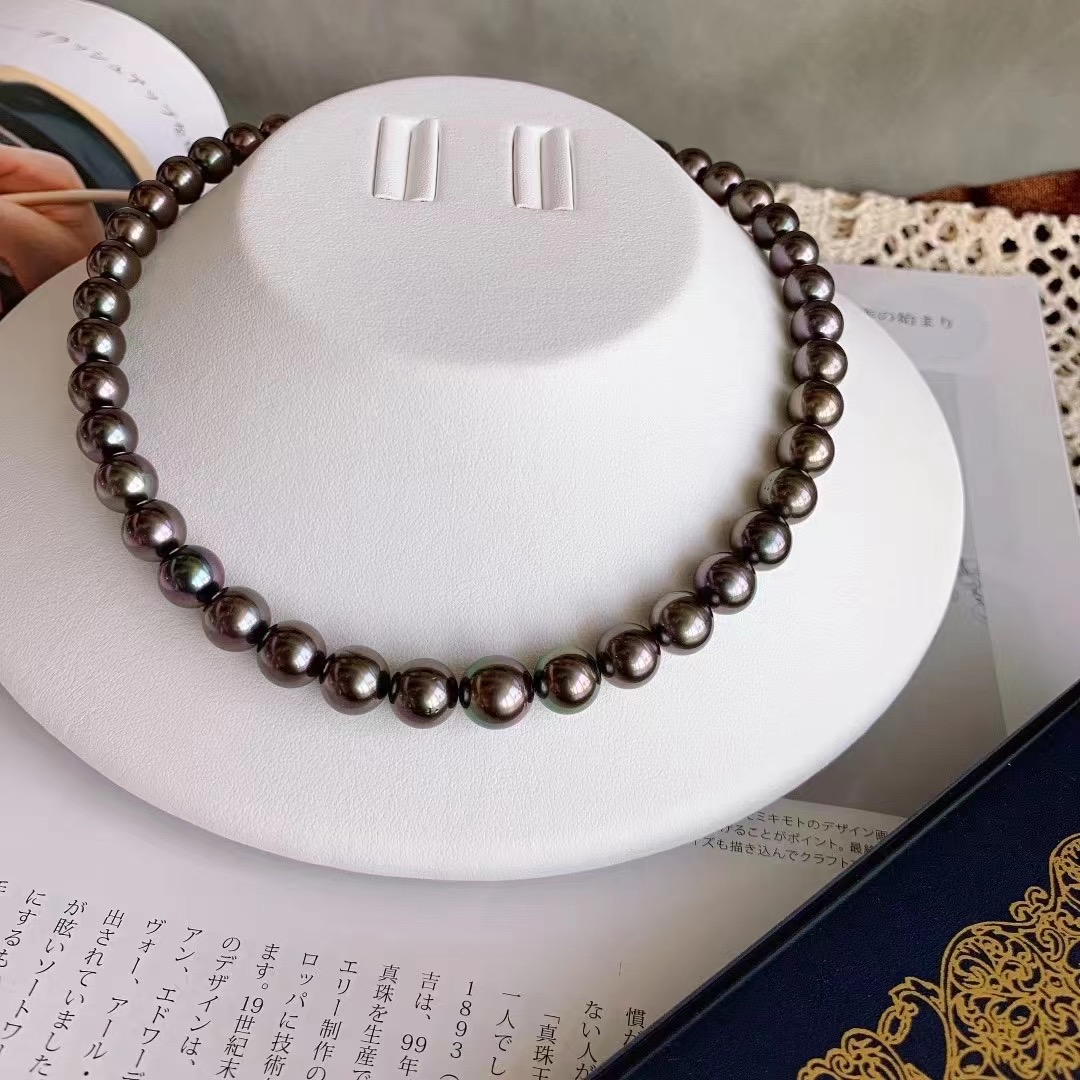
Less than 6% of a commercial pearl harvest grades as “round” under GIA classification—meaning the diameter variance stays under 2%. A 10mm round freshwater pearl from a Hyriopsis cumingii mussel in Zhejiang province costs roughly $18 wholesale. Saltwater South Sea rounds from Pinctada Maxima in Australian waters, same diameter, run $240-$480 depending on luster and surface clarity. The difference isn’t just species. It’s nacre deposition time: freshwater mussels graft 20-30 pearls simultaneously and harvest in 18 months. South Sea oysters hold a single nucleus for 2-3 years, building 1.5mm to 2.8mm of crystalline aragonite layers.
Round pearls suit stud earrings and single-strand necklaces strung on 0.45mm silk thread with hand-knotted intervals. The symmetry reads as formal. A 7-7.5mm akoya strand with 0.8mm nacre, knotted on double-twist silk, weighs roughly 42 grams for an 18-inch length in Sterling 925 clasp. That’s a $900 strand if you buy direct from a Kobe processor. The same strand at retail, with a brand name stamped on the clasp, hits $4,500. I’ve held both. The pearls came from the same harvest.
Button Shape Pearls: Flat Back, Full Face
Button shape pearls develop when the nucleus settles against the oyster’s shell wall during culturing, flattening one hemisphere while the other domes normally. They measure 8mm to 14mm diameter with a depth of 5mm to 9mm depending on severity. The flat back makes them ideal for earrings that sit flush against the lobe—no excessive lever-back hardware required. A pair of 10mm white South Sea button pearls, set in 20-gauge Sterling 925 posts with friction backs, weighs 4.8 grams total. Wholesale cost for the pair: $60-$90. Direct-to-consumer fair-trade pricing with 18K gold posts: $220. Retail markup version: $950.
Styling button shape pearls works best when the flat side faces the skin. The dome catches light without the pearl wobbling. Thread them into a bracelet with 6mm spacing knots and the flat profile prevents rolling—practical for daily wear. I design with buttons specifically for clients who type at keyboards or cook professionally. The pearl doesn’t dig into the wrist when the hand rests on a surface.
| Shape | Typical Diameter (mm) | Avg. Weight (g) per Pearl | Nacre Thickness (mm) | Common Metal Setting | Direct-Trade Price Range (per pearl, unmounted) |
|---|---|---|---|---|---|
| Round (Akoya) | 6.5–9.0 | 0.9–2.4 | 0.4–0.8 | 18K Gold / Sterling 925 | $35–$180 |
| Round (South Sea) | 10.0–16.0 | 3.5–9.8 | 1.5–2.8 | 18K Gold | $240–$850 |
| Button (South Sea) | 9.0–14.0 | 2.0–6.5 | 1.2–2.4 | Sterling 925 / 20-gauge posts | $30–$90 |
| Drop / Teardrop | 8.0–13.0 (length) | 2.5–7.2 | 0.9–2.0 | 14K–18K Gold lever-back | $55–$210 |
| Baroque (Tahitian) | 9.0–18.0 (irregular) | 2.8–12.0 | 1.0–2.6 | Sterling 925 / mixed metal | $40–$300 |
| Semi-Baroque / Circled | 7.0–14.0 | 1.8–8.0 | 0.7–2.2 | Sterling 925 / 18K accent | $25–$160 |
| Keshi (solid nacre, no nucleus) | 4.0–11.0 (random) | 0.5–5.5 | 100% nacre | 20-gauge wire wrap / Sterling | $15–$95 |
These prices reflect what I pay at coastal buying stations—Gia Hoi in Vietnam, Kuri Bay in Western Australia, Mangareva in French Polynesia. Add fair-trade certification audit costs of $0.40 per pearl, shipping, and customs. A retailer adds 400%-700% and calls it “curation.”
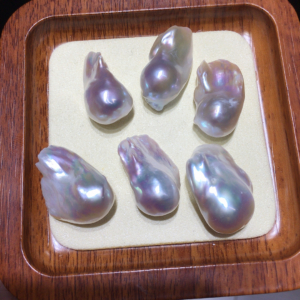
Teardrop Pearl Earrings: Asymmetry That Frames the Jaw
The term “teardrop” gets misapplied constantly. A genuine teardrop pearl is not a drop—it’s an elongated symmetrical shape tapering to a point, formed when the pearl sac elongates during deposition. True teardrops account for maybe 3% of a South Sea harvest. Most “teardrop pearl earrings” sold online are near-drops: rounded at both ends with slight elongation. The distinction matters for styling.
A matched pair of teardrop pearl earrings measuring 11mm length × 9mm width, with 1.4mm nacre, set in 18K gold lever-back findings with safety catches, weighs 6.2 grams per ear. The pointed end should hang downward—this elongates the neck visually. Flip them point-up and the earring looks top-heavy. I see this mistake in editorial shoots constantly. Stylists who’ve never handled loose pearls treat them like gemstone briolettes. Pearls are organic; their weight distribution follows the internal nucleus placement, not the external contour.
Teardrop shapes work suspended from a single chain as a pendant too. A 13mm × 10mm South Sea teardrop on a 0.45mm silk cord with a 14K yellow gold bail weighs 5.8 grams total. The pearl should sit at the clavicle notch—the chain length differs per person. Measure from the sternal notch, not from “standard” 18-inch chains that actually measure 45.7cm and hit at different points depending on neck circumference.
Symmetrical Drop Pearl Pendants: The Engineering No One Discusses
Symmetrical drop pearl pendants require two things: a pearl with bilateral symmetry along its vertical axis and a drill hole precisely perpendicular to that axis. A 0.8mm deviation in the drill angle and the pearl hangs crooked. Most mass-market drops get drilled in batches with jigs. High-end drops get hand-drilled under magnification by a technician checking orientation against the pearl’s growth rings—visible under 10× loupe as faint concentric bands in the nacre.
I source symmetrical drops for pendants from a Tahitian co-op on Rangiroa. The farmers grade by shape before sending to Papeete for auction. A Grade A symmetrical drop (variance under 3% between left and right halves) with peacock-green overtone, 10.5mm length, 1.3mm nacre, costs me $175. Set in a Sterling 925 cap with 18K gold bail, the finished pendant weighs 7.1 grams. The retail equivalent at a Madison Avenue jeweler: $1,200 minimum. Same pearl. Same drill. Different business model.
Wear symmetrical drop pendants on a chain no thinner than 1.2mm gauge. Anything lighter and the pendant torque twists the chain against the bail during movement. I’ve repaired dozens where the bail wore through a 0.8mm chain in under six months. The physics are simple: a 7-gram pendant exerts constant friction on a micro-chain. Gold wears faster than the pearl does.
Baroque and Semi-Baroque: The Shapes That Bypass the Markup
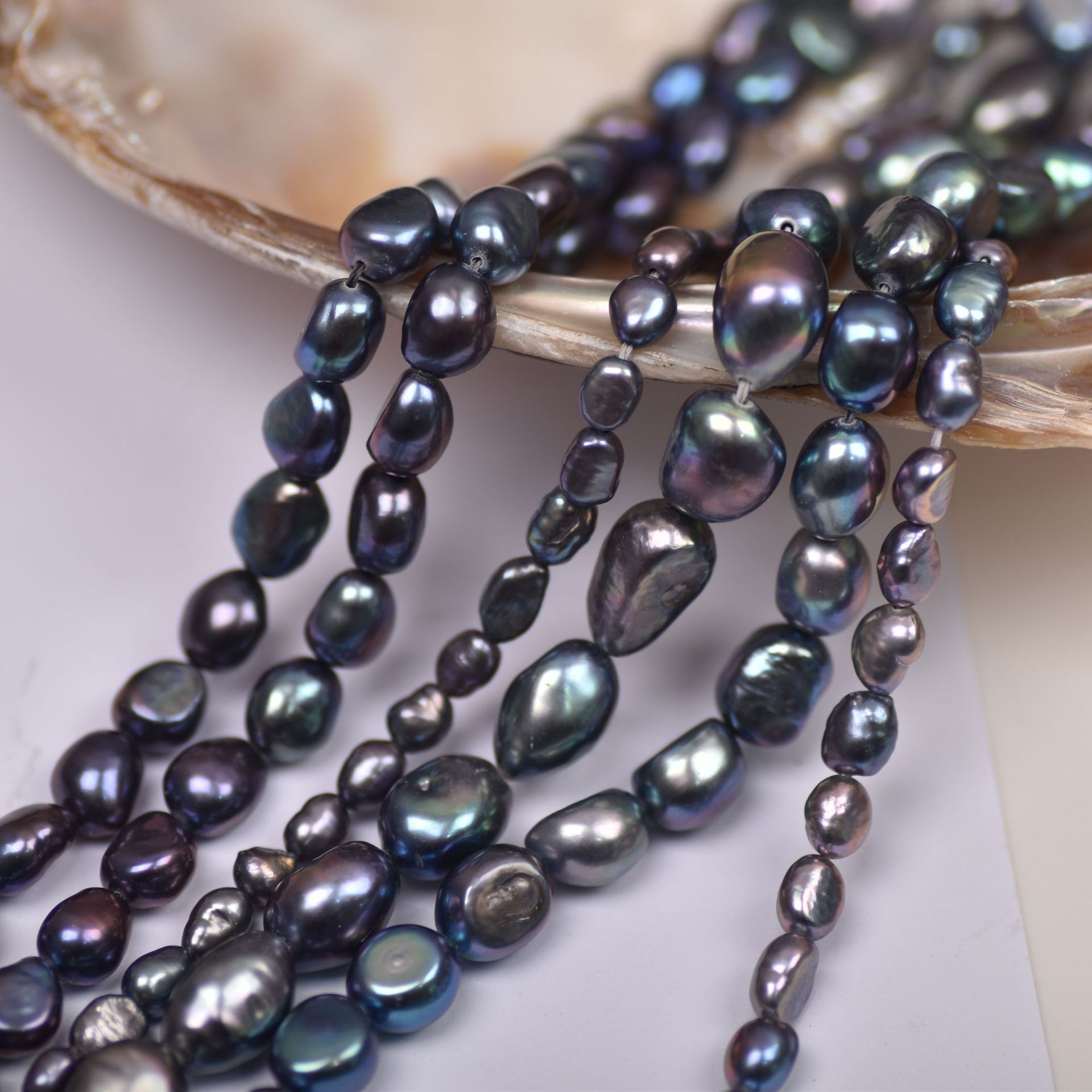
Baroque pearls—irregular, non-symmetrical, sometimes wildly contorted—represent 40%-60% of a harvest. They’re what’s left after rounds, drops, and buttons get sorted. The jewelry establishment treated them as seconds for a century. That changed around 2016 when independent designers started buying baroque Tahitians and South Seas at 60%-80% below round pearl pricing and setting them as statement pieces. The markup structure inverted: baroque pearls now command design premiums in certain markets while remaining underpriced at the source.
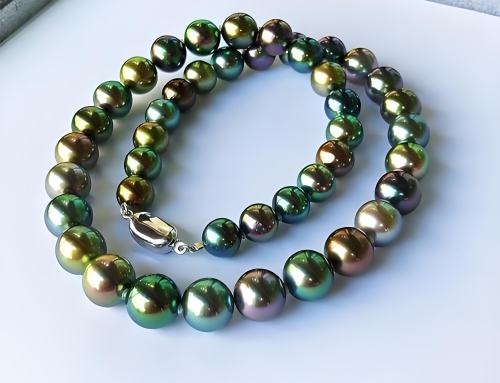
Circled pearls—a subset where concentric rings or grooves wrap the surface—form when the pearl rotates inside the pearl sac during nacre deposition. Pinctada Margaritifera produces circled Tahitians with 1.0mm to 2.2mm nacre displaying green, aubergine, and silver overtones. A 14mm circled Tahitian with strong orient costs $80-$140 direct from a Mangareva farm. String five on a Sterling 925 chain with 3mm spacer beads and the necklace costs $420 to produce—and looks like $3,000.
Keshi pearls deserve their own mention. They’re solid nacre, no bead nucleus. A byproduct of culturing when the oyster rejects the implanted nucleus but retains mantle tissue that continues secreting nacre. Keshi shapes are completely random—flakes, petals, rice grains, abstract forms. Sizes range from 4mm to 11mm. Because there’s no nucleus, a 9mm keshi weighs less than a 9mm bead-nucleated pearl of the same diameter. The solid-nacre structure makes them more durable against chipping. I knot keshi strands on 0.45mm silk with extra-tight knots because the irregular shapes abrade string faster than rounds do.
Global Warming Is Reshaping Pearl Shape Availability
Pearl shape isn’t just an aesthetic category. It’s a biological response to water conditions, and those conditions are degrading. Oysters under thermal stress secrete thinner, more erratic nacre layers. A 2023 study from James Cook University tracked Pinctada Maxima in the Arafura Sea across a 2°C temperature anomaly and documented a 31% increase in baroque and circled pearl output against a 17% decline in round yield. The warmer the water, the more asymmetrical the nacre deposition.
Acidification compounds this. At pH 7.8—projected for large swaths of the Pacific by 2040—aragonite saturation drops below the threshold Pinctada species need for crystalline nacre formation. Thinner nacre means structural weakness, and structural weakness means the pearl deforms around the nucleus. The teardrop pearl earrings and symmetrical drop pearl pendants I can buy today at coastal stations may not exist at the same availability in 15 years. This isn’t marketing scare language. It’s mineral chemistry.
Fair-trade certified pearl farms in Indonesia and the Philippines now log water temperature, pH, and salinity data alongside harvest records. The correlation is stark. When I visit a farm that’s been keeping records for a decade, I can predict shape distribution within 8% accuracy just from the seasonal temperature data. That level of predictability is useful for pricing. It’s also a document of collapse.
Is 0.8mm nacre thick enough for a pearl I want to wear daily, or will it wear through to the bead?
0.8mm is the minimum I’d accept for a pearl that sees regular wear—and only if the pearl is drilled properly and set in a protective mounting. Akoya pearls commonly have 0.4mm to 0.8mm nacre. At 0.4mm, with daily friction against skin and fabric, you’ll see bead visibility within 2-3 years. At 0.8mm, assuming the pearl isn’t exposed to perfumes, hairspray, or chlorinated water, you’ll get 7-10 years before noticeable thinning. South Sea pearls with 1.5mm+ nacre last decades and can be repolished. If the pearl has a Sterling 925 post rather than gold, check for galvanic corrosion at the drill hole—dissimilar metal contact accelerates nacre erosion around the mounting point. A 20-gauge post creates less leverage stress than an 18-gauge, reducing microfractures in the nacre around the hole.
I bought teardrop earrings that arrived looking more like lumpy ovals than actual teardrops. Did I get a misrepresented product or is this normal variation?
You likely received near-drop pearls sold as teardrops. A genuine teardrop narrows to a defined point over at least the final 20% of its length. Many sellers classify any elongated pearl as a “teardrop” because the term fetches a 30%-50% higher price than “oval” or “near-drop.” Check the taper ratio: measure the widest point and compare it to the width 2mm from the tip. A real teardrop shows at least a 40% reduction. If the tip is rounded—even slightly—it’s an oval drop, not a teardrop. Return them and ask for a shape-grade certificate or at minimum a macro photograph against a millimeter gauge. If the seller can’t provide either, they’re not sorting by shape grade and just calling everything a teardrop. Buy from sources that list shape variance tolerance as a percentage, not a vague word.
How I Buy Pearls by Shape—And What I Skip
Shape drives price more than any other factor except size, yet most buyers fixate on luster and surface. Luster can be enhanced with polishing compounds and temporary coatings. Shape cannot be faked. A round pearl is round because the nucleus remained centered in the pearl sac for the entire culturing period—a biological accident, not a skill outcome. Farmers don’t control shape; they control conditions that influence probability.
When sourcing for PearlsNation designs, I pay shape premiums only where shape affects wearability. Button shape pearls for stud earrings: worth paying for consistent dome height because that determines how the light hits. Teardrop pearl earrings for dangle styles: worth paying for matched taper ratios because mismatched drops look like a quality-control failure at the clasp. Symmetrical drop pearl pendants: worth paying for bilateral symmetry and correct drill alignment because the entire piece hangs on that axis.
Skip the round premium on bracelets. Bracelet pearls rotate constantly on the wrist. A near-round with 3% variance reads as perfectly round in motion. Save 40% on the pearl cost and put the difference into a better clasp—a Sterling 925 box clasp with a safety figure-eight side-lock costs $22 wholesale versus a $4 spring ring that will fail in eight months.
Skip the round premium on long strands beyond 36 inches. The eye can’t track individual pearl symmetry across that length. I’ve strung 60-inch ropes alternating near-round and button pearls that wholesale clients assumed were all top-grade rounds. The light reflection pattern matters more than shape consistency at scale.
Pay the symmetrical drop premium for anything suspended from a single point. A pendant pearl with a 5% asymmetry tilts visibly. You’ll notice it every time you glance down. That irritation accumulates.
Know what you’re buying. Ask for the nacre thickness in millimeters, not the “AAA” grade that means nothing standardized across sellers. Ask for the oyster species in Latin. Ask where the pearl was drilled—a farm-drilled pearl carries different alignment quality than one drilled at a Guangzhou finishing factory. A Pinctada Maxima from Australia drilled in Kuri Bay typically shows better axis alignment than one shipped to a third-party processor because the technician who drills it also graded it for shape in the sorting room.
The pearl shape guide the industry won’t publish is simple: shape is a cost factor, not a beauty factor. Buy the shape that suits the mounting and the wear pattern. Refuse to pay round premiums for pearls that won’t stay stationary enough for anyone to assess their roundness. Put the saved money into metal quality and clasp engineering. That’s the styling secret that actually holds up over time.