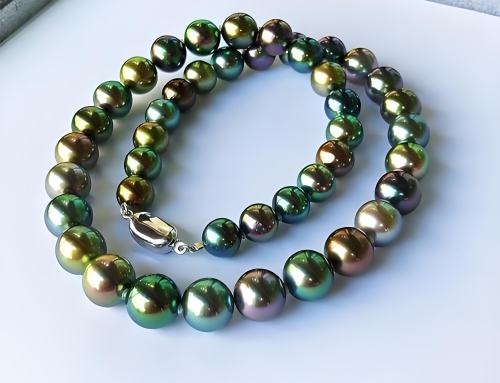
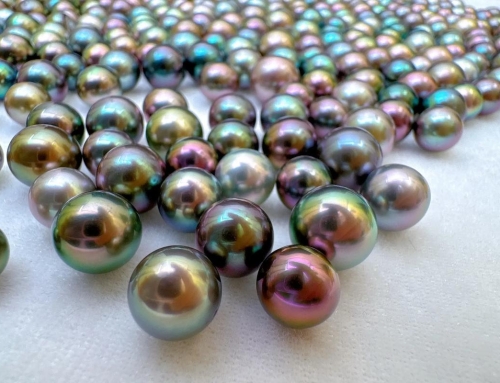
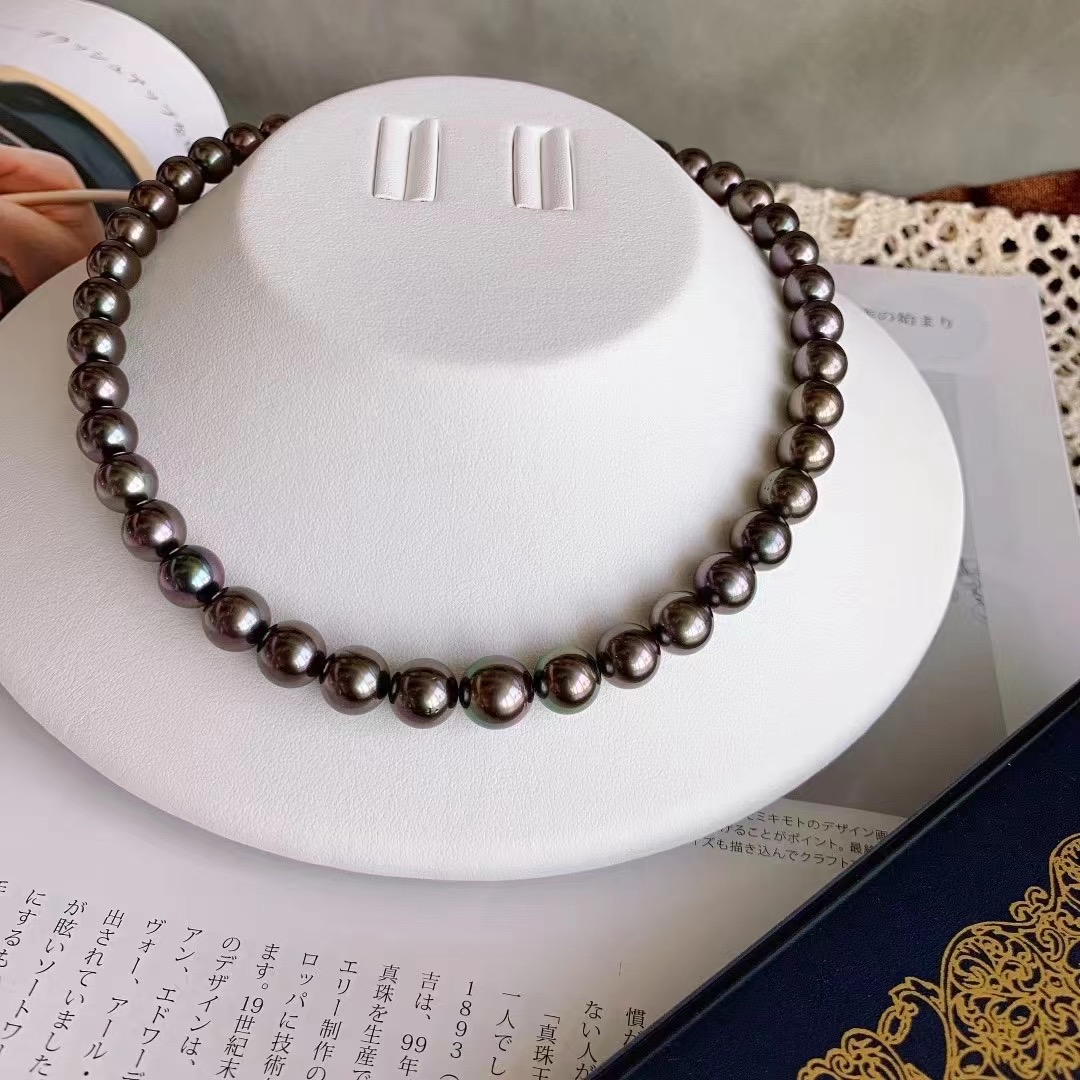
Tahitian pearls, also known as black pearls, are highly sought after for their unique and exquisite beauty. These pearls are not actually black in color, but rather exhibit a range of dark colors such as charcoal gray, deep green, and peacock blue. Tahitian pearls are primarily sourced from the islands of French Polynesia, specifically the waters surrounding the islands of Tahiti, Moorea and the Tuamotu Archipelago.
The process of cultivating Tahitian pearls begins with the introduction of a small nucleus into the oyster. This nucleus serves as an irritant that triggers the oyster’s natural defense mechanism. In response to this irritant, the oyster secretes layers of nacre, the substance that gives Tahitian pearls their lustrous appearance. Over a period of several years, these layers accumulate to form a pearl.
Tahitian pearls are unique because they are produced by the black-lipped oyster, scientifically known as Pinctada margaritifera. These oysters thrive in the warm, clear lagoons of French Polynesia. The nutrient-rich waters and ideal temperature conditions provide the perfect environment for these oysters to grow and produce high-quality pearls. The oysters are typically found at depths of 8 to 20 meters where they feed on plankton and other microscopic organisms.
Harvesting Tahitian pearls is a delicate process that requires skilled divers to carefully remove the oysters from their natural habitat. Once harvested, the oysters are carefully opened to reveal the precious pearls hidden inside. The Tahitian pearls are then sorted by size, shape, color and overall quality. Only a small percentage of the Tahitian pearls harvested meet the strict standards required to be classified as Tahitian pearls.
The beauty of Tahitian pearls lies in their natural variations in color and size. Each pearl is unique, with its own combination of hues and overtones. The most valuable Tahitian pearls have a rich body color with intense overtones that enhance their vibrancy and depth. These Tahitian pearls are highly prized in the jewelry industry and can command high prices due to their rarity and beauty.
In recent years, efforts have been made to protect and preserve the black-lipped oyster population in French Polynesia. Sustainable pearl farming practices have been implemented to ensure the long-term viability of this industry. These practices include careful monitoring of water quality, responsible harvesting techniques, and strict regulation of pearl farming activities.
In summary, Tahitian pearls come from the islands of French Polynesia, where they are cultured by black-lipped oysters in warm, nutrient-rich waters. These unique pearls are prized for their distinctive dark colors and natural variations. The careful harvesting and sorting process ensures that only the highest quality pearls reach the market. With sustainable farming practices, the future of Tahitian pearl production in this beautiful part of the world looks bright.
Read related articles :
Where do Edison pearls come from ?
Where do Freshwater Pearls Come From ?