Dissecting the Boardroom Pearl
Most style guides treat pearl jewelry as a relic of conservative dress codes. A single, predictable white strand. That narrow view misses the entire point of wearing pearls in professional settings. A conference table demands presence, not passivity. The right pearl functions as a non-verbal signal—calculated, deliberate, and quietly authoritarian.
I work with Pinctada Maxima South Sea specimens daily. A 12mm Australian white spherical with 2.4mm of nacre weighs roughly 3.8 grams per pearl. The luster isn’t soft. It’s metallic. Sharp enough to catch the overhead fluorescents in a mergers and acquisitions meeting without screaming for attention. That single drilled pearl on a 20-gauge Sterling 925 wire post communicates more control than a diamond cluster or a logo-plastered watch face.
The Scale Distraction: Size Psychology
Boardroom optics hinge on proportion, not flash. I see junior analysts walk into pitch meetings drowning in 8-9mm Akoya strands that register as costume jewelry. The body language shifts immediately. They touch the necklace. Adjust it. The pearls become a fidget tool rather than a power signal.
Business formal pearl jewelry operates on a strict millimeter discipline. For face-to-face negotiations, I limit earring diameter to 7.5mm for Akoya (Pinctada fucata) or 9mm for softer white Freshwater. Anything larger shifts attention from your argument to your earlobes. Necklace scale should respond to neckline architecture. A collared blouse accepts a 16-inch choker of 6.5mm pearls strung on 0.45mm double-knotted silk. The thread thickness matters here—0.45mm provides enough tensile strength to handle daily wear without stretching, and the knots prevent a full strand avalanche if a clasp fails during a presentation.
Necklace Lengths That Support, Not Sabotage
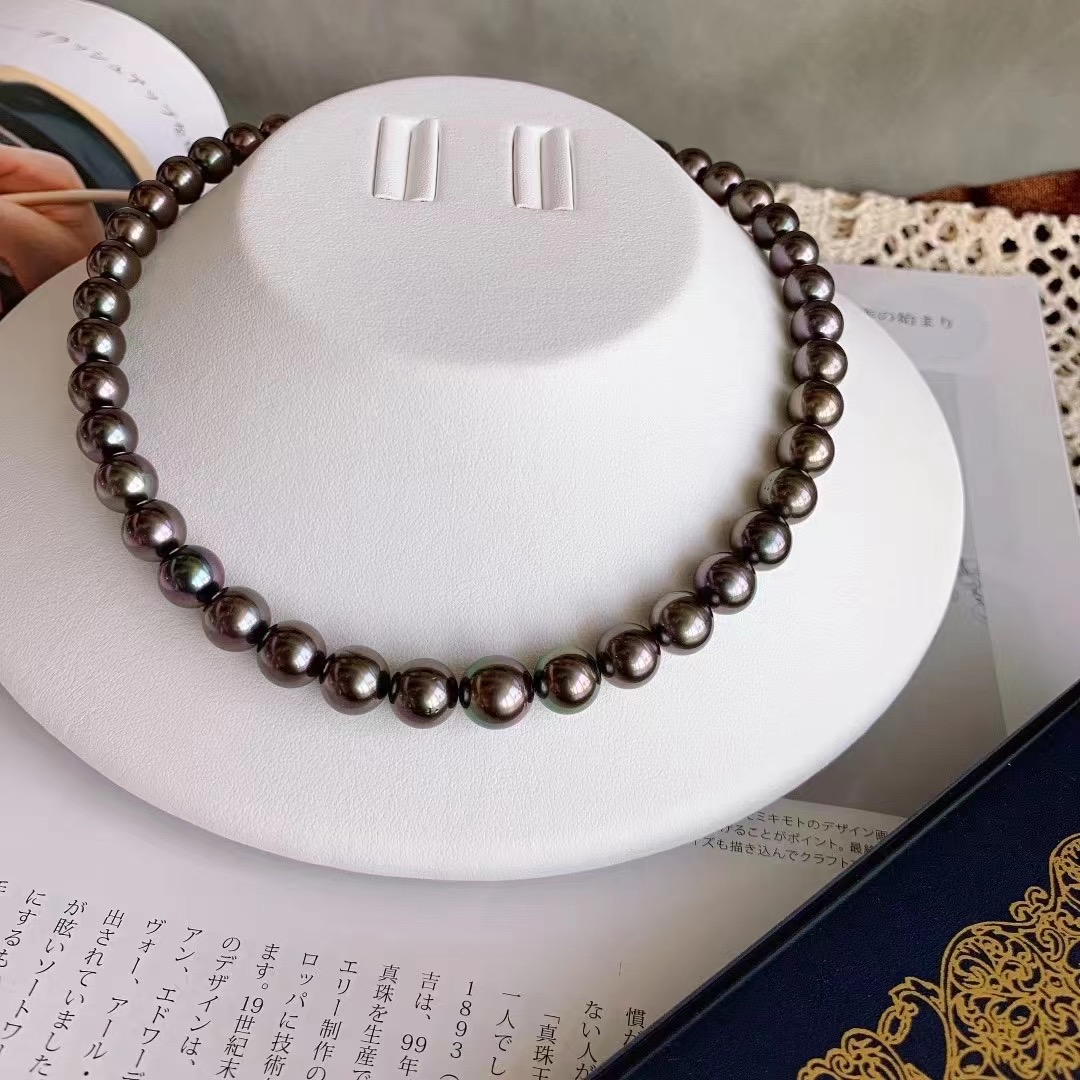
 18-inch princess lengths hit the clavicle. This placement sits above the breast pocket line of a standard blazer, creating a frame for the face without interacting with lapels. A 7mm graduated Tahitian strand—Pinctada Margaritifera, dark silver-gray body color with peacock overtones—neutralizes the sweetness of pearl jewelry. The gray spectrum reads as steel, as architecture, as substance.
Opera lengths (28-32 inches) double as corporate power accessories pearls when looped twice. I knot 8mm white South Sea pearls on gray silk for this look. The double-strand effect adds weight without bulk. The gray thread between pearls creates shadow lines that echo pinstripe suiting. This configuration works under an unbuttoned blazer or against a tonal knit shell.
Metal Anchors: Sterling Versus Gold
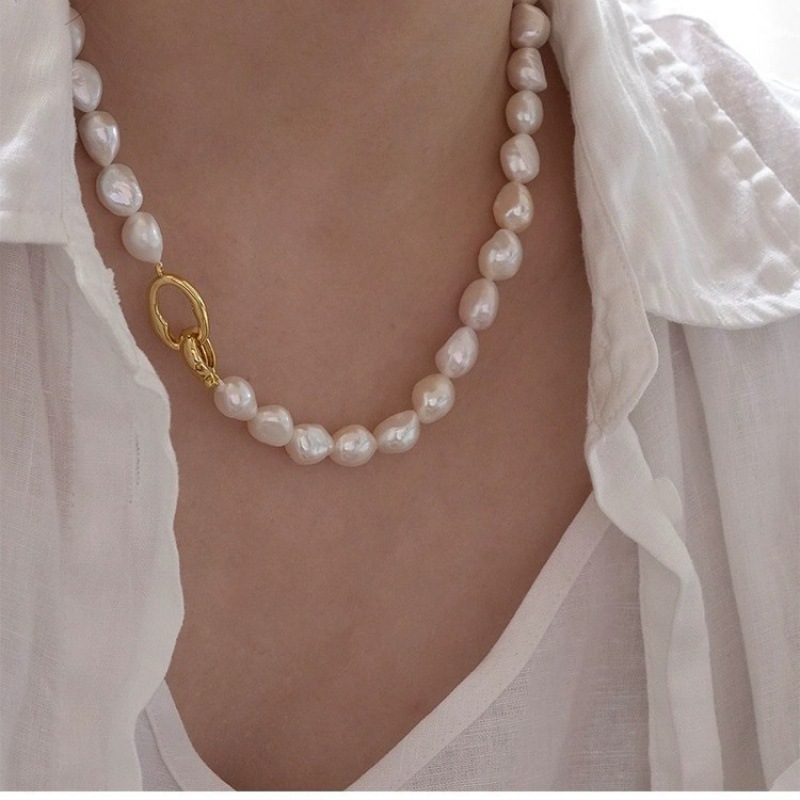
The metal choice determines whether your pearls register as vintage or modern. Sterling 925 is my default for understated elegance office jewelry. Oxidized silver creates contrast against white pearls, pulling the iridescence forward. A single 10mm baroque freshwater pearl on a 1.8mm wide oxidized silver band reads industrial, architectural, intentional.
18K yellow gold has its place, but requires restraint. A pair of 7mm golden South Sea studs—warm champagne body color with 22K gold posts—pair specifically with camel blazers and cream silk shells. The warmth echoes, doesn’t compete. Avoid yellow gold with black Tahitians in corporate settings. The combination telegraphs eveningwear styling, which undermines the gravitas you need at 9 AM.
Rose gold and pearls create a false softness. I reserve this pairing for creative industries where expressing aesthetic range matters. A rose gold wire wrapping around an 11mm baroque freshwater pearl, hanging from an ear threader, signals design fluency. It says you understand material tension. It doesn’t belong in banking or law.
Asymmetrical Placement as Controlled Rebellion
Symmetry registers as predictable. A single earring—one 10mm white South Sea pearl on a Sterling 925 hinged huggie—disrupts expectation without violating dress code. The brain notices the absence on the other ear. People lean in slightly, recalibrating. This is the power move within authentic pearls in professional settings styling secrets that traditional style guides never mention.
An asymmetrical brooch placement achieves similar disruption. A 13mm baroque Tahitian pearl, cool gray with aubergine undertones, pinned 3 inches below the left shoulder seam rather than at the lapel. The lower placement draws the eye diagonally across the body, creating movement. In static environments like conference rooms, visual movement commands attention. The pearl needs weight for this—at least 3.5 grams—so the pin doesn’t torque forward against the fabric.
Layering Pearls with Oversized Casual Fits
Corporate dress codes keep loosening. The oversized blazer, the deconstructed trouser, the raw silk shell—these silhouettes demand jewelry that holds its own scale-wise. A single 5mm strand disappears against an oversized lapel. It reads as timid. The solution involves strategic layering.
I layer a 20-inch strand of 7.5mm gray Freshwater pearls—triple-knotted on 0.45mm black silk—with a 24-inch chain necklace holding a single 14mm round Pinctada Maxima pendant. The pendant drops below the strand, creating vertical elongation that works against the horizontal volume of an oversized blazer. The black silk knots register as subtle punctuation marks at close range. The silver chain provides the industrial counterpoint that prevents the arrangement from becoming precious.
For the deconstructed white button-down (worn untucked, sleeves rolled twice), I skip necklaces entirely. A cluster of three pearl earrings marching up the left ear—6mm, 5mm, 4mm descending, all set in Sterling 925—does the work. The smallest sits in a cartilage placement. This arrangement signals attention to detail, not ostentation.
Everyday Utility Wear Pearls
Daily corporate life involves typing, phone calls, coffee cups, and extended hours. Jewelry must function. Dangle earrings catch on headset bands. Long chains swing forward into keyboards. Rings click against trackpads.
My solution for everyday utility: a single 8mm round Pinctada Margaritifera Tahitian pearl, dark silver body with visible rose overtones, set on a 2mm wide Sterling 925 band styled for the index finger. The placement avoids the keyboard contact zone that a ring finger position would occupy. The band is hammered, not polished, so micro-scratches from daily wear become part of the texture rather than visible damage. Pearl rings on the pointer finger also shift the visual weight of hand gestures. When you point to a slide or data set, the pearl punctuates the motion.
Nacre Thickness and Daily Durability
Corporate jewelry endures more wear than evening pieces. Daily donning and removal stresses drill holes. Perfume traces and skin oils accumulate in silk threads. The nacre thickness determines whether your pearls survive three years of staff meetings or start showing chalky bead nuclei within six months.
Akoya pearls from Pinctada fucata average 0.35mm to 0.7mm of nacre. South Sea pearls from Pinctada Maxima typically carry 2mm to 6mm. For stud earrings worn 200+ days annually, I source South Sea specimens with minimum 2.4mm nacre depth. The extra thickness resists the micro-abrasions from contact with phone screens and blazer collars. Freshwater pearls—solid nacre throughout—offer the highest durability-to-cost ratio for corporate daily wear. A 7.5mm round freshwater stud, 1.6 grams, Sterling 925 post, costs a fraction of Akoya and shrugs off wear patterns that would destroy thinner-nacre alternatives.
Color Temperature and Skin Undertones
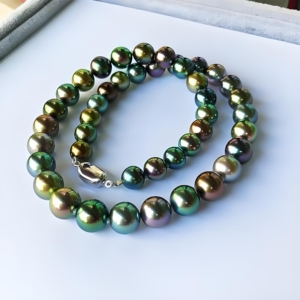 White isn’t one color in pearl terms. Pinctada Maxima whites range from silver-white to cream-white with rose, silver, or ivory overtones. Placed against skin, these undertones either harmonize or create dissonance. Cool olive and deep skin tones register the silver-white and rose-overtoned whites as luminous. Warm fair skin pulls the golden overtones forward, which can read as yellowed rather than lustrous.
Tahitian grays—Pinctada Margaritifera—neutralize color temperature issues entirely. The dark body color with silver, green, or aubergine overtones works across every skin tone range. A 9mm dark gray Tahitian stud, 2.8 grams, round with sharp luster, functions as a neutral. It pairs with navy suits, charcoal trousers, camel coats, white shirting. No color clash exists here, which makes Tahitian pearls the safest investment for complex professional wardrobes.
Clasps That Earn Their Real Estate
A strand’s clasp determines its daily utility. Lobster clasps snag on hair and woven blazer linings. Magnetic clasps separate under tension—a strand dropping mid-meeting erases any authority the pearls might have conferred. The fishhook clasp with a safety latch, fabricated in Sterling 925 and oxidized to medium gray, is the workhorse. Small enough to hide under a collar, secure enough to survive a sprint through an airport terminal.
The clasp should sit at the back of the neck for most lengths or intentionally at the side-front for asymmetrical styling. A deliberate side placement at the 3 o’clock collar position creates a focal point. I use a 14K yellow gold fishhook clasp at the side-front on a strand of 8mm South Sea pearls when the outfit demands a single metallic accent. The clasp becomes jewelry, not hardware.
The Silent Audit: What Your Pearls Communicate
A partner-level negotiation demands different pearl language than a creative pitch. For high-stakes confrontations, I reduce noise. One 8mm silver-white South Sea stud per ear. No necklace. No ring. Silence. The pearls function like punctuation—brief, exact, final. In creative presentations, I might deploy the full asymmetrical arsenal: stacked earrings, a single 30-inch chain with a gray baroque pendant, stacked silver bands on different fingers. The excess signals divergent thinking. The color restraint (silver, gray, oxidized metal) maintains professionalism.
Pearls in professional settings aren’t decoration. They’re calibrated instruments. Every millimeter, gram, and overtone makes a case about who you are before you open your mouth. Choose the ones that make the argument you want.
I dropped my 10mm South Sea stud and it cracked. Is it salvageable?
A cracked pearl cannot be repaired. The nacre layers separate and no adhesive restores the original structure or luster. If the crack is superficial and the nucleus is not exposed, a jeweler can sometimes reset the pearl with the damaged area facing the post, hiding it against the earlobe. But any visible fissure means replacement is necessary. South Sea pearls with 2mm+ nacre are more impact-resistant than thinner Akoya, but dropping any pearl onto a hard surface risks shattering the crystalline aragonite layers. Always store studs in their box, not loose in a cosmetic bag, and put them on last—after hair products and perfume.
My pearl strand stretched out and now it sags between the pearls. Do I need a full restringing?
Yes, and don’t delay it. Visible gaps between pearls mean the silk thread has stretched beyond its elastic limit. A 0.45mm silk thread under daily tension from a strand weighing 40-60 grams will elongate gradually over 12-18 months of consistent wear. If left unstrung, the knots loosen further and the entire strand becomes vulnerable to breakage—losing even one pearl often means losing several before you notice. A professional restringing with fresh 0.45mm silk, double-knotted between each pearl, restores the drape and security. I restring my daily-wear strands annually, regardless of visible stretching, just to preempt the failure point.