What I Feel at the Bench When Someone Says “Sustainable Jewelry USA”
The first thing I notice isn’t the gem. It’s the weight of the silver sheet in my palm—Sterling 925, 18-gauge, cold against the skin before the saw frame bites in. Someone who’s never stood at a bench might picture sustainability as a spreadsheet of carbon offsets and recycled packaging. I picture the 0.45mm silk thread I’ll use later, the slight drag it creates against my fingertip, the way a Pinctada Maxima pearl resists the needle just enough to tell me the nacre is dense, real, and worth every minute of the knotting ahead.
This isn’t a philosophy piece. This is about what happens between the flex shaft and the polishing cloth. When customers search for sustainable jewelry usa, they’re often fed a stream of greenwashed adjectives. I’d rather tell you what my hands know.
The Saw Frame Doesn’t Lie
 I use a 2/0 saw blade for most Sterling sheet work. The blade is thinner than a human hair and snaps if I rush, if I force the angle, if I’m distracted. There’s no faking hand-sawed silver. Machine-punched findings have a uniformity that feels sterile. Under magnification, a hand-sawed edge shows micro-serrations—tiny rhythmic marks left by each stroke of the blade. These aren’t flaws. They’re the fingerprint of a person who stood there, fed the metal through the frame, and made decisions about curve and tension in real time.
Mass-produced jewelry stamped in overseas factories skips this entirely. Hydraulic presses hit sheet metal at pressures exceeding 20 tons, punching out identical blanks by the thousand. The edges are smooth but dead. There’s no tool marking to read, no evidence of a decision being made. When you handle a piece where the saw marks still whisper under the polish, you’re holding something that was made, not just produced.
This connects to ethical pearl farming more directly than most realize. The same patience required to hand-saw a pendant setting is the patience required to wait five years for a Pinctada Margaritifera to secrete 1.8mm of usable nacre in the lagoons of French Polynesia. Neither process can be accelerated without ruining the result. The industrial impulse—speed, volume, uniformity—is the enemy of both craft and eco conscious cultured pearls.
Silk Thread and the Tension Nobody Talks About
I knot on pure silk. Not polyester blends, not nylon disguised with a “silk-like” label. Genuine silk thread, 0.45mm diameter, sourced from suppliers who understand that a knot’s integrity depends on fiber length and twist count. Polyester threads have memory—they want to return to their manufactured shape, which means knots loosen over months of wear. Silk has no such memory. Once I set a double knot against a pearl’s drill hole, the silk fibers compress and stay compressed. The knot becomes a permanent architectural element of the strand.
Here’s what I mean by double-knotting tension: after sliding a pearl down the thread, I form a loose overhand knot. Before tightening, I position that knot precisely where the pearl’s curvature meets the drill hole rim—usually within 0.3mm of the opening. Then I apply tension. Too little, and the knot will slip into the drill hole itself over time, creating gaps between pearls. Too much, and I risk fracturing the nacre around the drill hole, especially in Tahitian pearls where the nacre layer might be 1.2mm to 2.5mm thick. The sweet spot is a knot that sits flush against the pearl, slightly compressed, acting as both spacer and shock absorber.
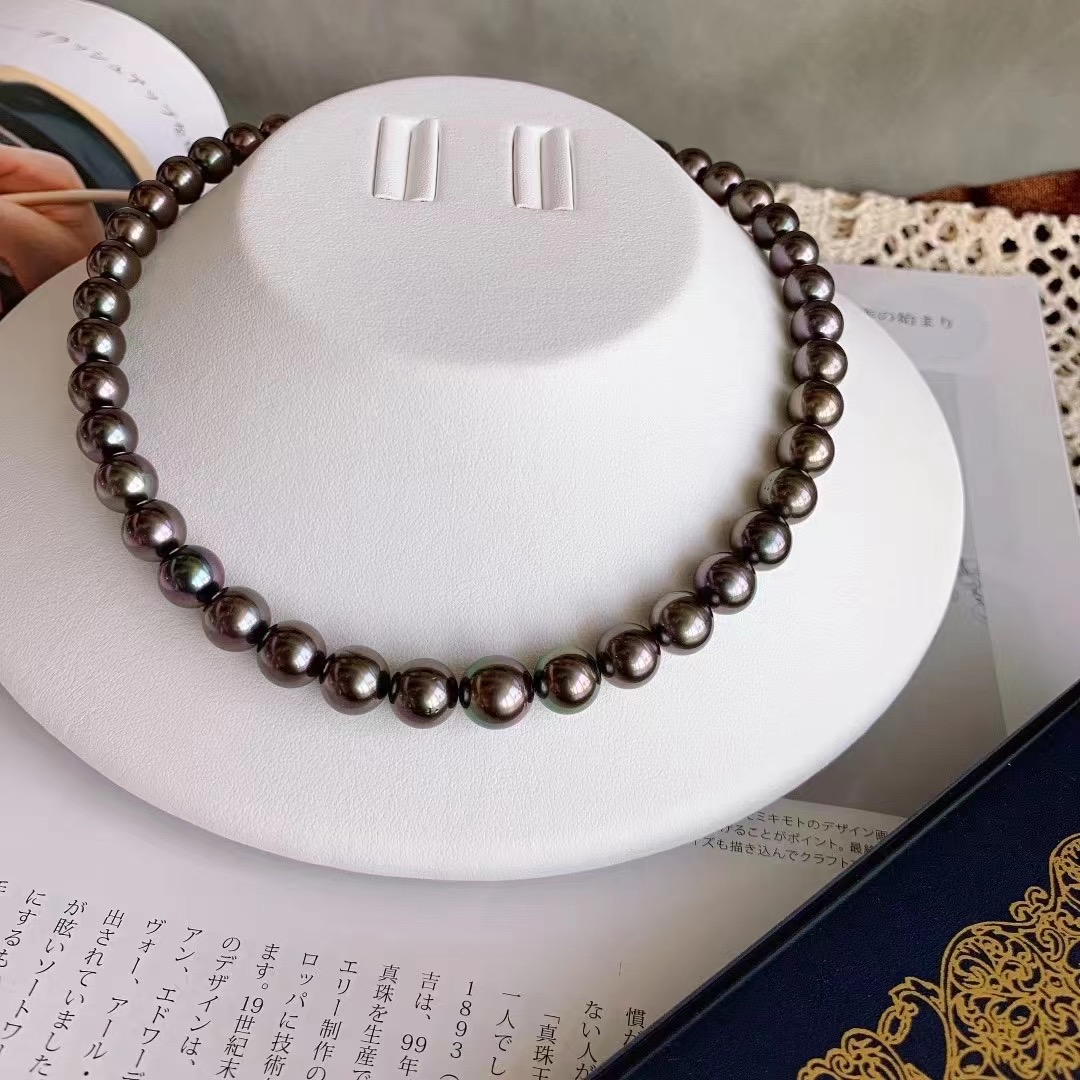
A strand of 42 Akoya pearls—typically 7.0mm to 7.5mm each, harvested from Pinctada Fucata oysters in Japanese waters—takes me roughly three hours to knot properly. The factory method, using a knotting machine with poly-blend thread, takes about 20 minutes. The visual difference is subtle. The structural difference is enormous. Machine-knotted strands fail at the clasp junction first, usually within two years of regular wear. My strands? I’ve had customers come back after eight years for a cleaning, and the knots are still holding true.
This is what buying genuine sustainable jewelry usa with confidence actually means. It’s not about a certificate. It’s about whether the maker invested the hours that the material deserved.
Copper, Silver, Gold—The Metals That Carry the Story
 My bench holds three primary metals at any given time. Sterling Silver 925—92.5% pure silver alloyed with 7.5% copper for workability and strength. The copper content is why Sterling tarnishes; sulfur compounds in air bond with copper atoms, forming that dark patina. I don’t fight tarnish. I use it. A piece of Sterling jewelry that’s been worn for six months develops a patina pattern unique to the wearer’s skin chemistry, their climate, their habits. No two pieces age identically.
Then there’s 18K gold, which I use sparingly for accent work—bezels, clasp mechanisms, the occasional custom commission. 18K means 75% pure gold, the remaining 25% typically a split of silver and copper that determines the color. Rose gold leans heavier on copper. Yellow gold balances silver and copper. At the bench, 18K handles differently than 14K. It’s softer, more forgiving under the hammer, but it grabs the saw blade differently. You learn to feel the difference within your first dozen cuts.
20-gauge copper sheet is my practice metal. I test new designs in copper before committing to silver or gold. Copper teaches you things that CAD software can’t—how a particular curve work-hardens after three passes through the rolling mill, where a fold line will develop stress fractures, how much material you lose to filing when two edges don’t meet flush. I keep my copper scraps in a bucket under the bench. Every six months, I send them to a refinery for recycling. This isn’t a marketing initiative. It’s just what you do when you respect the material enough to not throw it away.
The environmental impact of pearl harvesting gets plenty of attention, and rightfully so. But metal sourcing matters equally. A single ounce of newly mined gold generates approximately 30 tons of mine waste. Recycled gold—melted down from existing jewelry, industrial components, and electronics—carries none of that burden. I source my Sterling grain and gold casting shot from refiners who can trace their supply chain back to recycled sources within the USA. It costs more. I pay it because the alternative sits wrong with me.
What an Oyster Actually Does
Let’s get specific about the biology, because ethical pearl farming depends on understanding what’s happening inside the mollusk. A pearl forms when a nucleus—typically a polished bead made from freshwater mussel shell harvested in the Mississippi River basin, measuring anywhere from 2.0mm to 8.0mm depending on the target pearl size—is surgically implanted into the gonad of a host oyster. Along with the bead nucleus, the technician inserts a tiny piece of mantle tissue from a donor oyster. That graft of epithelial cells is the critical component. It’s what secretes nacre.
The oyster, reacting to this irritant, begins layering aragonite platelets and conchiolin—the organic protein that acts as the mortar between crystalline bricks. Over months and years, these layers build up. A Pinctada Maxima oyster (South Sea) might deposit nacre at a rate of 0.3mm to 0.5mm per year. A Pinctada Margaritifera (Tahitian) grows slightly slower. Akoya oysters (Pinctada Fucata) produce the thinnest nacre of cultured pearls—often 0.35mm to 0.7mm total over 12 to 24 months of cultivation. That’s why Akoya pearls feel lighter and cooler to the touch than South Sea pearls; there’s simply less crystalline mass in your hand.
Farm management determines whether the process qualifies as eco-conscious. Responsible farms in Australia’s Kimberley region and French Polynesia’s Tuamotu Archipelago maintain strict limits on oyster density per hectare, rotate lease sites to allow seabed recovery, and prohibit the use of chemical cleaning agents on oyster baskets. Less responsible operations—and they exist throughout Southeast Asia—overcrowd their lines, blast shells clean with high-pressure freshwater jets that scatter microplastics, and discard nacre-thin pearls into the market rather than culling them honestly.
The environmental impact of pearl harvesting isn’t inherent to the practice. It’s a function of farm management, just as the environmental impact of silver jewelry isn’t inherent to silversmithing—it depends on whether you’re using recycled grain or freshly mined ore, whether your polishing compounds are water-soluble or petroleum-based, whether your pickle solution gets neutralized before disposal.
How I Spot a Piece Worth Buying
 When I’m evaluating jewelry—my own before it leaves the bench, or a piece someone brings in for appraisal—I look for specific indicators that separate craft from commodity.
First, the clasp. On a pearl strand, examine the clasp attachment. A quality piece uses a figure-eight safety catch integrated into the clasp mechanism itself, not a flimsy spring ring that will fail under 3 pounds of tension. The clasp should be stamped with its metal content—925 for Sterling, 750 for 18K gold. No stamp? Assume it’s plated base metal and walk away.
Second, the drill holes. In a properly crafted pearl strand, each pearl’s drill hole should align concentrically with its neighbors. Off-center drilling causes pearls to cant at odd angles, creating gaps and uneven light reflection. Under 10x magnification, the drill hole should show clean edges. Chipping around the hole means the driller used a dull bit or excessive speed.
Third, the knot spacing. Slide a pearl gently to one side and examine the knot. It should fill the space between pearls without being so large that it forces them apart, and without being so small that the pearls grind against each other. Pearl-on-pearl contact is how nacre gets scratched and eventually worn through.
Fourth, the tool marks. This sounds counterintuitive, but I want to see evidence of hand work. The back of a bezel setting might show the faint parallel lines of a file card. The inside curve of a hand-fabricated ring shank will have subtle variations that a casting never replicates. These marks tell me someone made decisions about this specific piece of metal on this specific day.
For anyone buying genuine sustainable jewelry usa with confidence, these details matter more than any marketing claim. A brand can print “sustainable” on their packaging. They can’t fake the tool marks of a craftsperson who cared enough to do the work properly.
The Weight of a Finished Strand
A completed strand of 38 South Sea pearls—each 11.0mm to 13.0mm, harvested from Pinctada Maxima oysters off the coast of Broome, Western Australia—weighs approximately 65 to 80 grams depending on nacre thickness and residual moisture content in the silk. When I lift a strand like that off the bench at the end of a knotting session, the weight is the first thing that registers. Gravity doesn’t care about branding. Mass is mass.
That weight represents about eight years of oyster growth, six hours of grading and drilling at the farm, three hours of knotting at my bench, and a supply chain that—if it’s honest—can trace each pearl back to a specific lease site and harvest season. The clasp adds another hour of fabrication time: cutting the blank from 18-gauge Sterling sheet, forming the tongue and box mechanism, soldering the safety catch, filing the edges smooth, polishing with rouge compound on a cotton wheel.
Sustainability isn’t a feature I add to the finished piece. It’s a consequence of decisions made at every step, from the recycled silver grain in my casting crucible to the water-based polishing compounds that won’t poison the groundwater, from the farms I choose to source from to the silk thread I trust with the knots that hold everything together.
The bench doesn’t lie. The tools don’t lie. And a customer who knows what to look for won’t be fooled by a story that’s only printed on the tag.
I bought a “sustainable” pearl necklace online and the knots are already fraying after three months. Did I get scammed?
Fraying knots within three months almost always point to polyester-blend thread, not pure silk. Polyester fibers are shorter and more prone to surface abrasion, especially where the clasp mechanism rubs against the first few knots. Pull a frayed knot under good light and look closely—if the fibers have melted-looking tips or a slight plastic sheen, it’s synthetic thread. A proper silk-knotted strand should hold its knots without visible wear for years. The second possibility is that the knots were set with insufficient tension, allowing movement that accelerates fiber breakdown. Either way, the maker cut corners. A strand knotted by someone who cares won’t fail in months. Contact the seller and ask directly: what thread was used, and was it hand-knotted or machine-knotted? If they can’t answer immediately, you have your answer.
Is 0.8mm of nacre on a Tahitian pearl actually enough, or should I hold out for thicker?
0.8mm is the minimum accepted nacre thickness for Tahitian cultured pearls under French Polynesian export law. It’s enough to provide durability for occasional wear, but I wouldn’t set a 0.8mm-nacre pearl in a ring that sees daily use. Rings take impact. A pearl with only 0.8mm of crystalline layering will show wear at the crown within a few years of regular exposure to door handles, countertops, and handbags. For a pendant or earrings—low-contact pieces—0.8mm is adequate. For a ring or a bracelet that will knock against desks and railings, I want to see 1.5mm minimum. The easiest way to check without specialized equipment: roll the pearl between your thumb and forefinger. Thicker nacre feels slightly heavier for its size and transmits temperature more slowly. Thin-nacre pearls warm up immediately and feel almost hollow. Trust your fingertips.